The decline in "Magnificent Seven" stocks has created a buying opportunity — Fundstrat

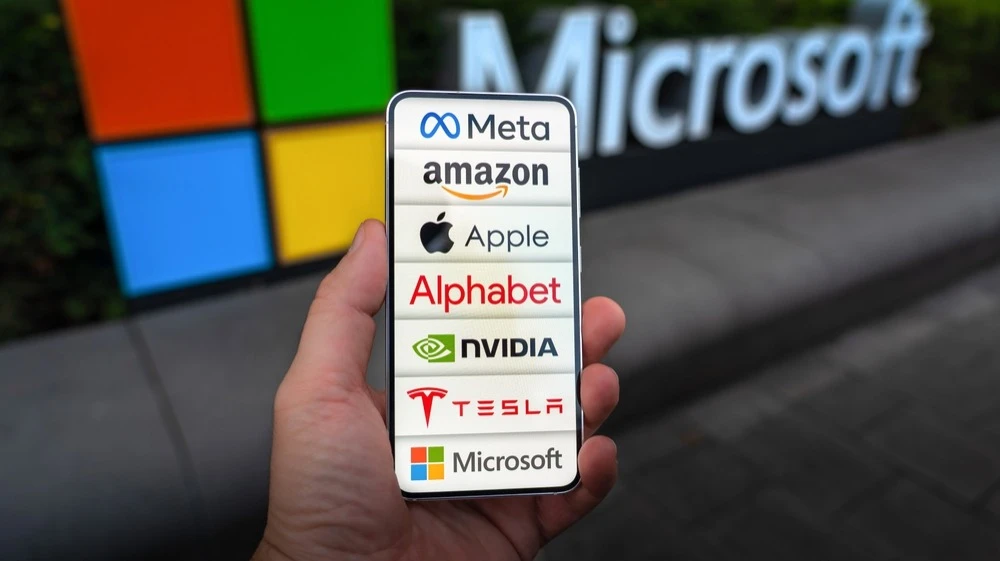
The pullback in “Magnificent Seven” stocks presents a good opportunity for investors, given that short-term trends in the U.S. stock market remain “bullish,” said Mark Newton, head of technical strategy at Fundstrat, as reported by CNBC.
According to him, shares of Microsoft, Meta, Alphabet, and Amazon have fallen to roughly two-month lows, and this underperformance relative to the market appears to have run its course, the strategist believes. Over the last five trading sessions, Nvidia was the only Mag7 stock to rise. Among the factors weighing on the companies’ stock prices are concerns about the sustainability of growth in the AI sector and competition from Chinese players, CNBC notes.
During trading on Monday, June 22, the technology sector suffered a sharp decline. Specifically, Amazon lost 4.8% of its value, while Alphabet—which lost one of its key top executives—fell nearly 5%, marking its sharpest decline in more than a year, according to CNBC.
The sell-off triggered a global market decline on Tuesday. Futures for the Nasdaq Composite technology index were down 2.9% half an hour before the market opened on June 23, and among the "Magnificent Seven" companies, only Microsoft was in positive territory in premarket trading.
“Right now, it makes more sense to look for signs of a return to outperformance than to bet on a further decline in these stocks,” says a Fundstrat strategist. At the same time, Newton predicts that a stabilization in the prices of the “Magnificent Seven” would be an important positive factor for the entire market, especially if oil prices, bond yields, and the dollar continue to fall at the same time.
What else are people saying in the market?
“I don’t think there will be a capital outflow from the ‘Magnificent Seven,’” said Paul Mix, head of technology research at Freedom Capital Markets, in an interview with CNBC. He emphasized that the development of AI infrastructure remains a key market trend: “The bulk of the spending is being driven by hyperscalers, which are almost exclusively companies from the Magnificent 7, so their positions are secure.” Like many analysts, he acknowledges that future major IPOs could draw away some capital, but Mix believes this will likely come at the expense of other market segments rather than the largest tech companies.
"Everything related to artificial intelligence and technology remains the focus of retail traders. It’s just that they’re no longer as active in individual stocks as they were in the past. It’s not a matter of losing interest in the tech sector or AI in general, but rather in the instruments themselves. “I think the focus has now shifted from trading specific stocks to ETFs,” said Liz Ann Saunders, chief investment strategist at Charles Schwab, on CNBC.
Given SpaceX’s sensational stock market debut, there is speculation that the “Magnificent Seven” will soon become part of a new group known as the “Amazing Ten” (Fab 10)—a term coined by the analytics firm Vanda Research. In addition to SpaceX itself, the firm included OpenAI and Anthropic in this group of favorites, both of which are also expected to go public this year. Another acronym gaining popularity on social media is MANGOS. This group does not include Nvidia, Amazon, or Tesla, but it does include SpaceX, OpenAI, and Anthropic.

This article was AI-translated and verified by a human editor