The growth leader of 2025 rose 27% in a single session. How did the head of Nvidia help him?

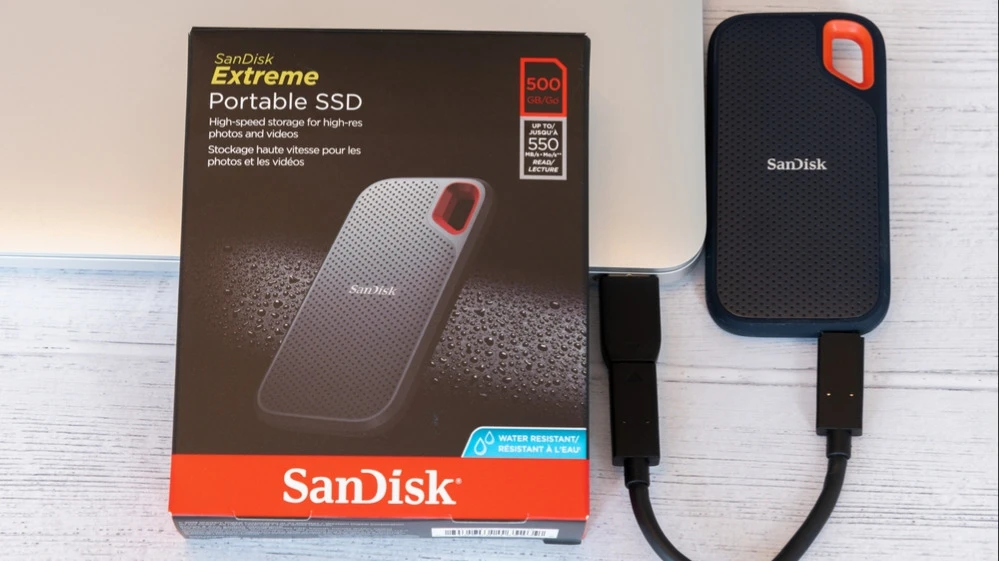
Shares of Sandisk, which manufactures flash memory for data storage, jumped 27.6% on Tuesday, January 6, reaching a record high of $349.6. This was the company's best intraday growth since February 2025, according to Bloomberg.
Sandisk only emerged as an independent company in February, after spinning off from Western Digital. At the end of November, its shares were included in the S&P 500 and showed the best return for the year, rising in price by more than 550%.
In the first three sessions of 2026, Sandisk shares have already gained over 40%. On Tuesday, the company once again became the growth leader in the index.
The already strong rally was supported by statements made by Nvidia CEO Jensen Huang at the CES consumer electronics show in Las Vegas. Presenting new products on Monday, he emphasized the growing demand for flash storage in the AI sector. "There are virtually no solutions on the data storage market yet," Huang said. "This market simply did not exist before, but now it is likely to become the largest in the world — it will be where the working data of all AI systems will be stored."
Shares of other memory and storage manufacturers also made it into the top of the S&P 500 index on Tuesday: Western Digital's shares jumped 16.8%, while Seagate Technology's rose 14%.
Why did memory loss occur?
The supply shortage and rising memory prices are due to the rapid increase in demand for AI training and usage, explains Bloomberg Intelligence analyst Jake Silverman. It is this factor that is now driving the rally in shares of companies that manufacture data storage devices. According to the analyst, Huang's statement confirms that demand for NAND memory will remain high in the Nvidia ecosystem.
On Monday, the chipmaker unveiled a new data storage platform designed for the next-generation Rubin AI chip, which will be released in the second half of the year. "Essentially, this solution will add more SSDs to the AI infrastructure to speed up model performance," Morningstar analyst William Kerwin told Barron's. "Growing demand for SSDs in such systems could further exacerbate the market shortage, which will further support Sandisk's product prices."
Memory prices have been rising for quite some time. According to a report published this week by Korea Economic Daily, Samsung Electronics and SK Hynix intend to raise prices for server DRAM memory by 60–70% in the first quarter compared to the fourth quarter of last year.
Sandisk and other memory manufacturers are among the main beneficiaries of the trend toward AI adoption, according to Bank of America analysts led by Vamsi Mohan in a January 4 note cited by Bloomberg. Mohan expects companies to increasingly store data for training, analytics, and regulatory compliance, leading to "explosive growth" in demand for storage systems. The technology is particularly active in drones, surveillance systems, automobiles, and sports devices. "Previously, AI investment focused on capital expenditures and model training, which catalyzed a new round of investment in equipment," Mohan noted. "But starting in 2026, we expect the focus to shift to AI inference."
Inference is the process by which a neural network generates a response for the end user, requiring large amounts of memory to utilize the data on which the model has already been trained.
This article was AI-translated and verified by a human editor