The Long-Awaited Anthropic Prospectus: Blue Lagoon Goes Public—Key Details on the IPO by November 1

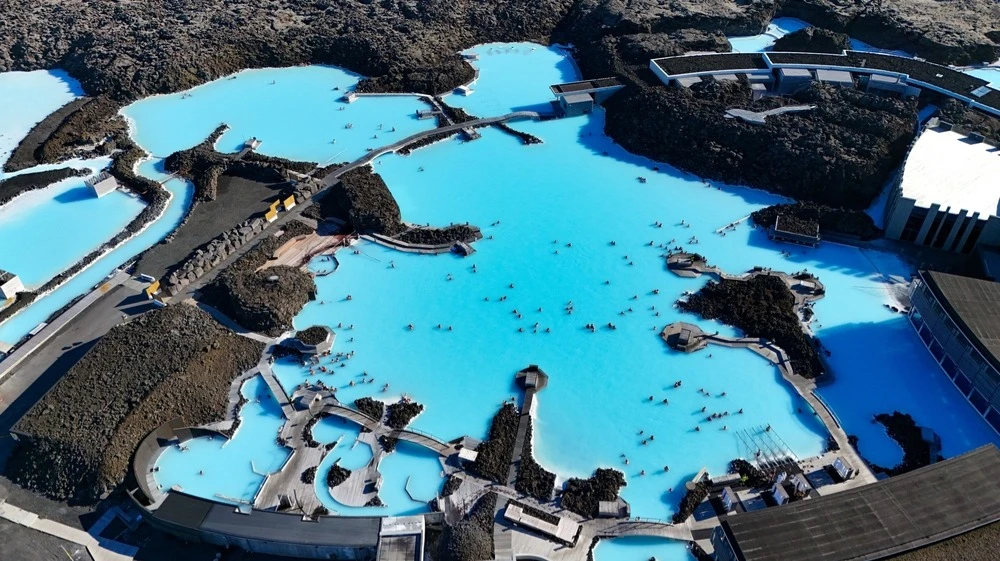
The owner of the Icelandic geothermal resort Blue Lagoon is preparing for an IPO / Photo: Palmi Gudmundsson / Shutterstock
Anthropic published its IPO prospectus earlier this week, bringing it one step closer to going public.The popular Icelandic geothermal resort Blue Lagoon will once again attempt to go public after postponing its IPO several years ago due to a series of volcanic eruptions. Swiss-Chinese agrochemical giant Syngenta plans to list its shares in Hong Kong in early 2027 at a valuation of $66–88 billion and expects to raise up to $10 billion. Check out our roundup of the week’s top events in the initial public offering market.
What is known about future placements
— Nearly half of Anthropic’s revenue in the first half of 2026 came from sales through Google, Amazon, and Microsoft’s cloud platforms, compared with 11% in 2023, according to the company’s IPO prospectus, which was disclosed on October 26. At the same time, the developer of Claude has committed to spending over $269 billion on computing power from these three companies and an additional $125–150 billion on supplementary resources. In its prospectus, Anthropic warned that its dependence on cloud giants—which simultaneously serve as its investors, partners, and competitors—poses risks to the business.
— Bláa Lónið, an Icelandic company that operates the famous Blue Lagoon geothermal resort, plans to hold an IPO on the local stock exchange, according to Bloomberg. The company’s shareholders have approved the offering, which will allow institutional and retail investors to purchase shares. Bláa Lónið has also approved a stock option program for all 700 employees. The company had already been preparing to go public in 2022 but postponed its plans due to volcanic eruptions that periodically disrupted the resort’s operations. The Blue Lagoon is visited by about 1 million tourists annually.
— Syngenta, a Swiss-Chinese agrochemical company, plans to hold an IPO in Hong Kong in early 2027 with a valuation of $66–88 billion, Reuters reports, citing sources. The company, which is controlled by the Chinese state-owned firm Sinochem, expects to raise between $5 billion and $10 billion by selling 10–20% of its shares. The IPO underwriters, including UBS and CICC, expect a high valuation thanks to advances in biotechnology and new seed varieties. Syngenta plans to use the proceeds to reduce debt and expand its business.
— Hong Kong-based crypto company Redotpay is considering filing a confidential IPO application in the U.S. by the end of 2026 after the offering was delayed due to legal and regulatory issues, Bloomberg reports, citing sources. The company is aiming for a valuation of at least $5 billion and is in talks to raise pre-IPO funding at a valuation of $4–5 billion. Redotpay, which issues cryptocurrency payment cards, serves more than 9 million customers. Its annual revenue, on a pro-rata basis, has exceeded $180 million, and its operating margin is 50%.
— Dubai-based DIP Holding plans to set the IPO price at 1.12 dirhams ($0.30) per share—roughly in the middle of the announced range—despite being oversubscribed several times over, according to Bloomberg. As a result, parent company Dubai Investments will raise about $529 million from the sale of 20% of its shares instead of the maximum possible $543 million. The price is below the upper end of the range—a rarity for the local market, the agency notes. The company lowered its valuation amid geopolitical tensions and investor demands to increase the dividend yield, which will be about 7.5%. Trading in DIP shares on the Dubai Stock Exchange is set to begin on November 11. This is the first offering in the UAE in 2026.
How Did This Week's IPOs Go?
— U.S. biotech company Bambusa Therapeutics raised $168.9 million in its Nasdaq IPO, selling 10.6 million shares at $16 apiece, according to Bloomberg. The company’s valuation at the time of the offering was $815 million. Founded in 2024, Bambusa develops drugs to treat skin and autoimmune diseases, including eczema, using technology acquired from BioNTech. However, the company generates no revenue, and its net loss for the first half of 2026 rose to $22.4 million from $13 million a year earlier.
— The American biotech startup Aspen Neuroscience raised $140.6 million in its IPO by selling approximately 9.4 million shares at $15 each—the lower end of the stated price range, according to BioPharma Dive. The company is developing a cell therapy for Parkinson’s disease that aims to restore dopamine-producing neurons using the patient’s own cells. Its lead drug is currently undergoing clinical trials.
— The African fintech startup OPay, backed by SoftBank, raised $304 million in its New York IPO by selling 16 million American Depositary Shares at $19 each—the lower end of the stated price range, according to Bloomberg. The company was valued at approximately $4 billion, making it one of Africa’s largest fintech companies. OPay is a market leader in Nigeria’s digital payments sector, where it has more than 50 million active users. The funds raised are planned to be used to expand the business into other African countries.
Other Important News from the World of IPOs
— India became the global leader in IPO volume in October: companies raised a record 455 billion rupees ($4.8 billion), surpassing the U.S. ($2.1 billion) and Hong Kong ($1.5 billion), according to Bloomberg. The main driver was the largest IPO in Indian history by telecommunications company Jio Platforms, owned by billionaire Mukesh Ambani, which raised 302 billion rupees. In just one month, about 40 companies went public in India—more than in any other country. Since the beginning of the year, the total value of IPOs in India has reached $18.26 billion, approaching the 2025 record of $22.36 billion.
— Australia’s regulator, ASIC, has requested information from investment banks regarding the failed IPO of data center operator Firmus, according to Bloomberg. The investigation involves Bank of America, JPMorgan, Morgan Stanley, and Morgans Financial, which organized the offering. Firmus had planned to raise about $5 billion at a valuation of $30 billion, which would have made the deal one of the largest in Australian history. However, the IPO was canceled due to investor concerns about the company’s inflated valuation.
This article was AI-translated and verified by a human editor