The next two years will show which AI companies investors should have avoided — Jim Chanos
The renowned short seller believes that over the next 18–24 months, some companies currently considered potential technology leaders will face difficulties raising capital

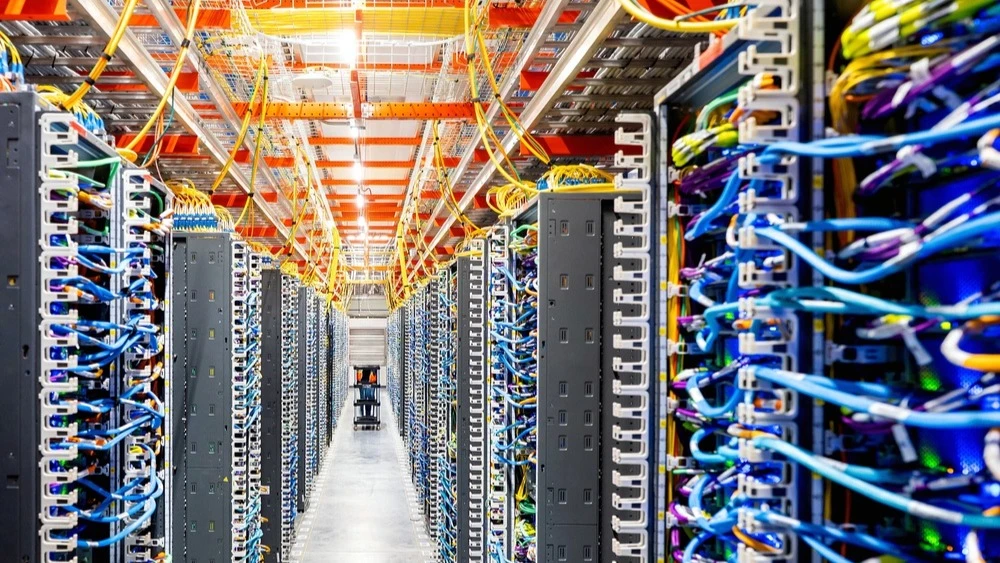
An investor believes that the AI market could trigger hidden write-downs at infrastructure companies / Photo: shutterstock.com
Profits from chip, equipment, and data center providers may be painting a misleading picture of the AI boom for investors, according to renowned short-seller Jim Chanos. At the Macro Minds conference, he stated that companies involved in artificial intelligence infrastructure are mistakenly perceived by the market as drivers of technological growth, even though their actual profitability turns out to be extremely modest upon closer inspection. This could lead to a massive revaluation of assets in the market, which over the next two years will cut off funding for some of these so-called technology leaders.
Details
The market may be too optimistic about companies that provide AI infrastructure, according to the founder of Chanos & Company. Chanos says that investors often view such businesses as part of the tech boom, even though their business model may be much simpler: buy expensive equipment, fill it with customer orders, and profit from the difference.
"If you buy chips from Nvidia, then rent space in a data center from someone else, and then lease those chips to Microsoft, Google, or Meta, you're a hardware leasing company. You're not a high-tech company. In essence, you're a financial company."

According to Chanos, the problem lies in the profitability of such models. Given the current capacity shortage, companies with access to data centers and chips should be generating particularly high returns. However, Chanos says, an analysis of these companies’ contracts shows that even at the peak of the shortage, their profit margins are only 5–8%.
In his own models, Chanos also makes an assumption that is conservative for the industry: he assumes a 10-year lifespan for graphics processing units, although he acknowledges that this is already an aggressive scenario for equipment operating around the clock. Based on this calculation, the profitability of AI infrastructure companies comes out at just 4–6%. The investor considers such business models to be unprofitable for the technology sector and is confident that they will eventually disappear.
“I would advise everyone today to be careful not to accidentally assign some kind of magical valuation to run-of-the-mill businesses. Because one thing we know for sure is that capital is flowing into this sector on a massive scale, and that generally drives down returns. And at this stage of the cycle, capital will flow to absolutely everyone. But going forward, as this becomes increasingly obvious, it will stop flowing to companies with run-of-the-mill business models. And I suspect we’ll see this happen within the next 18–24 months.”

Among the risks in the AI sector, Chanos points to the accounting discrepancy between infrastructure providers and their customers.
“Companies like Nvidia, GE Vernova, Vertiv, and others like them—which are building this massive, capital-intensive business called AI—recognize revenue and profits immediately. Hyperscalers and others who are spending exactly the same amount of money, however, capitalize these expenses. And this is a very important point to keep in mind when you look at the earnings boom we’re currently seeing in the high-tech sector.”

Chanos points out that the market behaved exactly the same way in 1998–2001: at that time, companies were ramping up orders for networking and telecom equipment based on forecasts that internet traffic would double every quarter. The combined profits of companies in the S&P 500 index soared by 30%. But when it became clear that demand was growing more slowly than expected, orders plummeted, and accumulated depreciation and expenses for the year sent the index’s overall profitability tumbling by 40%.
This article was AI-translated and verified by a human editor