The Nobel Prize in Economics was awarded to the authors of new approaches to crisis management

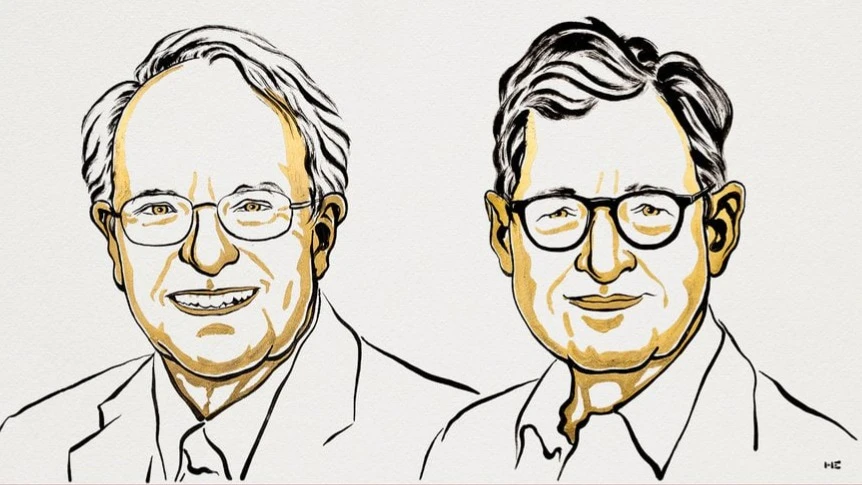
Photo: X / The Nobel Prize, Niklas Elmehed
The 2026 Nobel Prize in Economics was awarded to two American scholars—Robert E. Hall and Michael Woodford. They were awarded the prize “for the development of the microeconomic foundations of macroeconomic stabilization.” They will share the prize of 12 million Swedish kronor ($1.2 million).
According to a press release from the Nobel Committee, this refers to research that has made it possible to manage large-scale macroeconomic crises much more effectively than before. Based on these models, governments and central banks can take timely fiscal and monetary policy measures to stabilize the economy.
Hall and Woodford brought about a revolution, the committee explains. Instead of focusing solely on macroeconomic indicators such as inflation, production, and consumption, the scholars demonstrated how the economy is influenced by the aggregate of millions of decisions made at the micro level—by individual households and companies. This laid the foundation for New Keynesian economic theory, in which models are built on microeconomic principles—that is, from the bottom up.
Scientists have also demonstrated how statements by central banks and governments influence households' and companies' perceptions of the future and steer the economy in the right direction.
Responding during a press conference to a question about which economic event or shock had convincingly demonstrated that his framework had stood the test of practice, Woodward cited the example of how central banks adapted their tools during the 2008 global financial crisis, according to Bloomberg. Regulators at the time faced a decline in demand that could not be overcome simply by lowering borrowing costs.
“An important part of the response was signaling future monetary policy—that is, making clearer statements about the likely future path of interest rates rather than relying solely on the possibility of immediately cutting rates even further, — Woodward said. — This really helped stabilize the situation more effectively. The problem didn’t disappear as if by magic, but I think it was an important contribution.”
“The laureates’ work has provided a solid theoretical foundation for the models used today by central banks and governments around the world. Thanks to them, we are better prepared to weather economic shocks, such as energy crises or sharp changes in household consumption,” said Jon Hassler, chair of the Nobel Committee for Economics.
In particular, the press release states that Hall and Woodford’s research proved immensely valuable during the pandemic and the energy crises of recent years — as a result, their impact on economic growth and inflation proved to be less prolonged than during the crises of the 1970s. Recessions and periods of high inflation have not disappeared, but they have become shorter-lived, the Nobel Committee noted.
This article was AI-translated and verified by a human editor