Slow but sure—a tsunami: IMF chief warns that AI is hitting the labor market and government budgets
Kristalina Georgieva called on the authorities to review the education system and take action now, even though the future of the labor market remains unclear

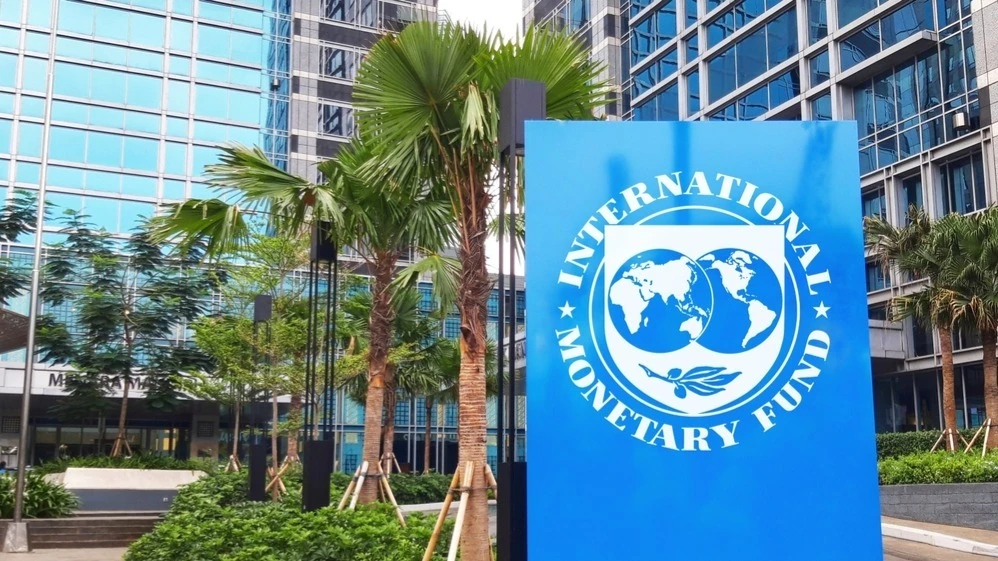
IMF Managing Director Kristalina Georgieva reiterated her point about the "AI tsunami" in Bangkok / Photo: Poetra.RH/Shutterstock.com
Artificial intelligence poses a threat to the labor market and government tax revenues, warned IMF Managing Director Kristalina Georgieva. “It’s a slow tsunami, but a tsunami nonetheless,” she said during a session on the impact of AI on employment. This is Georgieva’s first appearance at the annual IMF and World Bank meetings being held in Bangkok, according to Bloomberg.
According to Georgieva, AI is already reducing the demand for many workers by taking over routine, repetitive tasks. At the same time, AI is increasing the number of low-wage jobs in sectors such as construction, and “there’s nothing to be happy about here,” the fund’s head believes. Changes in the labor market will have far-reaching consequences for public finances as well, Georgieva noted. If AI increases the share of capital in the economy at the expense of labor, this could hurt budget revenues: labor has traditionally been the main source of tax revenue.
The IMF chief called on authorities to rethink their approaches to education to help society adapt to change. “Today, we cannot imagine exactly what work will look like in five years,” she acknowledged. “But we can systematically and carefully assess what is happening, draw lessons from it, and—most importantly—apply them right now” (quoted by Bloomberg).
Growth Isn't for Everyone
Despite all the costs to employment, AI may ultimately bring benefits: according to IMF estimates, its widespread adoption could accelerate growth in Asia’s developed economies by 1 percentage point, Bloomberg reports. According to Georgieva, such a gain “more than offsets” the slowdown caused by the aging populations in these countries.
However, AI could widen the gap in wages and opportunities among workers within a single country, warns Krishna Srinivasan, director of the IMF’s Asia and Pacific Department, in an article for the Fund’s journal *Finance & Development*. Highly skilled professionals whose work is complemented by AI stand to benefit: their wages will rise as productivity increases. Others, however, may be displaced by AI.
This isn’t the first time Georgieva has compared AI to a tsunami. Back in January, at the World Economic Forum in Davos, she used this metaphor to describe those just entering the job market. “The jobs that are disappearing are, as a rule, precisely those that make up entry-level positions, which is why it’s harder for young people looking for work to find a good job,” Fortune magazine quoted the IMF chief as saying.
Researchers at Stanford University have estimated that by June 2026, employment rates for 22- to 25-year-olds in occupations highly susceptible to the impact of AI, would be approximately 19% lower than the level it would have reached had it grown at the same rate as that of their peers in less affected sectors. According to their findings, the gap arises primarily because young people are being hired less frequently, rather than due to an increase in layoffs. At the same time, the study’s authors emphasized that they are merely describing a trend—without assessing the extent to which AI contributes to it.
What Are the Dangers of the AI Boom?
Georgieva had already warned about the risks of this boom on October 7, speaking in Singapore ahead of the meetings in Bangkok. According to her, investment in AI as a percentage of GDP is likely to exceed investment in railways, power grids, and telecommunications. Growing economic and financial concentration is forcing AI companies to boost productivity and profits to justify their high valuations. If the market is disappointed, this could result in a “shock with far-reaching consequences,” Reuters quoted her as saying.
Concerns are growing that AI will exacerbate inequality: so far, only a few workers and countries are reaping the benefits, despite a massive wave of investment in this sector worldwide, according to Bloomberg. According to Georgieva, the key is to prepare for the spread of AI, including by introducing regulatory restrictions that “will help address the significant dangers of AI, including large-scale disruptions in the labor market, serious cyber risks and threats to stability, as well as the risk that advanced models will slip out of human control and run amok” (quoted by Reuters).
This article was AI-translated and verified by a human editor