The Russian ruble has strengthened to a three-year high. What is helping it?
Despite the damage to the state budget, Russia does not intend to fix the ruble exchange rate yet, says Sergey Romanchuk, a veteran of the currency market

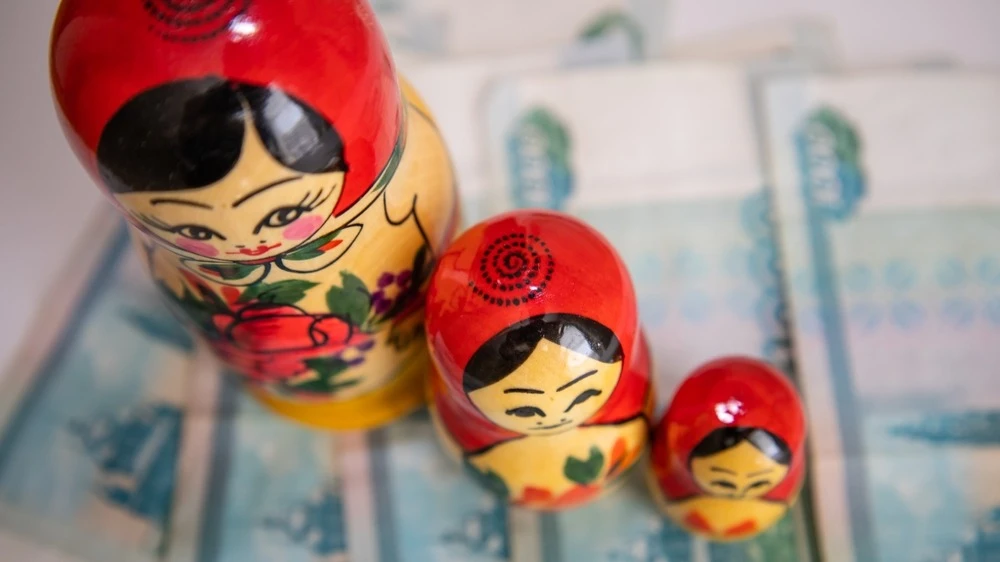
In the current quarter, the ruble topped the top global currencies amid war and oil boom / Photo: Caroline Ruda/Shutterstock.com
The ruble exchange rate rose to its highest in more than three years amid a jump in revenues from energy exports after the start of the U.S. war with Iran. Since U.S. President Donald Trump extended easing of sanctions against oil from Russia in March, the Russian currency has appreciated against the dollar and euro by more than 20%, the British Financial Times noted.
Details
In relation to the dollar, the ruble is now at its highest level since February 2023. Compared to the minimum of early 2025, it has strengthened against the U.S. currency by more than 60%: now the U.S. currency is worth about 71 rubles against 115 rubles on January 1, 2025, states the FT.
The ruble's rally since the beginning of last year is mainly due to the trade imbalance: Russia sells abroad more than its economy imports. Many channels for capital outflows, including dividend payments and transfers via Swift, remain closed, the publication notes.
What to expect from the ruble?
Analysts of the Russian Center for Macroeconomic Analysis and Short-Term Forecasting (CMACP) have called the ruble a "significant risk" for Russia's budget revenues. They estimate that by the end of this year, the state could lose 1.6-1.7 trillion rubles ($22.5-24 billion). However, despite the pressure on the budget, Moscow is unlikely to resort to "non-standard" measures to weaken the ruble, according to the Center for International Monetary Policy.
"[The Russian] Central Bank still assumes that a floating exchange rate helps the economy adjust to external shocks," said financier and member of ACI's Foreign Exchange Committee Sergey Romanchuk. According to him, the Russian financial authorities may reconsider this approach only if the ruble strengthens "to really extreme levels," the FT writes.
What about oil exports from the Russian Federation
According to the Center for Research on Energy and Clean Air (CREA), in March 2026, the first full month after the Iran war began, Russia's fossil fuel export revenues jumped 52% to €713 million per day in February. Physical export volumes grew much more modestly, by 16%. Oil was the main contributor: revenues from its exports rose by 94% to €431m per day, including from sea shipments - by 115% to €372m per day. At the same time, the volume of oil exports by sea increased by 29%.
Revenue continued to increase in April, but shipment volumes sagged. According to CREA's calculations, total revenue from Russian fossil fuel exports rose another 4% month-on-month to €734 million per day, despite a 7% drop in real volumes.
"Compared to the pre-war baseline scenario, Russia's revenues from oil and gas exports in 2026 could increase by $84-252 billion, or 63-188 percent. In the central scenario - a three-month war [in Iran] and rapid recovery - Russia would receive an additional $161 billion," the Ukrainian think tank KSE Institute predicted.
This article was AI-translated and verified by a human editor