Top stories for tomorrow: AMD and Nvidia unveil new products, McDonald's competitor goes public

AMD and Nvidia unveiled new platforms for AI data centers, robotics, and autonomous transportation at CES 2026, intensifying competition for the multibillion-dollar market for computing and "physical AI." Copper hit a new all-time high above $13,000 per ton amid risks of shortages and trade imbalances due to possible US tariffs. These and other topics are covered in our review of key events as of the morning of January 6.
AMD unveiled its Helios AI platform for data centers at CES 2026.
AMD CEO Lisa Su unveiled a new platform for AI data centers called Helios at CES 2026, calling it "the world's best AI rack," according to Yahoo Finance. The system competes directly with Nvidia's solutions: Helios combines 72 MI455X accelerators — the same number as NVL72 with Rubin chips. AMD also revealed plans for the MI500 GPU series, which, according to the company, will provide a significant increase in AI performance compared to MI300X. Su emphasized that such a leap is necessary: within five years, AI will be used by up to 5 billion people every day, and global computing power will have to be increased 100-fold.
The company also unveiled the GENE.01 humanoid robot for industrial use and announced the Ryzen AI 400 and Ryzen AI Pro 400 processors, which are set to compete with Intel's new Core Ultra chips.
Against the backdrop of the AI boom, AMD shares have risen 74% over the past 12 months, compared to 34% for Nvidia, although the latter remains dominant with a market capitalization of around $4.5 trillion, compared to $359 billion for AMD.
Nvidia unveils Vera Rubin platform for AI supercomputers
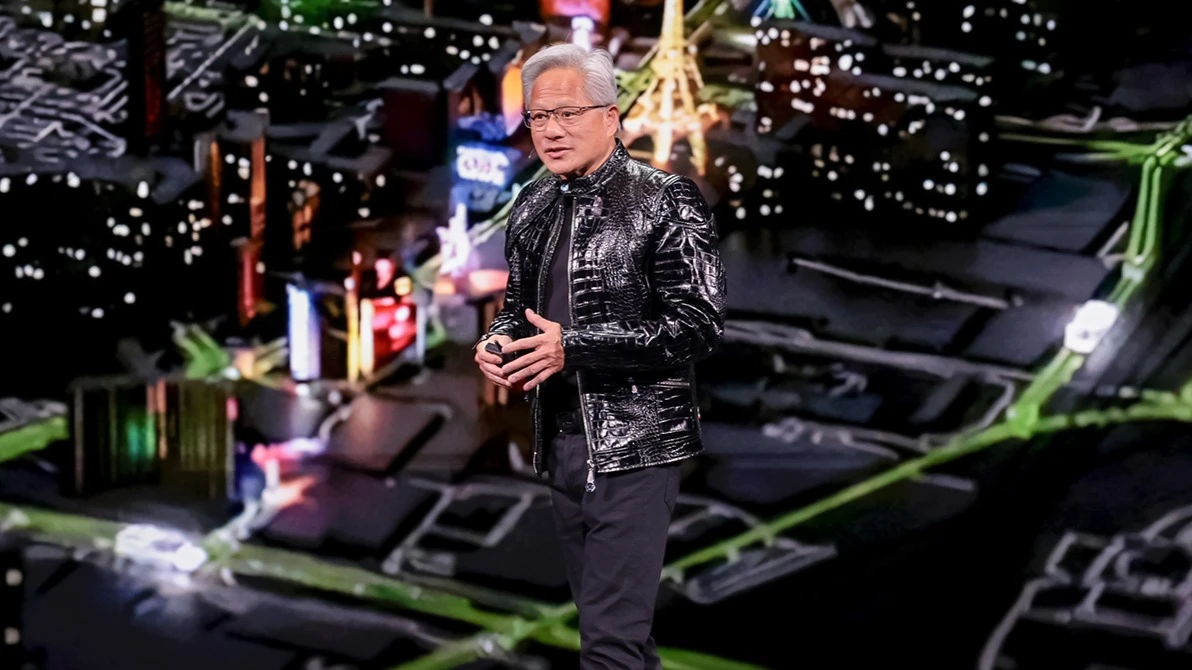
At CES 2026, Nvidia announced its next-generation Rubin platform and the Vera Rubin superchip, which combines one Vera CPU and two Rubin GPUs in a single processor, according to Yahoo Finance. The company positions the new solution as optimal for agent AI, advanced "reasoning" models, and MoE architectures. According to Nvidia CEO Jensen Huang, the platform is being released at a time of rapid growth in demand for AI training and inference computing and should deliver a significant performance increase over the previous generation.
The Rubin platform scales up to the Vera Rubin NVL72 server with 72 graphics processing units (GPUs) and further to the DGX SuperPOD system, which is purchased by major technology companies, including Microsoft, Google, Amazon, and Meta, according to Yahoo Finance. Nvidia claims that the new generation reduces the number of GPUs required to train MoE models by four times and lowers the cost of inference tokens by ten times, improving energy efficiency and reducing the total cost of ownership for customers.
Nvidia also showcased AI solutions for robots and drones.
Nvidia presented new developments in robotics and "physical AI" at a conference in Las Vegas, which are already being used by companies ranging from Boston Dynamics and Caterpillar to LG and NEURA Robotics, according to Yahoo Finance. The company believes that such technologies have the potential to transform manufacturing and logistics. Nvidia showcased new AI models and computing platforms for training and controlling robots.
Nvidia also announced Alpamayo models for driverless cars, designed to recognize complex and non-standard road situations. Lucid, Uber, and Berkeley DeepDrive have expressed interest in them, and the company cites virtual training for autopilots as a key area of development.
Copper hit a new all-time high above $13,000
Copper prices continued their rapid rise, exceeding $13,000 per ton for the first time on the London Metal Exchange, according to Bloomberg. Quotes reached a record $13,187, and since mid-November 2025, the metal has risen in price by more than 20%. The rally is fueled by active copper supplies to the US amid risks of import duties being imposed, which is why US prices are steadily trading at a premium to world prices.
Analysts note that the market is driven by speculative demand and fears of shortages: US stocks are growing, and disruptions at mines in Chile, Indonesia, and the DR Congo are exacerbating tensions. Prices are further supported by a structural shortage of investment in production and growing demand for the metal due to the energy transition, data centers, and electric vehicles.
Trader earned about $410,000 betting on Maduro's removal
An unknown trader made a profit of around $410,000 by betting on the removal of Venezuelan President Nicolas Maduro on the Polymarket platform, Reuters reports. The trader's positions, valued at approximately $34,000 before the weekend, rose sharply in price after reports of a US military operation and Maduro's capture. Against this backdrop, global stock indices, oil prices, and energy company shares rose, while Venezuelan and PDVSA bonds rose nearly 30% on expectations of debt restructuring.
The deal caught the attention of US lawmakers who are talking about tightening rules against insider trading in prediction markets. Congressman Richie Torres has announced his intention to introduce a bill prohibiting officials and civil servants from placing bets on such platforms. Polymarket has previously faced questions about the possible use of non-public information, and regulators have not yet commented on whether an investigation into these trades will be launched.
Jollibee has decided to spin off its international business and go public in the US.
Shares of McDonald's competitor Jollibee Foods Corp. rose more than 11% to a five-year high after announcing plans to spin off its international business into a separate company and list it on the US stock exchange by the end of 2027, Bloomberg reports. The Philippine fast-food chain said that Jollibee Foods Corporation International will combine all assets outside the country, while the domestic business will continue to trade in Manila. The company has already engaged international and local advisors to prepare the deal.
Jollibee believes that the split will increase strategic transparency and allow investors to separately evaluate its stable Philippine business and its faster-growing but more volatile overseas operations. The international division accounts for about 43% of the group's revenue and includes more than 6,800 restaurants in 30 countries, including the US, China, Canada, and Vietnam.
What's on the markets
— Japan's broad Topix index rose 1.54%, while the Nikkei 225 gained 1.11% in trading on January 6.
— Hong Kong's Hang Seng Index rose 1.56%. Mainland China's CSI 300 Index rose 0.98%.
— In South Korea, the Kospi index rose 1.07%, while the Kosdaq fell 0.57%.
— Australia's S&P/ASX 200 fell 0.52%.
— S&P 500 futures rose 0.13%, Nasdaq Composite futures rose 0.24%, and Dow Jones Industrial Average futures were virtually unchanged.
This article was AI-translated and verified by a human editor