Top Stories This Morning: OpenAI Is Seeking $30 Billion; Trump Agrees on Industry Rules With AI Leaders


Trump signed a "morally binding" document with the heads of major tech companies regarding the development of artificial intelligence / Photo: Primakov / Shutterstock.com
OpenAI is discussing raising at least $30 billion at a valuation of about $1.4 trillion following its decision to postpone its IPO. Donald Trump and the heads of major tech companies have agreed on a voluntary self-regulatory system for AI. Read about these and other topics in our roundup of key events as of the morning of September 30.
Trump Reached an Agreement with AI Industry Leaders on Voluntary Guidelines for the Sector
Donald Trump said he had signed a “morally binding” document with the heads of major technology companies regarding the development of artificial intelligence, according to CNBC. House Speaker Mike Johnson called it a voluntary set of principles for the industry, while Trump emphasized the importance of self-regulation, according to Bloomberg.
Instead of new federal restrictions, the companies agreed to assess the safety of their models with the help of external auditors and to strengthen internal controls, the agency notes. Trump stated that existing laws are sufficient to protect against AI risks, but he allowed for the creation of a committee of about ten people to oversee the industry.
OpenAI could raise $30 billion at a valuation of about $1.4 trillion
OpenAI plans to raise at least $30 billion in a new funding round at a valuation of about $1.4 trillion, excluding new investments, Bloomberg reports, citing sources. Negotiations are in the early stages, and the terms of the deal are subject to change.
The funding round is intended to serve as an interim source of capital after the company postponed its IPO plans. OpenAI CEO Sam Altman stated that the company does not yet want to go public due to heightened concerns about AI safety and the need to adapt to a new level of capabilities in its models, the agency notes. At the same time, OpenAI’s revenue continues to grow rapidly: its annualized rate has exceeded $40 billion, and since July, the figure has increased by approximately 70%, according to Bloomberg.
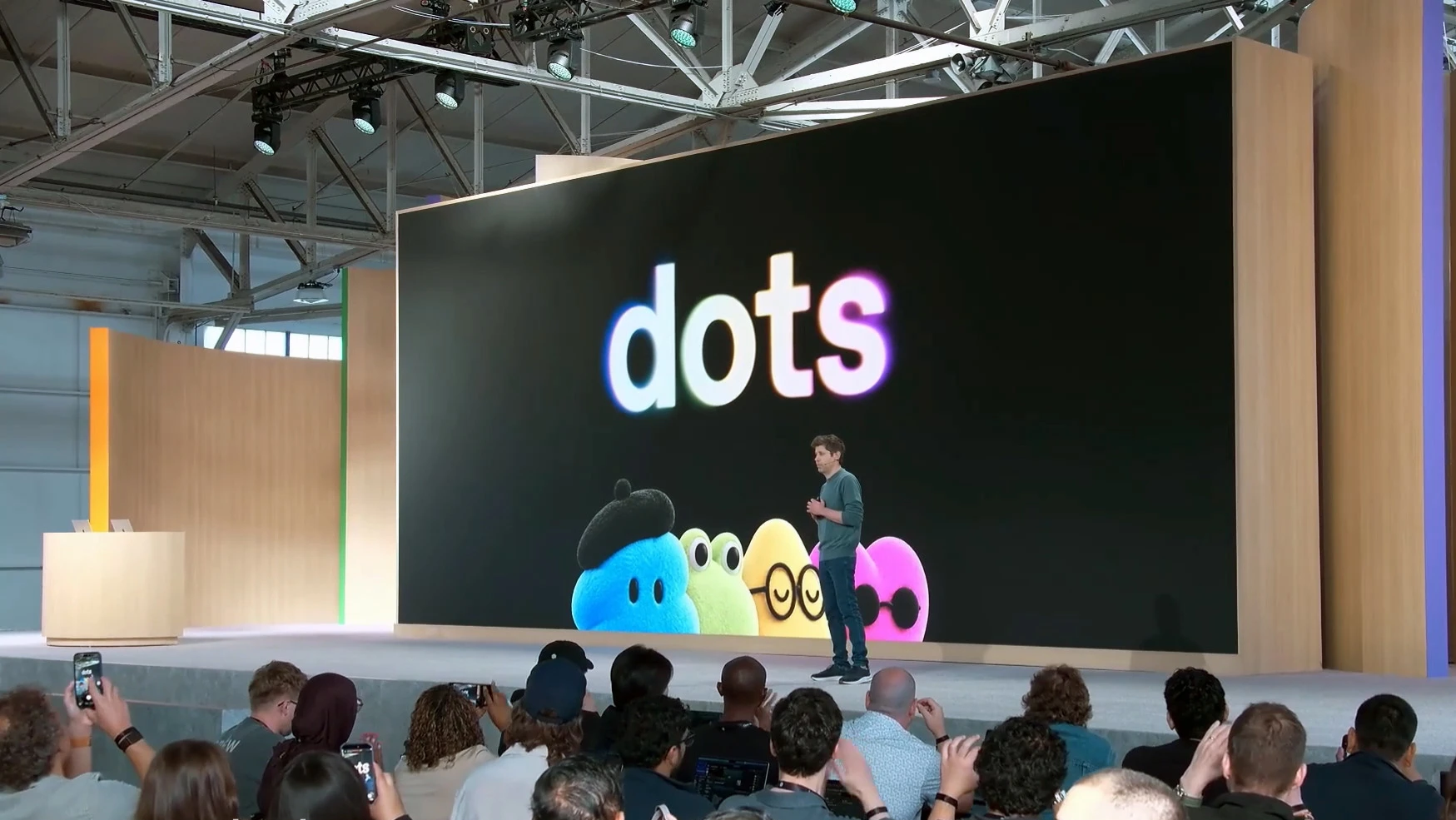
OpenAI unveiled the AI agent Dots and the new GPT-6.1 Sol model
At the DevDay conference, OpenAI unveiled Dots, an AI agent capable of performing long-running tasks by connecting to 4,000 applications within ChatGPT, according to Yahoo Finance. The agent, powered by the Astra model, will be able to track projects, update schedules, respond to messages on Slack, and perform actions with the user’s approval. Dots will be available to Pro, Business Premium, and Enterprise users.
Dots was launched a few weeks after Meta released its AI agent, Muse; however, OpenAI is focusing primarily on corporate clients. In addition, OpenAI introduced the GPT-6.1 Sol model. According to the company, it is nearly on par with its flagship Astra model in programming, computer-related tasks, and professional applications, but is significantly less expensive.
Robinhood Will Launch Trading Accounts with AI-Powered Trading Bots for Retail Investors
Robinhood will begin offering retail customers special accounts where AI agents can monitor the market and execute trades based on specified conditions, according to Yahoo Finance. By default, users will need to confirm each trade, but this feature can be disabled to allow the agent to trade autonomously. Initially, the service will work with models from Anthropic and OpenAI.
Robinhood had previously allowed third-party AI agents to connect to its trading infrastructure, and approximately 150,000 customers have used such accounts. Now the company is integrating this feature directly into its app and hopes to make it widely available. Users will be responsible for the trades made by the agents, who will only be able to access funds in a separate agent account.
China has threatened the EU with retaliatory measures if it imposes broad-based tariffs
China has promised to retaliate if the European Union imposes broad tariffs on Chinese goods, following the example of U.S. measures, according to Bloomberg. The Chinese Ministry of Commerce stated that increased pressure from the EU could undermine mutual trust and derail the ongoing trade negotiations.
This was prompted by reports that EU countries are discussing a new instrument similar to the U.S. Section 301, which would allow for the faster imposition of tariffs against entire industries. Beijing called such a measure protectionist and warned that it would defend the interests of Chinese companies. Talks between the EU and China on trade disputes are scheduled for October 8–9.
What's Happening in the Markets
— Japan's broad-based Topix index rose 1.8%, while the Nikkei 225 rose 2%.
— Hong Kong's Hang Seng Index rose 0.1%, while mainland China's CSI 300 Index remained virtually unchanged.
— In South Korea, the KOSPI remained virtually unchanged, while the KOSDAQ rose 0.9%.
— Australia's S&P/ASX 200 rose 1.1%.
— Nasdaq 100 futures rose 0.1%, S&P 500 futures rose 0.2%, and Dow Jones Industrial Average futures rose 0.4%.
This article was AI-translated and verified by a human editor