Top Stories This Morning: The "Flying" Tesla Roadster, Meta's New Model, and CoreWeave's Risks


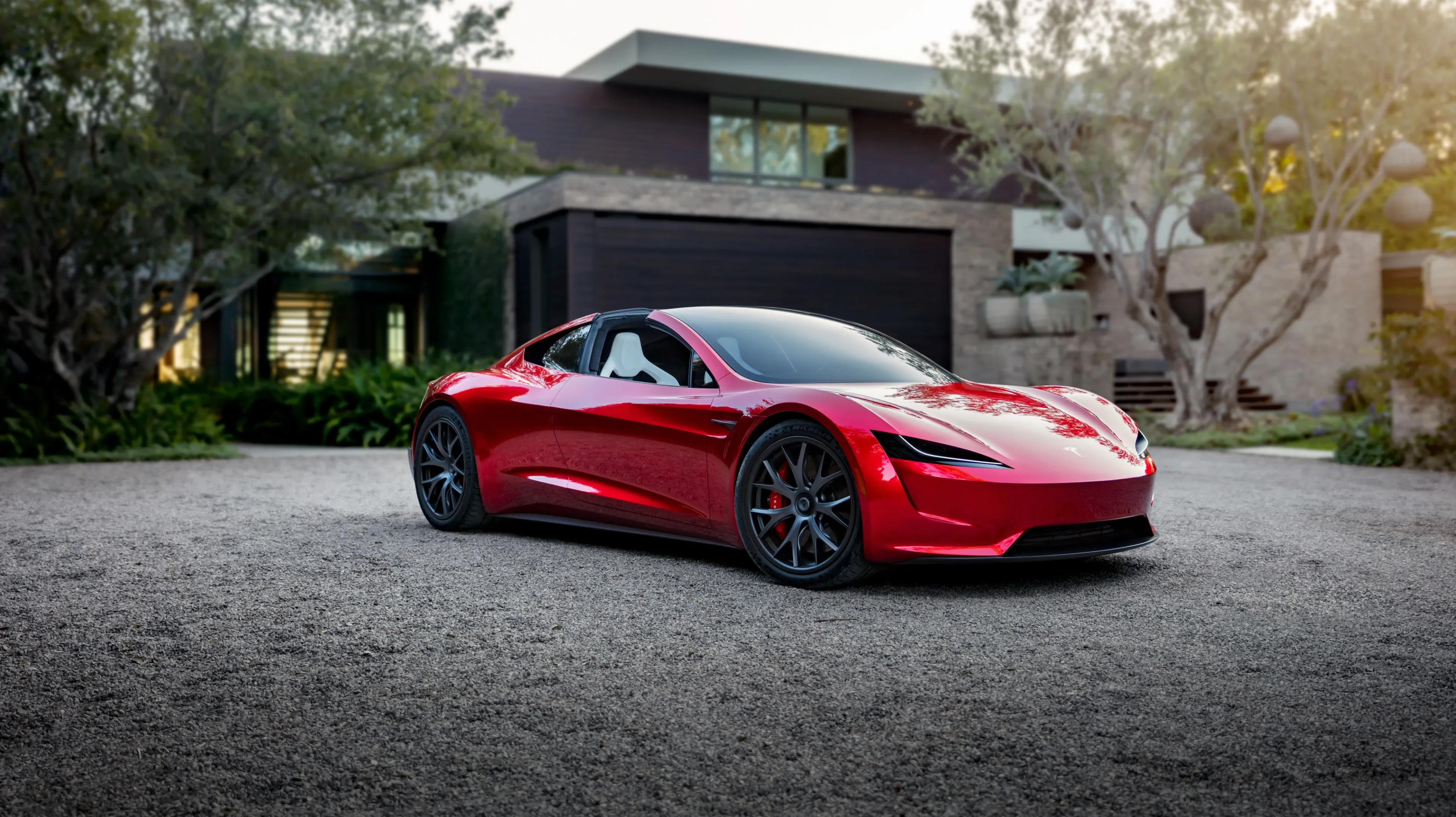
The next-generation Roadster can make short flights using engines developed in collaboration with SpaceX / Photo: X / Tesla
Tesla unveiled the Roadster sports car, capable of short flights using SpaceX engines and accelerating to 96.6 km/h in less than a second. Meta introduced Muse Spark Open, an open-source AI model for programming and AI agents. Read about these and other topics in our roundup of key events as of the morning of October 16.
Tesla Unveiled the "Flying" Roadster Amid a Decline in Electric Vehicle Sales
Tesla unveiled a new generation of its Roadster sports car in Texas, capable of short flights using jet engines developed in collaboration with SpaceX, according to Bloomberg. During the demonstration, the car drove up a ramp, performed a flip in the air, and landed, as well as jumped over several Tesla cars. It accelerates to 96.6 km/h in less than a second. Production of the Roadster is scheduled to begin in 2028, while the “flying” Rocket version will be available by invitation only and will not be permitted on public roads.
The agency notes that the presentation took place against the backdrop of Tesla’s sales decline for the second consecutive year and criticism of its aging model lineup. Analysts believe that the new Roadster could boost interest in the brand, but due to its high price and limited demand, it is unlikely to have a significant impact on the company’s revenue.
CoreWeave's credit risks have heightened investors' concerns about an AI bubble
The debt problems of U.S. AI infrastructure operator CoreWeave have worsened amid a sell-off of tech stocks, according to CNBC. The company has accumulated more than $51 billion in debt and liabilities for the construction of data centers. The yield on its bonds maturing in 2031 reached 15.8%, and the cost of credit default swaps (CDS) jumped above 1,140 basis points. A figure above 1,000 points typically indicates serious credit problems, the network notes. CoreWeave’s stock fell 15.5% on Wednesday but rebounded 5.9% on Thursday.
Investors are concerned that massive spending on AI infrastructure is not backed by sufficient cash flow. At the same time, CoreWeave’s contract portfolio exceeds $100 billion, with about two-thirds coming from major clients, including Microsoft and Meta. Analysts at Deutsche Bank warn of the risk of a chain reaction in the AI market, though they maintain their “buy” recommendation on CoreWeave shares.

Meta has made a new AI model available amid competition with China
Meta has unveiled Muse Spark Open, an open-source AI model designed for programming and operating AI agents, according to Bloomberg. Developers will be able to download and modify the model for free, though it is less capable than the more advanced Muse Wonder, which was unveiled earlier this week. Meta’s Director of Artificial Intelligence, Alexander Wang, stated that the company intends to keep its most powerful models proprietary for security and commercial reasons.
According to Van, the development of American open-source models is important for competing with China's Alibaba and DeepSeek. Meta hopes that the free model will attract developers to its future paid cloud services.
Anthropic has enlisted independent experts to verify the safety of its AI models
Anthropic announced a partnership with the nonprofit organizations METR and SecureBio to conduct an independent safety assessment of its AI models, according to CNBC. The company is also in talks with other organizations, including Hugging Face. The initiative follows a proposal by Anthropic CEO Dario Amodei to slow down AI development and allow external experts to verify compliance with safety standards. Accenture previously joined the program.
Anthropic has developed a three-tiered access system for independent auditors. Six METR employees have been granted access to the company’s computing resources, offices, and tools at a level nearly equivalent to that of its own specialists and will be able to publish the results of their audits. SecureBio was granted limited access to study the risks of using AI in the development of chemical and biological weapons.
Shares of BTS's owner jumped 10% thanks to the group's world tour
Shares of South Korea's Hybe, the company behind the K-pop group BTS, rose 10% on Friday amid optimistic forecasts for its quarterly earnings, according to CNBC. According to iM Securities, the company’s third-quarter revenue increased by 106% to 1.5 trillion won ($1.11 billion), operating profit reached 172.2 billion won, and concert revenue nearly tripled to 717 billion won. Meanwhile, the Kospi index rose 2.9%, the network notes.
This growth was driven by BTS’s world tour, which included 16 stadium concerts in North America and eight in Europe, as well as performances by Enhypen, Katseye, and Cortis. Total concert attendance may have reached a record 3 million people, with more than 70% of the audience coming from Western markets for the first time. Analysts expect record revenue from concerts, merchandising, and licensing, and the development of new groups should reduce Hybe’s dependence on BTS.
What's Happening in the Markets
— Japan's broad-based Topix index rose 1.8%, and the Nikkei 225 also rose 1.8%.
— Hong Kong's Hang Seng Index rose 1.2%, while mainland China's CSI 300 Index rose 0.8%.
— In South Korea, the Kospi rose 3.8% and the Kosdaq rose 5.6%.
— Australia's S&P/ASX 200 rose 1.1%.
— S&P 500 and Nasdaq 100 futures rose 0.2%, while Dow Jones Industrial Average futures rose 0.1%.
This article was AI-translated and verified by a human editor