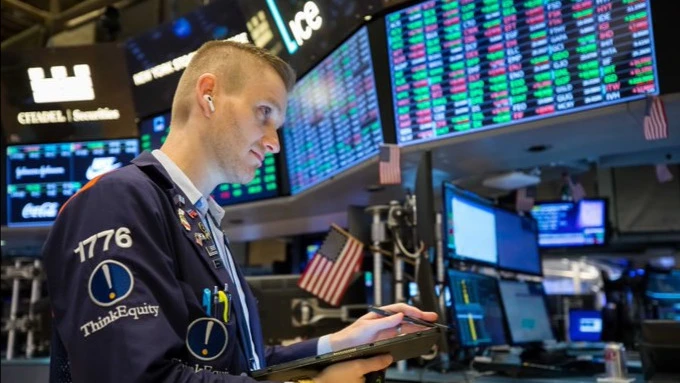
Two-year treasuries saw the strongest rise in yields since 2022 due to oil and the Fed
Brent crude oil rose to $120 per barrel

U.S. government bond yields rose due to high oil prices and shifting investor expectations on the Fed's interest rate change / Photo: x.com / USTreasury
Yields on two-year bonds of the U.S. Treasury Department jumped in trading on April 29 at the highest rate since 2022 for the day on which the U.S. Federal Reserve announces a decision on rates, Bloomberg reported. But the bond market was influenced not only by the revision of expectations on the Fed's policy - investors have practically abandoned the scenario of lowering rates and allow their increase in 2027 - but also by the rise in oil prices. In particular, the cost of June contracts for Brent exceeded $120 per barrel.
Details
The yield of two-year treasuries rose by 11 basis points to 3.95% at the moment, Bloomberg writes. The yield of 30-year bonds was approaching 5% - the last time they were at this level was in July 2025, the agency says.
Bonds with short maturities as the most sensitive to expectations about the Fed's monetary policy sold off the most strongly. But the bond market began to suffer losses even before the Fed's decision to keep the rate unchanged for the third time in a row - amid rising oil prices due to tensions in the Middle East, the agency writes. Investors do not see the prospects of the soon opening of the Strait of Hormuz - the most important sea route for global oil and gas supplies.
Traders have actually abandoned bets on the Fed interest rate cut in 2026 and have begun to lay in quotations the possibility of its increase in the first half of 2027, notes Bloomberg. The probability that the Fed rate will increase by April 2027 is now estimated at 50%. Immediately three members of the Federal Reserve Committee on Open Market Operations (FOMC) opposed the wording, which can be perceived as signals of a possible return of the regulator to reduce the rate in the future.
What the analysts are saying
The bond selloff means markets are mortgaging "much higher oil prices and a slightly lower bar for rate hikes," said JPMorgan Asset Management portfolio manager Priya Misra as quoted by Bloomberg.
The rise in treasury yields signifies the market's "recognition" that the Strait of Hormuz remaining closed will keep energy prices higher than previously expected, said Natixis North America 's head of U.S. rates strategy John Briggs.
"Interest rate traders have been predicting a more hawkish [Fed] policy all day as oil prices rise. But this divergence in voting shows that [Fed] governors are increasingly leaning toward what the market is seeing as well. Frankly, traders aren't taking these downside signals seriously right now, but that could change quickly if the U.S. and Iran strike a peace deal," Bloomberg macro strategist Sebastian Boyd wrote.
What's up with oil prices
Contracts for delivery of Brent crude oil with execution in June rose in price on April 29 by about 8%, exceeding $120 per barrel. The oil rally continues for the eighth day in a row - the longest such period in four years, notes the Financial Times. The reason was the protracted standoff between the U.S. and Iran over the Strait of Hormuz, through which about 20% of the world's oil and gas supplies passed before the war.
"What started as a geopolitical upheaval is now moving into a more protracted phase," the FT quoted Candriam 's head of strategy, Nadège Dufosse , as saying.
This article was AI-translated and verified by a human editor