Wall Street's most optimistic strategist has raised his forecast for the S&P 500. What are the risks?
A new cause for concern about the stock market seems rather paradoxical

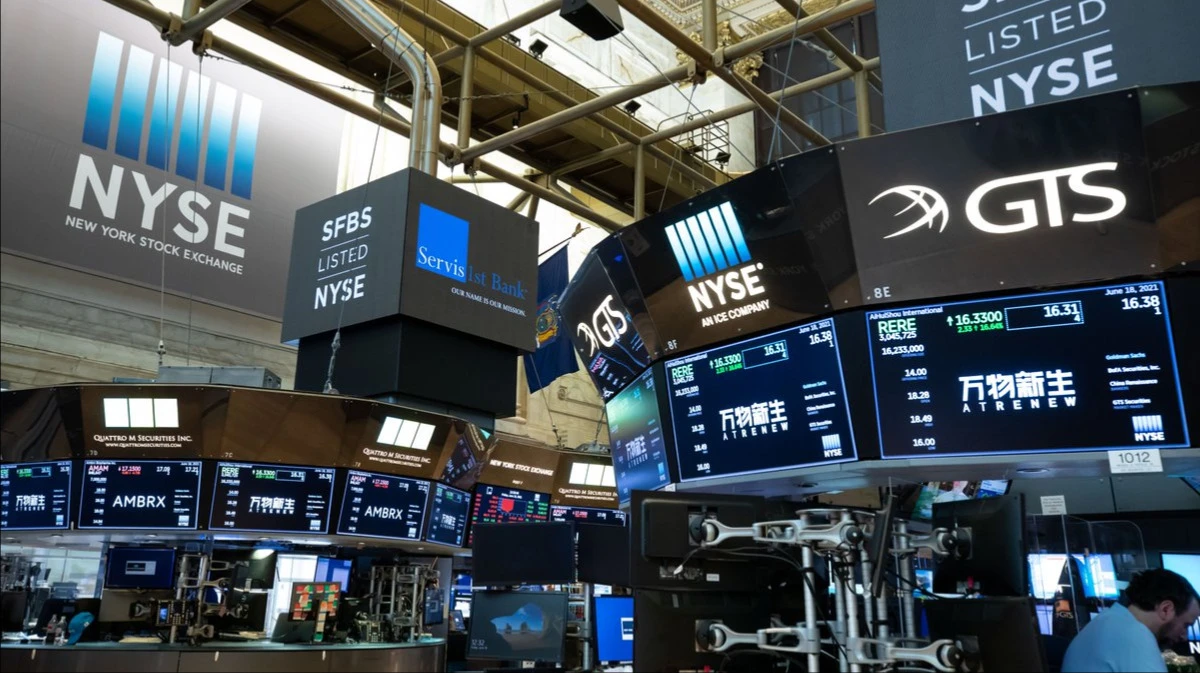
Ed Yardeni of Yardeni Research raised his target for the S&P 500 from 8,250 to 8,400 points / Photo: X / NYSE
Ed Yardeni, a strategist at Yardeni Research, has raised his forecast for the S&P 500 index to a level that exceeds even his previous target—which was already the highest on Wall Street. Yardeni pointed to “excellent corporate earnings momentum.” However, it is not certain that this performance can be replicated in the coming quarters: other analysts believe that earnings growth for S&P 500 companies is likely to slow.
Details
"Companies have, on the whole, significantly exceeded industry analysts' forecasts," said Ed Yardeni, president and chief investment strategist at Yardeni Research. He raised his target for the S&P 500 from 8,250 to 8,400 points, and now expects the aggregate earnings of the companies in the index to reach $375 per share this year, up from his previous forecast of $330, according to Bloomberg. Yardeni’s new target implies an 8.7% increase in the index from its August 11 closing level.
“We have never before seen consensus earnings forecasts for the current and subsequent years rise as rapidly as they have since mid-2025,” Yardeni wrote in a note cited by Bloomberg. “The result has been a rapid rise in the stock market, driven by earnings climbing to record highs.”
Yarden is one of Wall Street’s most optimistic strategists. He expects the positive momentum to continue in the long term. “We are maintaining our target of 10,000 points for the end of 2029, although we will likely raise it if the ‘roaring 2020s’ continue to unfold in our favor,” he added.
At the same time, Yardeni maintains his estimate that there is a 20% probability of a recession that would lead to a “bear” market. “We believe that any market decline—and even a crash—will present a buying opportunity and will not trigger a recession or a ‘bear’ market, similar to the tech bubble of 1999–2000 and the subsequent crash in tech stocks,” Yarden said.
Is there cause for concern?
This month, the S&P 500 returned to record highs, jumping 3.6%. A number of strategists attributed this rise to growing corporate earnings, according to Bloomberg. According to Bloomberg Intelligence, earnings per share for S&P 500 companies in the second quarter are expected to show a 31% increase. To date, more than 90% of the index’s companies have reported their results.
A new cause for concern about the stock market seems rather paradoxical, according to Bloomberg: corporate earnings growth has turned out to be too strong. As the current earnings season draws to a close, all signs point to the second quarter being one of the best three-month periods in recent memory, the agency notes.
The problem is this: such rapid growth is unlikely to continue. According to data from Bank of America strategists, the consensus forecast suggests that in the first quarter of 2027, earnings growth for S&P 500 companies will slow to less than 20%, and for the full year will be around 15%. While these rates appear high by historical standards, the market has often shown weaker performance when earnings growth began to slow from high levels, according to Bloomberg.
According to BofA, when earnings per share (EPS) growth exceeds the long-term trend but is slowing, the median return on the S&P 500 over the next 12 months is 6.7%, and the index rises in 72.3% of cases. By comparison, when earnings per share (EPS) growth is above the trend and accelerating, the median 12-month return reaches 14%, and the proportion of periods with gains is 83.3%.
However, there is very little historical data to compare with the current surge in earnings. BofA strategists led by Savita Subramanian expect growth to remain above 20% in the third and fourth quarters, according to Bloomberg. If the forecast holds true, growth will exceed that level for four consecutive quarters. Such streaks have been extremely rare—occurring only 10 times since 1936. According to the strategists, the most recent instances of this occurred during recovery periods following declines in earnings per share, particularly after the COVID-19 pandemic and the global financial crisis.
And growth rates aren’t the only standout metric of the current earnings season. According to Citadel Securities, earnings for S&P 500 companies are also on track to exceed analysts’ forecasts by one of the widest margins in history. Scott Rubner, head of equity and equity derivatives strategy at Citadel, noted that companies have also delivered the sharpest increase in earnings forecasts in at least 26 years. “Importantly, this isn’t just about AI,” Rubner wrote in a note cited by Bloomberg. “The macroeconomic picture remains challenging, but the signal from corporate America is much simpler: earnings are far better than expected.”
Overall, by the close of trading on August 7, 85.6% of companies had exceeded Wall Street’s earnings-per-share expectations—the highest percentage since 2021, according to data from Bloomberg Intelligence. At the same time, only 10.6% of companies failed to meet expectations—the lowest figure in three decades.
Have corporate results already peaked?
Corporate earnings in the second quarter were “outstanding,” noted Ben Inker, co-head of asset allocation at GMO. However, he said there is a significant difference between the artificial intelligence segment and the rest of the market. Inker believes that the strong results of a significant portion of companies outside the AI sector can be attributed to a “cyclical upswing.” “If this upswing continues, it will most likely push up inflation and interest rates. If it runs out of steam, companies will likely be unable to meet their elevated forecasts,” Bloomberg quotes the analyst as saying.
A strong earnings season has prompted other Wall Street strategists to raise their S&P 500 targets. On August 10, JPMorgan Chase strategists led by Dubravko Lakos-Bujas raised their forecast for the broad-market index from 7,600 to 8,000 points, according to Bloomberg.
However, the bull market in stocks, which has been going on for nearly four years, may be entering its final phase, research firm Ned Davis Research warned yesterday. It claims to have identified a potentially alarming signal for investors: too few stocks are currently participating in the rally to sustain the growth of the overall market.
This article was AI-translated and verified by a human editor