Warren Buffett's School: How Ekman, Spier, and Abel Adapted Their Mentor's Philosophy
Warren Buffett's strategy has long extended beyond his fund, and today Bill Eckman, Guy Spier, Monish Pabrai, and Greg Abel are each continuing the tradition of value investing in their own way.
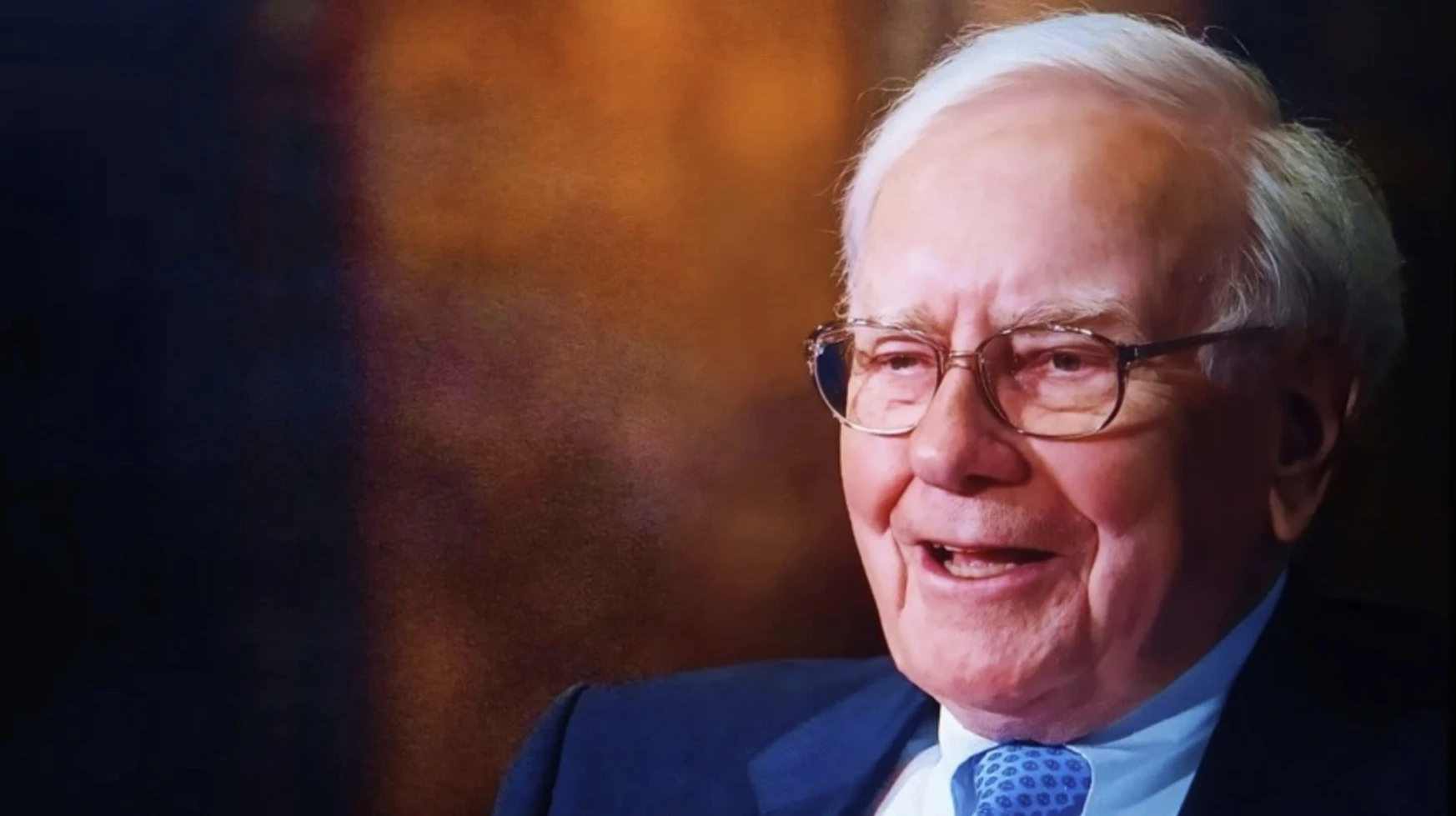
Warren Buffett is 96. Photo: Shutterstock.com
On August 30, Warren Buffett turns 96. Over the course of his career, he has achieved what few investors manage to do: his name has become almost synonymous with an entire investment approach. When we say “value investing,” we think of Buffett.
Although he did not invent the approach himself. The foundations of value investing were laid by Benjamin Graham and David Dodd: In 1934, they published *Security Analysis* and proposed valuing stocks as shares in real companies: looking for undervalued companies with low price-to-earnings ratios, a large reserve of liquid assets, and little debt. Buffett later compared such investments to looking for “cigar butts”: even a weak business can turn out to be profitable if you buy it cheap enough.
Buffett refined Graham's approach: he focused not simply on cheap stocks, but on high-quality companies that could be held for decades—and became the most famous champion of value investing for several generations.
That said, Buffett’s legacy extends beyond his approach and investment decisions. Equally important is his influence on investors who have developed Buffett’s method in their own ways. Bill Eckman, Monish Pabrai, Guy Spier, Ted Weschler, and Greg Abel call themselves Buffett’s disciples—but they don’t always agree on what exactly to learn from him or how to do so. For some, the key is a long-term horizon and the selection of high-quality companies; for others, it’s fund architecture and decision-making discipline.
Correspondence Students
For decades, Warren Buffett has essentially taught an open course on investing. In his letters to Berkshire Hathaway shareholders, he described in detail how he makes decisions: he explained deals, analyzed his own mistakes, and wrote about how he allocates capital. Investors had the opportunity to observe not only Buffett’s individual investments, but also how his approach evolved and how he made decisions over the course of decades
For Pershing Square founder Bill Ackman, this publicly available archive became one of his key sources of investment knowledge. In 2024, he named Buffett as his greatest teacher: “I started reading Berkshire Hathaway’s annual reports. Later, I came across the Buffett Partnership letters—a fascinating read: they date back to the mid-1950s, when Buffett was just starting his business and writing to his partners.”
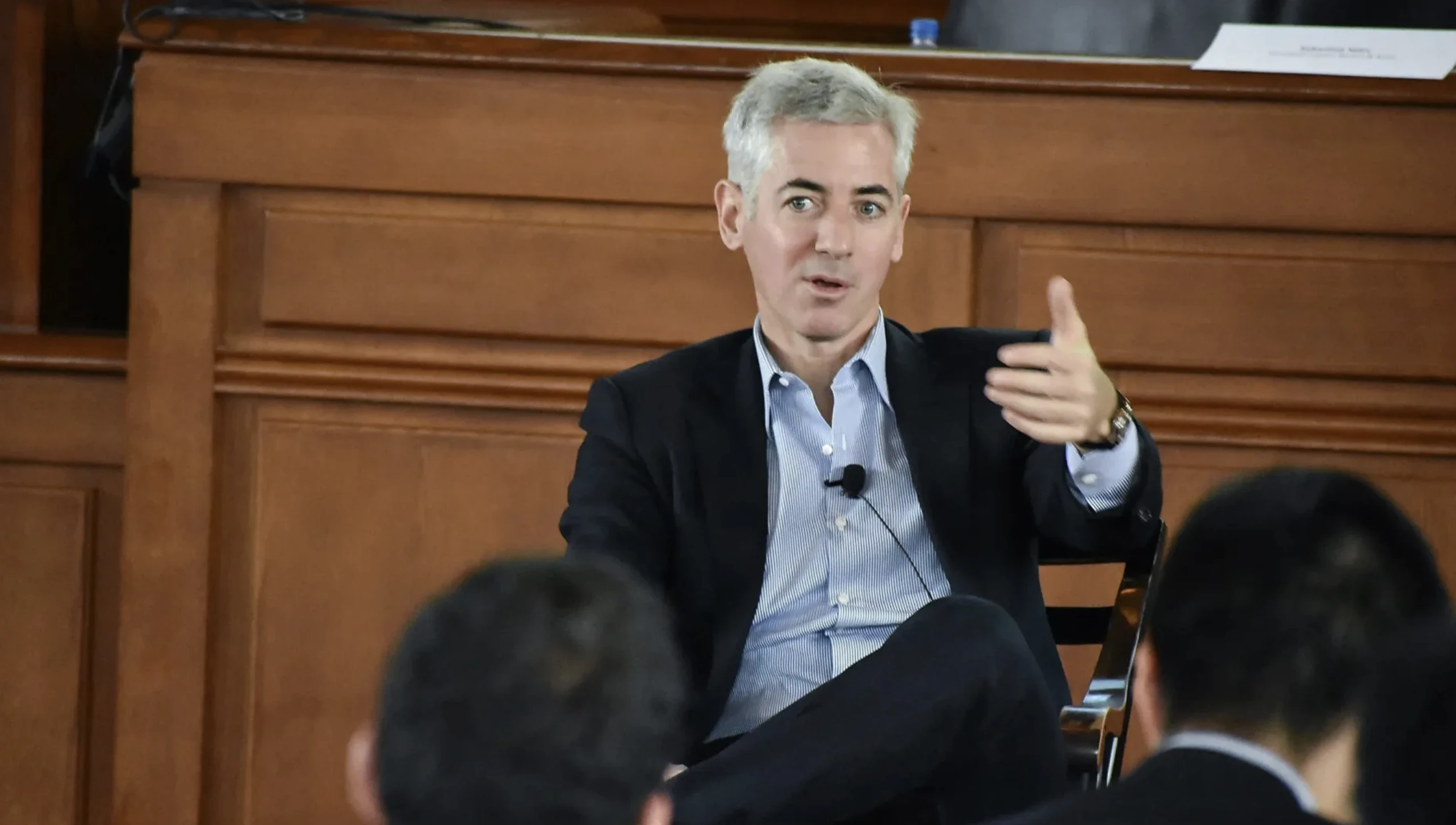
Bill Eckman quite rightly called Buffett his greatest teacher. Photo: hls.harvard.edu / Tracy Tolf
From Buffett’s approach, Ekman adopted, above all, a long-term investment horizon and a focus on business quality. Pershing Square seeks straightforward and predictable companies with stable cash flow and conservative balance sheets, and prefers to make large bets on a small number of such businesses. In addition, Ekman stated that he wants to create a “modern-day Berkshire Hathaway.” In 2025, Pershing Square agreed to invest $900 million in Howard Hughes Holdings—the owner of major real estate development projects in the U.S. Ekman expects to eventually transform the developer into a diversified holding company that will acquire new businesses and expand into the insurance sector.
That said, Ekman differs significantly from Buffett in his activist approach. Buffett typically does not publicly interfere in the operations of the companies whose shares he buys. Ekman, on the other hand, often attempts to change their strategy or leadership. One of the most famous examples is Canadian Pacific Railway: in 2011–2012, he purchased a large stake, secured a change in the majority of the board of directors and the CEO’s departure, and then supported the appointment of a new CEO.
Ekman shares Buffett’s lessons with other investors. Philanthropist Whitney Tilson recalled that, back in college, Ekman advised him to “read everything Warren Buffett has ever written.” Tilson followed the advice, began studying Buffett’s writings, and later started attending Berkshire Hathaway’s annual meetings regularly.
Lunch Students
But for some investors, reading Berkshire’s letters and reports and listening to Buffett at the annual meetings wasn’t enough—they wanted to speak with him in person. The Power of One Charity Lunch auction offered this opportunity: the winner received the right to have lunch with Buffett, and the proceeds were donated to the Glide Foundation, which helps people facing poverty, homelessness, and addiction.
In 2007, Monish Pabrai and Guy Spier offered $650,100 for this meeting—a record amount at the time. The lunch took place a year later, on June 25, 2008, at the Smith & Wollensky steakhouse in New York City and lasted about three and a half hours.
By the time of their meeting, both Pabray and Spier had been following Buffett for many years and studying his approach. For nearly a decade, Pabrai had been building his investment business modeled after the Buffett Partnership, which Buffett managed from 1956 to 1969. Spier had been attending Berkshire’s annual meetings since 1995. What they discussed with Buffett was not disclosed, but after that meeting, the investors said the lunch was worth every penny, and Pabrai added that they would have been willing to pay even more.
Back in 1999, Pabrai wrote to Buffett and offered to work for him for free in order to learn about value investing. Buffett declined, and a few weeks later, Pabrai launched his own fund. He saw the Berkshire Partnership model as an unusual way to build capital. For example, at Pabrai Investment Funds, he implemented the same compensation structure: no fixed management fee, and the manager received 25% of the profits only after the investor’s return exceeded 6% per year. After incurring losses, the fund first had to recover its previous peak capital, and only then could the manager again receive a performance fee. Warren Buffett’s right-hand man, Charlie Munger, the longtime vice chairman of Berkshire Hathaway, acknowledged that Pabrai was one of the few who had successfully replicated Buffett’s model.
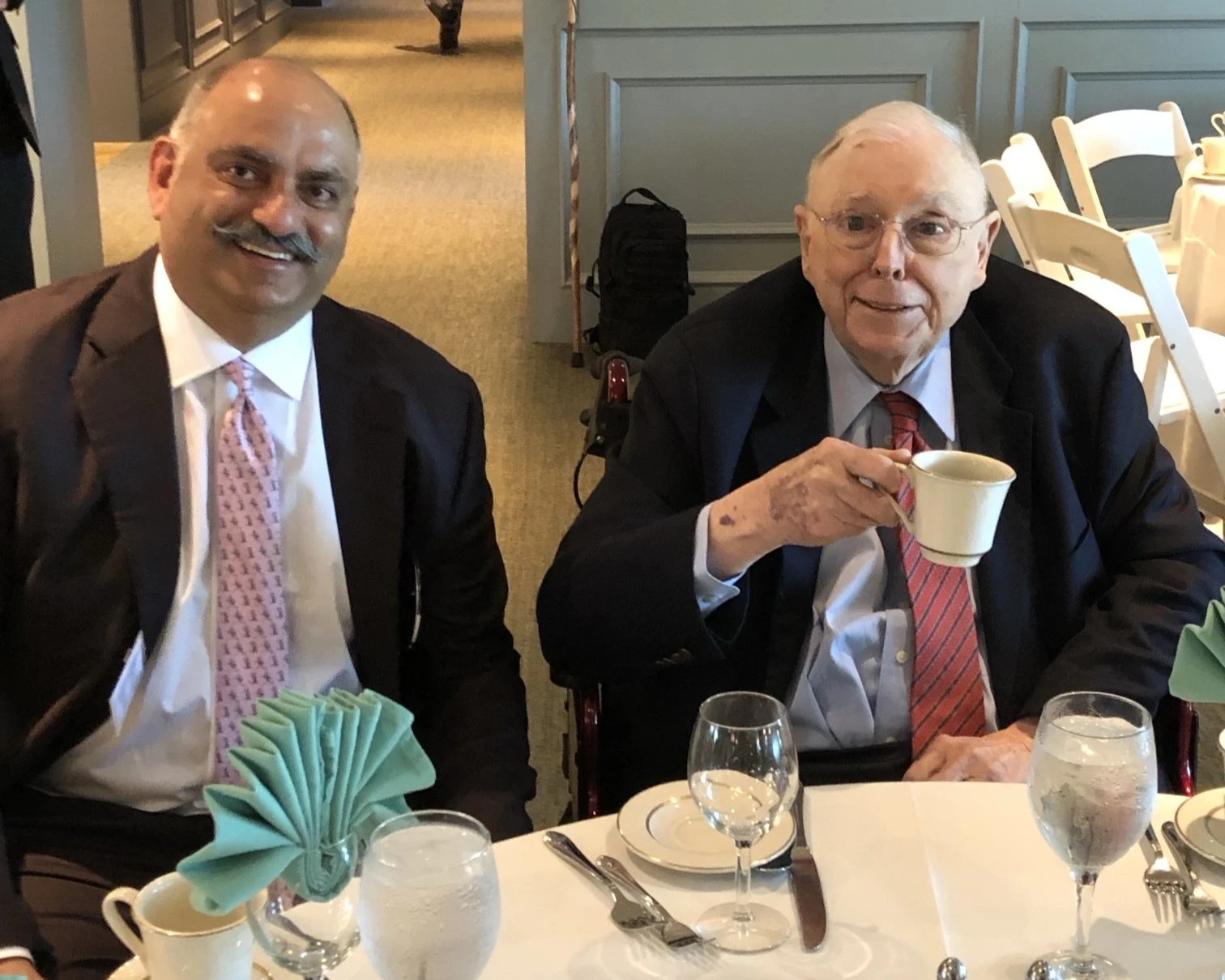
Charlie Munger and Mohnish Pabrai. Photo: Mohnish Pabrai / X
Guy Spier also modeled his Aquamarine Fund after Buffett’s approach. Since 1995, he has regularly attended Berkshire’s annual meetings. Spear said he adopted Buffett’s principle of “internal” and “external” evaluation: an investor should judge their decisions based on results and their own ideas, rather than on status, the opinions of others, or market reactions. “Buffett taught us to act with the right motivation: because it’s the right thing to do, not because of what people will think,” he said.
Another lesson had to do with one’s environment: over time, people adopt the behavior of those with whom they spend the most time. After meeting Buffett, Spier moved with his family from New York to Zurich to distance himself from the competition, the pressure of information overload, and the culture of Wall Street. “As Buffett taught me, it’s not enough to rely on your own intellect to filter out the noise; you need the right processes and the right environment,” he said.
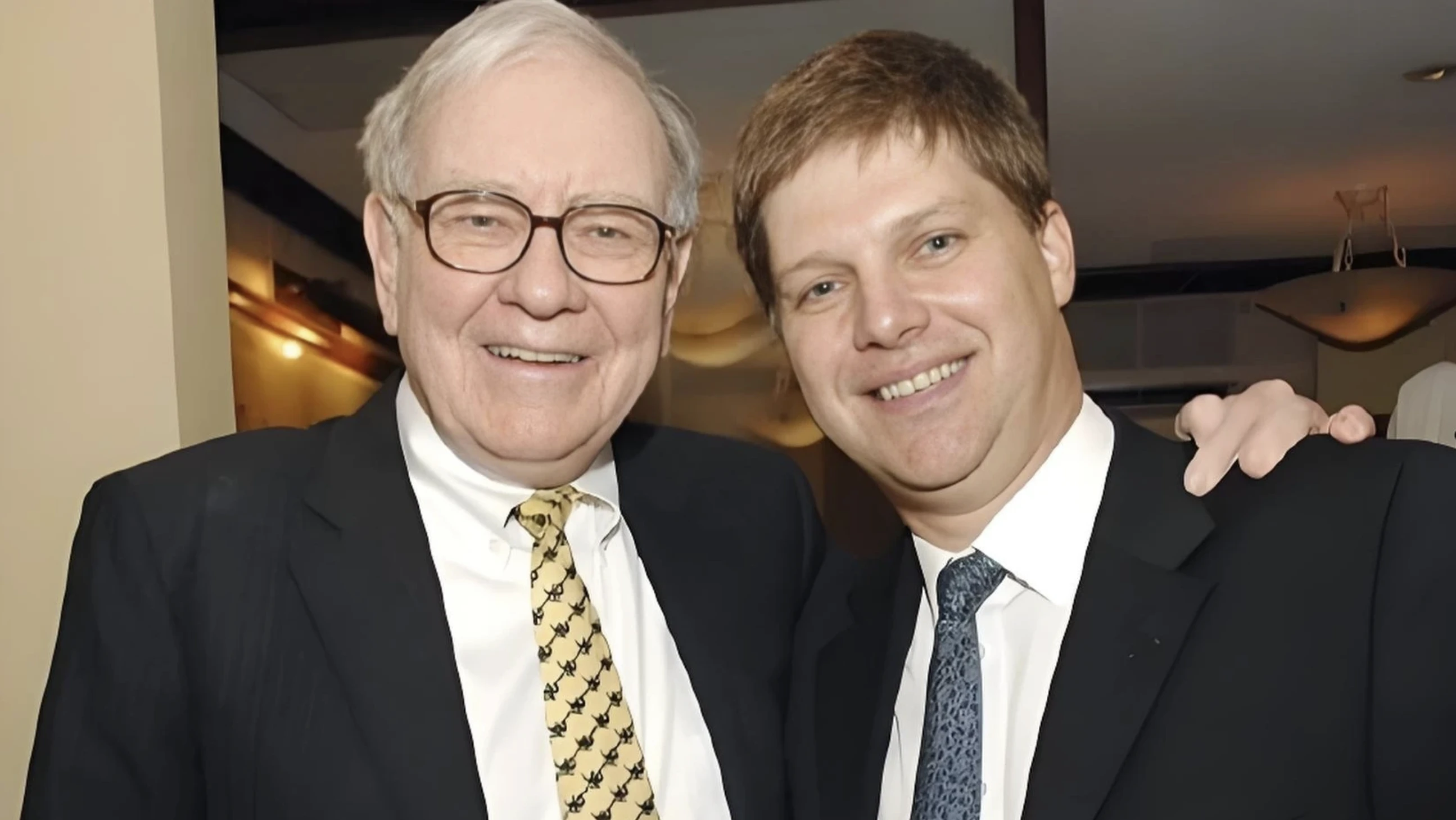
Warren Buffett and Guy Spier. Photo: Threads / Guy Spier
In Zurich, Spier began building his “own Omaha” following Buffett’s example: he chose a small office, cut back on casual meetings and the flow of news, began devoting more time to reading financial reports, and used checklists to avoid repeating past mistakes. In 2014, Spier published the book *The Education of a Value Investor: My Transformative Quest for Wealth, Wisdom, and Enlightenment,” in which he described how he tried to break away from the aggressive and toxic culture of Wall Street—and turn investing into a more disciplined and ethically meaningful pursuit.
Students at Berkshire
Investor Ted Weschler also met with Buffett at a charity dinner—twice, in fact: in 2010 and 2011. He paid a total of $5.25 million for both meetings.
By that time, Veshler had already established himself as a fund manager: in 1999, he founded Peninsula Capital, and in its first year, Peninsula delivereda total return of 1,236% to investors. In his work, Veshler adhered to one of Buffett’s principles: “One of my key tasks at Peninsula was to resist the temptation to sell; inaction runs counter to the idea of serious work, but in investing, it can be a very effective strategy.”
In 2011, Veshler went to lunch with Buffett, bringing three pages of questions—about investing, family, philanthropy, and life. At the end of the meeting, Buffett made him an unexpected offer—to become an investment manager at Berkshire. Weschler accepted, returned the money to outside investors, and closed Peninsula Capital.
Veshler believed that what he had in common with Buffett, above all, was intellectual curiosity. Weschler himself reads not only the financial press but also specialized industry publications—ranging from articles on the furniture business to reports on uranium—and tries to find connections that the market has not yet noticed. Weschler follows Buffett’s principle: don’t try to predict short-term market movements, but rather accumulate knowledge and wait for the moment when a truly compelling investment idea emerges.
While Veshler joined Berkshire as an established investor, Greg Abel built his career within the conglomerate itself. He joined Berkshire after the company gained control of MidAmerican Energy—which Abel headed—at the turn of the century.
Abel learned from Buffett as he took on more and more responsibility within Berkshire. He managed capital-intensive energy businesses, oversaw infrastructure projects with a time horizon spanning decades, participated in acquisitions, and eventually became involved in the capital allocation for the entire conglomerate. In 2018, he became vice chairman of Berkshire and began overseeing all of the holding company’s non-insurance operations—from energy and railroads to industrial, service, and consumer companies. In 2023, Buffett said that Abel “understands capital allocation just as well as I do,” and a year later stated that he would entrust Abel with decisions on where to allocate Berkshire’s capital.
By 2021, Abel was already being publicly referred to as Buffett’s successor. He himself emphasized that, under new leadership, Berkshire must uphold the principles by which the company had allocated capital for decades. Specifically, it will continue to treat the purchase of shares as the purchase of a stake in a business—regardless of whether it acquires 1% of the company or the entire 100%. Abel cited Berkshire’s culture—financial stability, managerial autonomy, and minimal bureaucracy—as another key part of Buffett’s legacy.
In 2025, Buffett announced that he would hand over leadership of the company to Abel. In his first letter to shareholders, Abel called Buffett “perhaps the greatest investor of all time” and promised to uphold the principles he had established. On January 1, 2026, Greg Abel became president and CEO of Berkshire Hathaway. Warren Buffett remained chairman of the board of directors.
This article was AI-translated and verified by a human editor