Tim Cook is stepping down as Apple's CEO. What were his major successes and failures over the past 15 years?

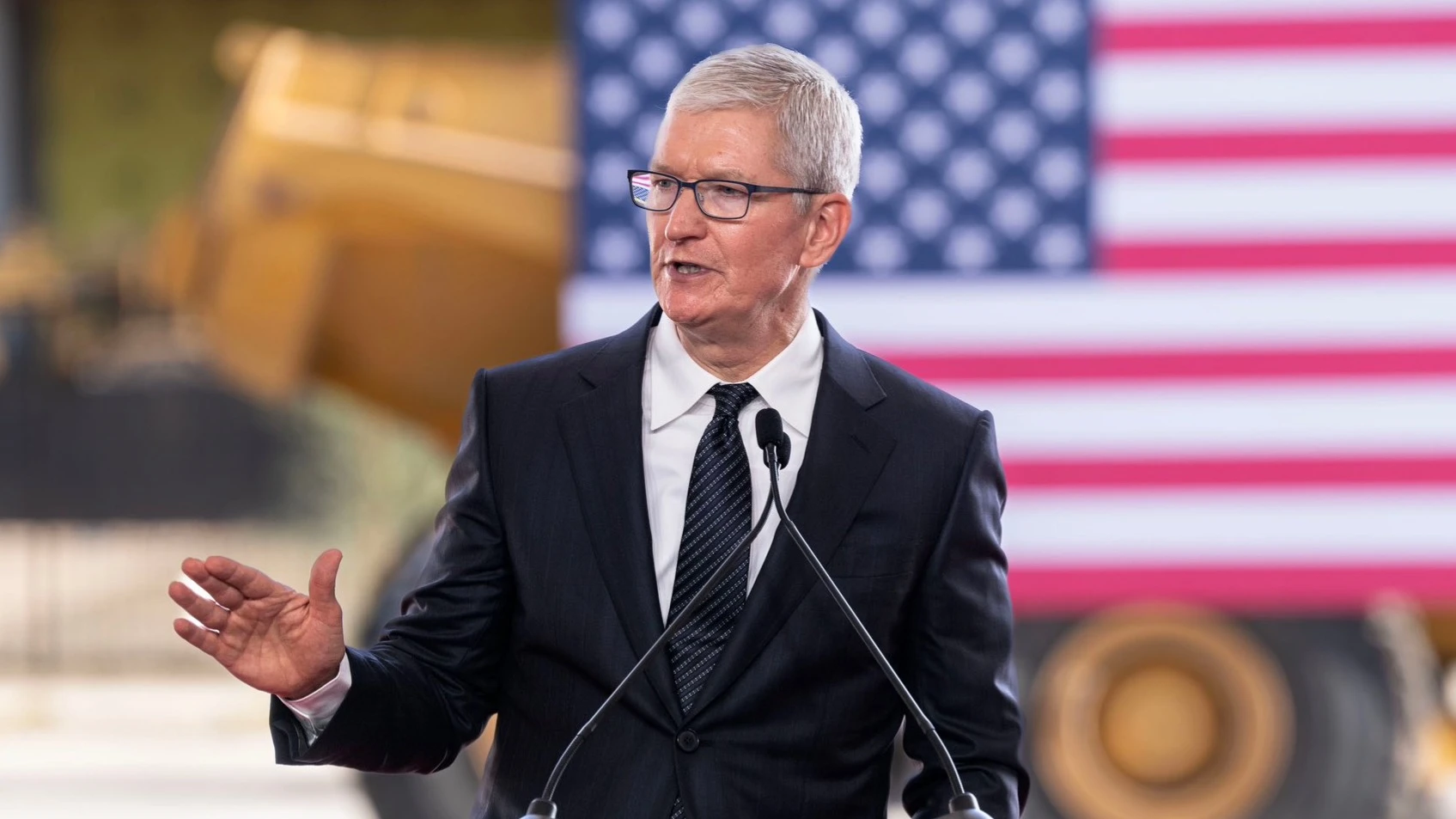
Over the past 15 years under Tim Cook's leadership, Apple has increased its market capitalization more than 13-fold / Photo: X / tim_cook
On August 31, Tim Cook will step down as Apple’s CEO, a position he has held since 2011. Shortly before he took office, the company became the world’s most valuable by market capitalization, surpassing Exxon Mobil. Under Cook’s leadership, Apple’s market capitalization has grown more than 13-fold, to $4.7 trillion. Apple is now second only to Nvidia.
Cook isn’t leaving the company entirely: he will become chairman of the board of directors, so his influence on strategy may continue for a long time to come, according to Yahoo Finance. Over the 15 years he has been at the helm, Apple’s business has expanded significantly through services and subscriptions, though the company has been criticized for lacking a new product comparable in scale to the iPhone and for lagging behind in the field of AI.
Cook's Victories
One of the outgoing CEO’s major achievements was the expansion of the business centered around the iPhone. The first iPhone was released back in 2007, under Steve Jobs, but it was Cook who succeeded in significantly expanding the number of models and price points by creating an extremely complex supply chain, explains Vamsi Mohan, an analyst at BofA Global Research. Models with larger screens, more powerful processors, and better cameras—targeted at buyers of premium devices—have been introduced. And on September 9, the company is expected to unveil its first foldable device.
Cook has also created a broad ecosystem of iPhone-related products, including the Apple Watch and AirPods.
“Apple would not have reached its current scale and size if Cook had not been able to expand the business around the iPhone through services and thereby create a new source of revenue,” said David Yoffie, a professor at Harvard Business School and former member of Intel’s board of directors, in an interview with Yahoo Finance. In his view, the iPhone has consequently become the most successful product in world history.
In 2025, smartphones accounted for $209.5 billion of the company’s total revenue of $416.1 billion. Revenue from services built around the iPhone—such as music, health tracking, and streaming—reached $109.1 billion, making this segment Apple’s second-largest business, according to Yahoo Finance.
Part of the iPhone's success is due to its large-scale expansion into the Chinese market under Cook. Last year, sales there totaled $64.3 billion.
Under Cook’s leadership, Apple has made data privacy and security a key element of its strategy, according to Yahoo Finance. The company has clashed with authorities over demands to provide ways to bypass the security measures on its devices. For example, in 2015, the FBI insisted that Apple create software to unlock a smartphone used by one of the perpetrators of a terrorist attack in California. Ultimately, access was gained with the help of a third party.
“The concept of privacy and security influences all of the company’s product-related decisions (...) Consumers care about this, and it’s a factor that influences their purchasing decisions,” notes Gene Munster, managing partner at Deepwater Asset Management.
“By any traditional measure, Tim has delivered outstanding results,” Yoffie says. “He took over the company from a legendary CEO—which in itself is usually a daunting prospect—and grew its market capitalization from roughly $350 billion to $4–5 trillion. This ranks him among the world’s most successful executives in terms of creating shareholder value over the past 15 years.”
What kind of criticism has the company faced?
The main criticism leveled at Cook is that, during his tenure, Apple failed to create an “iPhone successor”—a product capable of replacing the iPhone as the company’s primary growth driver, according to Yahoo Finance. The point, according to Mohan, is that “the iPhone simply overshadows everything else thanks to its scale and success.”
The Vision Pro headset, one of Apple’s first new product categories in many years, failed to live up to market expectations. However, the company is using some of the technologies developed for the headset in its upcoming smart glasses.
Another issue has been Apple’s lag in the field of generative AI. The company has faced criticism for its slow pace of adopting new technologies and has postponed the launch of an updated version of Siri, which it had unveiled back in 2024. At the same time, by opting out of the costly race to spend on AI chips and data centers, Apple has remained insulated from the turmoil affecting the stocks of hyperscalers and other AI companies.
This article was AI-translated and verified by a human editor