"We're ripe for a correction": Nasdaq Plummets 5%, Fear Index Soars — Online





Panic has gripped the stock market. The massive sell-off of AI stocks has spread to other sectors. The Nasdaq Composite Index plummeted more than 5%, and the S&P 500 fell more than 3%. Oninvest will be monitoring trading in this live feed.
19:53 CET: What about institutional investors? They’ve “frozen,” writes Goldman Sachs partner John Flad in a note cited by Seeking Alpha.
Institutional investors, who focus exclusively on buying and holding stocks for the long term, have significantly reduced their exposure ahead of the U.S. election and continue to stay out of the market, Flad notes. At the same time, hedge funds, which employ more flexible and aggressive strategies, were actively selling off shares of the largest cloud and technology companies—Microsoft, Amazon, Alphabet, and Meta—on Thursday, shares they had purchased just the day before.
7:45 p.m. CET: Investors should not try to catch falling tech stocks; instead, they should seek refuge in safe-haven assets, says David Bahnsen, chief investment officer at the Bahnsen Group asset management firm.
“Rather than trying to predict when this tech stock sell-off will end, we’d prefer to avoid it altogether and instead focus on more defensive market segments, such as consumer staples and energy companies,” he told Bloomberg. “These sectors may be less attractive, but they have stable cash flows and include companies with a long history of dividend growth.”
7:30 p.m. CET: The sell-off in tech stocks is creating a challenging situation for one of the most anticipated initial public offerings in history, the WSJ notes. According to traders on the Kalshi prediction platform, the probability that Anthropic will be able to hold an IPO this year has fallen below 60%. Just before the U.S. midterm elections, that probability was estimated at nearly 90%. Nevertheless, market participants remain confident that the IPO will take place in the coming months.
Anthropic has not officially announced a date for a potential IPO. Bloomberg reported that it could take place before Thanksgiving in the U.S., which falls on November 26 this year.
Earlier today, we published an article summarizing a recent post by Michael Burry, in which the investor explained why he does not intend to buy Anthropic stock.

19:16 CET: The sell-off in AI company stocks is far from over, strategists at Macro Research Board warned. “The correction in AI-related stocks will continue for much longer,” according to their latest note, as cited by CNBC.
Strategists recommend that investors diversify their portfolios by reducing their exposure to technology stocks.
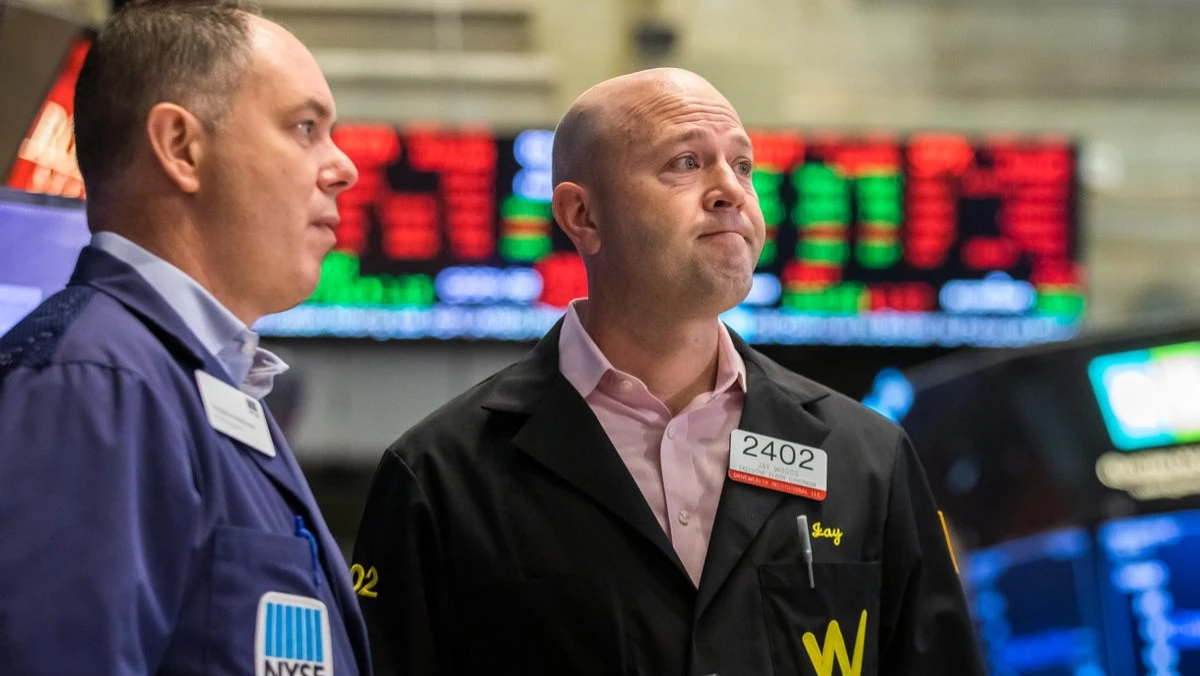
19:10 CET: No one knows what will happen next—whether this sell-off will intensify before the situation improves, Michael O'Rourke, chief market strategist at Jones Trading, told MarketWatch. According to him, investors are waiting for clarity on the Democrats’ political agenda before relying on earnings forecasts for S&P 500 companies. “You can no longer be certain about these earnings estimates—most likely, the companies themselves don’t see any prospects right now,” O’Rourke said.
"Almost all the trades that were working yesterday aren't working today," Steve Sosnik, a strategist at Interactive Brokers, told the publication. "We've been ripe for a real correction for quite some time," he added.
“Unlike yesterday, we’re now seeing that the sell-off in the tech sector, due to its scale, is beginning to spill over into the rest of the market,” said Keith Lerner, chief investment officer at Truist Wealth, in an interview with CNBC. “The spring is being compressed more and more.”
7:00 p.m. CET: There are three hours left until the market closes. Here's the current situation:
All major U.S. market indices are falling: the Nasdaq Composite is down 5.2%, the S&P 500 is down 3.4%, and the Dow Jones is down 2.6%. Nvidia shares are down nearly 9%, Qualcomm shares are down 11%, Intel shares are down 8%, and Tesla shares are down 12%. Shares of cloud computing companies CoreWeave and Nebius plummeted 13% and 17%, respectively.
If this trend continues through the end of the session, Thursday could become the worst day in history for the Nasdaq Composite: according to Dow Jones Market Data, the index’s market capitalization has fallen by $2.1 trillion today. The market capitalization of the S&P 500 also fell by the same amount, but for that index, this is the worst performance since April 2025.
The Philadelphia Stock Exchange Semiconductor Index (SOX) plummeted 10.5%.
Bitcoin has fallen by more than 5% and is trading below $76,000.
The VIX "fear index" surged by 55%.
6:30 p.m. CET: “A bloody AI bloodbath”—that’s how Barron’s describes today’s trading. But it’s not just AI stocks that are falling—all sectors of the S&P 500 are in the red. According to Dow Jones Market Data, the U.S. stock market’s market capitalization could shrink by $1.8 trillion today—the largest drop since April 2025.
6:20 p.m. CET: Short seller Michael Burry, known as the real-life inspiration for the character in *The Big Short*, has just reported several trades on his blog, Cassandra Unchained:
He reduced his position in put options on the VanEck Semiconductor ETF—which includes shares of the world’s leading semiconductor companies—by 25%. Put options grant the right to sell an asset at a predetermined price and are used as a hedge against a decline in price.
Burry writes that he intends to hold onto the remaining put options on this fund, as well as his existing put options on shares of Caterpillar, Palantir, Oracle, the Invesco QQQ Trust exchange-traded fund—which tracks the Nasdaq 100 Index—and “others.”
He increased his stake in MercadoLibre, the “Latin American Amazon.” The company had disappointed analysts with its third-quarter earnings report the day before, but Burry disagrees with them. “Every time I look into this company, I’m surprised by what all the other analysts see. Virtually everything MercadoLibre does seems logical to me and doesn’t raise any concerns,” he wrote.

18:05 CET: The combined market capitalization of the “Magnificent Seven” stocks fell by $1.13 trillion today. If this trend continues until the market closes, it will be the worst day for the group in recorded history, according to the WSJ.
Tesla led the decline in the Mag7, with its stock falling by more than 10%.
17:56 CET: The CBOE Volatility Index (VIX), often referred to as “Wall Street’s fear gauge,” was up 48% at one point—the sharpest rise since April 4 of last year, when investors sold off stocks en masse in response to Trump’s tariffs, the WSJ notes.
17:27 CET: The cost of protection against a default on SpaceX’s debt rose to a new high amid a sell-off of the company’s shares. According to ICE Data Services, the cost of five-year credit default swaps (CDS) on SpaceX debt rose by 14.6 basis points on Thursday to 284.3 basis points per annum—a new record, Bloomberg reports.
Even before the election, market participants warned that a decisive victory for the Democrats could give the party greater leverage over Musk’s activities and hinder the anticipated merger of SpaceX and Tesla, both of which he leads.
SpaceX’s debt metrics are under additional pressure from its borrowing program for AI projects. In October, the company announced that it had signed a financing agreement with Apollo Global Management for approximately $40 billion to purchase chips. According to Bloomberg sources, banks are already in talks to sell portions of this financing.

17:18 CET: A sell-off is also taking place in the cryptocurrency market. The price of Bitcoin has fallen by more than 5% and dropped below $76,000, erasing Wednesday’s sharp rally.
The Democrats’ victory in the congressional elections raises questions about the future of the crypto industry—including the fate of the Clarity Act, which the crypto market has been awaiting for over a year, according to Yahoo Finance. The bill aims to expand opportunities for crypto companies in the U.S. market and is supported by Donald Trump, but has faced resistance from lawmakers.
Stifel strategist Brian Gardner believes it is unlikely that the Clarity Act will be passed by the end of the year. “With Congress in the final stretch of its term, this issue has already been taken off the agenda,” Gardner said. He also assessed the chances of reaching a compromise between Republicans and Democrats in the next Congress as “pretty low.” Gardner also noted that he expects Senator Elizabeth Warren, who is expected to chair the Senate Banking Committee, to launch investigations into cryptocurrency companies.
July 17, CET: Here's what Wall Street analysts are saying about the AI stock sell-off:
The correction on the Nasdaq will spread to other leading stock indices, according to Steve Sosnik, chief strategist at Interactive Brokers. “There’s no doubt that the market rose too much and too quickly yesterday,” MarketWatch quotes him as saying. “Fear of missing out (FOMO) played a significant role in this rally. And today, the market is simply in a really bad spot.”
"The capital outflow from chipmakers' stocks reflects growing concerns about the pace and funding of AI spending due to the risk of increased regulation in the sector following the Democrats' victory," Bloomberg quotes Chris Murphy, an analyst at Susquehanna International Group, as saying.
“There is a possibility that the additional support for AI development provided by the Trump administration over the past two years may now wane,” said Ipek Ozkardeski, a senior analyst at Swissquote Bank. The current administration has largely ignored a number of issues related to investment in this sector, according to the analyst’s comments cited by Reuters.
Bob Edwards, CEO and Chief Investment Officer of Edwards Asset Management, noted that the market is seeing a shift in capital toward value stocks and dividend-paying companies. “The focus on AI isn’t going anywhere, but it remains associated with high volatility, and investors shouldn’t lose sight of some of the less exciting segments of the market,” he told Bloomberg.
“Continue to invest in a diversified stock portfolio,” Ulrike Hoffmann-Burkhardi of UBS Global Wealth Management advised Bloomberg. “Strong corporate earnings, steady economic growth, and high demand for AI infrastructure continue to support our positive outlook on the market.”
4:55 p.m. CET: The sell-off in the stock market is gaining momentum. The Nasdaq Composite Index , which has a high proportion of technology companies, is down 5.3%. According to Dow Jones Market Data, it has fallen more than 10% from its record closing high reached on October 6, which technically constitutes a correction, notes CNBC.
The S&P 500 broad-market index is down 3.2%, and the Dow Jones Industrial Average is down 2.1%. Shares of the largest-cap companies, which have a significant impact on the S&P 500’s performance, are mostly in the red. The Roundhill Magnificent Seven ETF, whose portfolio includes shares of the “Magnificent Seven,” fell by more than 5%. Tesla was hit the hardest, with its stock price plummeting nearly 11%. Apple suffered the smallest loss—about 0.6%.
16:49 CET: Thursday could be the worst day since June for the Philadelphia Stock Exchange Semiconductor Index (SOX), according to Bloomberg. The index has already lost more than 9%.
Among individual stocks, Nvidia shares took a hit: at one point, they were down nearly 8%, marking their worst intraday performance since April 2025. Shares of Advanced Micro Devices fell by more than 15%, Micron Technology by nearly 15%, and Broadcom and Intel by 8%. Shares of Qualcomm and Arm Holdings fell by 12%.
The decline affected more than just chipmakers. Shares of storage manufacturers Western Digital and Seagate Technology fell by more than 15%.
Outside the technology sector, market trends were mixed. For example, shares of the advertising platform AppLovin soared 30% after its earnings exceeded expectations.
16:33 CET: Shares of Elon Musk's companies, SpaceX and Tesla, fell by 8% and 9%, respectively. Since the start of the week, Tesla and SpaceX have collectively lost more than $430 billion in market capitalization, according to Bloomberg.
Musk has contributed nearly half a billion dollars to support Republican candidates. Following the election, investors fear that a Democratic victory will make it more difficult for Musk to expand his business empire. The election results in Texas, where both companies are registered, are causing particular concern: Democrats have secured key positions there, and the market fears tighter regulation of artificial intelligence. The party’s victory in both chambers of Congress creates an additional risk—in part due to potential uncertainty surrounding the merger of Tesla and SpaceX, which many investors fear.
“Tesla and SpaceX are essentially ‘two for the price of one’ as the market tries to reassess the risk of a significant slowdown in data center construction,” said Joe Gilbert, portfolio manager at Integrity Asset Management. “Momentum is a powerful force that works both ways, and right now we’re seeing a flight from assets in the tech sector until there are signs of a turnaround.”

4:15 p.m. CET: The main trading session in New York began less than an hour ago. Here's what's happening:
All major stock market indices are down. The S&P 500 is falling by more than 2%, and the Dow Jones by 1%. The Nasdaq 100 Index has plummeted 4.4%. The Nasdaq Composite Index has lost more than 3%, which, according to Reuters, puts it on the verge of a correction.
The SOX Index, which tracks the performance of the 30 largest chipmakers, plummeted 7.1%. Shares of Qualcomm, which the day before failed to meet Wall Street’s forecasts for smartphone chip sales, are down 9%, while Arm Holdings is down nearly 12%. Nvidia shares are down 6.5%.
Shares of the cloud computing companies CoreWeave and Nebius are down 11% and 14%, respectively.
The sell-off intensified following the Democrats’ victory in the U.S. elections, including in certain states that are key for data center locations. “There is now a chance that the Trump administration’s two-year push to expand AI infrastructure will be scaled back in one way or another, since the current administration has simply ignored much of the AI agenda. We believe this aggressive expansion will face closer scrutiny,” Ipek Ozkardeski, a senior analyst at Swissquote Bank, told Reuters.
Updating...
This article was AI-translated and verified by a human editor