Which stocks could outperform in a market crash? A Burry playbook
The famed short seller has studied stock performance after previous market peaks and identified names he believes will lead during the next bear market

Michael Burry sees opportunities in beaten-down stocks with high returns on capital and low valuations / Photo: Erman Gunes / Shutterstock
The U.S. stock market is flashing warning signs, argues Michael Burry, one of the investors who predicted the 2008 financial crisis. In early October, the S&P 500 hit an all-time high even though many of its constituents had already suffered steep declines. Burry sees this as a sign of underlying market weakness and draws parallels with the run-up to the dot-com crash in 2000.
In a post on his Cassandra Unchained blog over the weekend, Burry examined previous market downturns and the financial performance of today’s laggards to determine whether any offer attractive buying opportunities and could outperform in the next downturn.
Echoes of 2000
To assess the strength of the S&P 500’s rally, Burry studied 982 record closes since 1980, comparing them across seven measures of the performance of stocks within the index. On his numbers, the October record ranked among the weakest in 46 years on every measure. The only comparable stretch was the run-up to the dot-com crash in March 2000, Burry notes.
The S&P 500’s latest record masks a wide divide between stocks still trading near their highs and those that have already fallen sharply. Burry divided the index’s stocks into three groups based on their declines from their 10-year highs: “Leaders,” trading within 10% of their highs; “Broken,” down 20-40%; and “Busted,” down more than 40%.
As of October 6, when the U.S. stock market last set an all-time high, 97 companies were in the Leaders group, trading within 10% of their highs, versus 87 in March 2000. Another 114 companies, or 23% of the S&P 500, were in the Busted category, with a median decline of 55%. In March 2000, 32% of the index’s companies fell into that category.

Historically, the widest performance gap between market leaders and laggards emerged after March 2000, when the dot-com bubble burst: over the following 18 months, Busted stocks posted a median gain of 18%, while the former favorites plunged 50%, Burry calculates. That outcome was an exception, however. Over the same interval following the September 2018 peak, for example, deeply beaten-down stocks suffered a median loss of 56%, versus just 20% for the Leaders.
Stocks that Burry favors
Burry believes deeply beaten-down stocks could outperform the Leaders again in the next bear market. However, he cautions that a falling share price does not, by itself, make a stock cheap. When selecting companies, he considers two measures: how efficiently a business uses its invested capital and how much investors pay for its earnings.
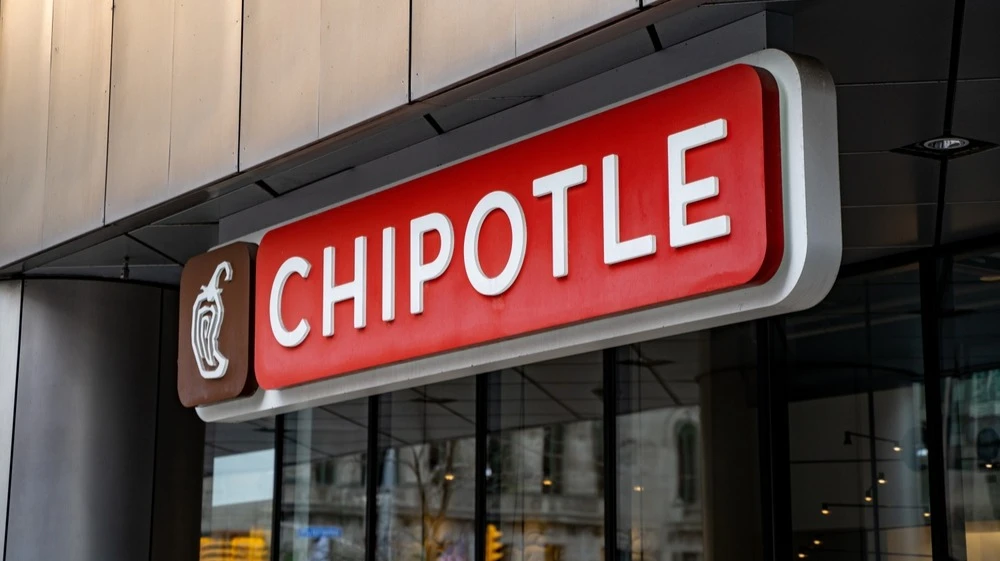
To assess business efficiency, Burry uses return on invested capital, adjusted for stock-based compensation. Among companies whose stocks have fallen more than 40%, footwear maker Deckers, restaurant chain Chipotle, and software developer Adobe had the highest returns. The top 10 also included research and consulting company Gartner, continuous glucose monitoring system maker Dexcom, hard-drive manufacturer Western Digital, advertising tech developer AppLovin, athletic apparel and footwear brand Lululemon, credit-scoring software developer Fair Isaac, and insurance data and analytics provider Verisk.
Time will tell if this is as it appears – a 2000 redux, with the Busted far outperforming the Leaders – or just another bear market where the Busted fall along with the Leaders. We see, above, potential winners on a silver platter.

Burry also assesses valuations relative to owners’ earnings. Cable and broadband provider Charter Communications, retailer Lululemon, and power company AES were the cheapest on this measure, followed by fintech PayPal and alcoholic beverage maker Constellation Brands. AppLovin, which ranks among the 10 companies with the highest returns on capital, did not make Burry’s list of the cheapest stocks.
Burry also warns investors about “value traps”: stocks may be falling simply because the underlying business is deteriorating. In today’s market, he argues, investors cannot indiscriminately buy everything that has fallen. Finding opportunities is more like “spearfishing,” requiring careful business selection and patience even after steep drawdowns.
Burry's approach now
Burry has been buying beaten-down stocks ahead of an expected market crash. His current or recent holdings include payment providers PayPal and Fiserv, animal health company Zoetis, and software developer Adobe. Most of these companies offer high returns on capital, and all have positive average annual revenue growth over the last three years, Burry says.
He holds deeply beaten-down S&P 500 stocks in anticipation of gains while betting against AI and semiconductor stocks. Burry expects to profit on both sides, making his short positions an independent bet on a market downturn rather than simply protection against potential losses.
He is also considering selling or trimming positions in retail giant Walmart, tech giant Alphabet, and oil refiner Valero, which have delivered strong returns but now look too expensive.
Where else Burry sees opportunities
In 2000, investors rotated out of expensive market leaders and into stocks that had already fallen sharply. Today, Burry believes there are fewer such opportunities within the S&P 500. Busted stocks, those down more than 40% from their 10-year highs, now trade at substantially higher earnings and sales multiples than they did in 2000.
Burry therefore reckons that money flowing out of today’s market leaders could move into stocks outside of the S&P 500 or into fixed income. Small, undervalued companies benefited from a similar rotation out of former market leaders in 1999-2007: the Russell 2000 Small Cap Value index substantially outperformed the S&P 500 over that period.
Small-cap value was one good place to be from 1999-2007, to some extent due to spillover liquidity fleeing the former big-cap leaders, especially with corporate bond markets roiled by bad debts at CLECs and the Enron and WorldCom bankruptcies.

Burry is also buying equities outside of the S&P 500. He has invested in Australian homewares and furniture retailer Temple & Webster and bought Hong Kong tech names. He also believes small-cap U.S. value stocks deserve a look, like Build-A-Bear, which offers an interactive stuffed-animal experience.

______________________
Check out Oninvest's Guru Portfolios section, where you can find the latest information on the composition and performance of the portfolios of the world’s top investors and biggest funds based on their 13F quarterly filings.