"65 billion barrels are a distraction from the real issue": Experts on the U.S.-Venezuela oil deal
It will take 5 to 15 years for Venezuelan oil volumes to have an impact on U.S. prices, according to NinjaTrader economist Tracy Shuchart

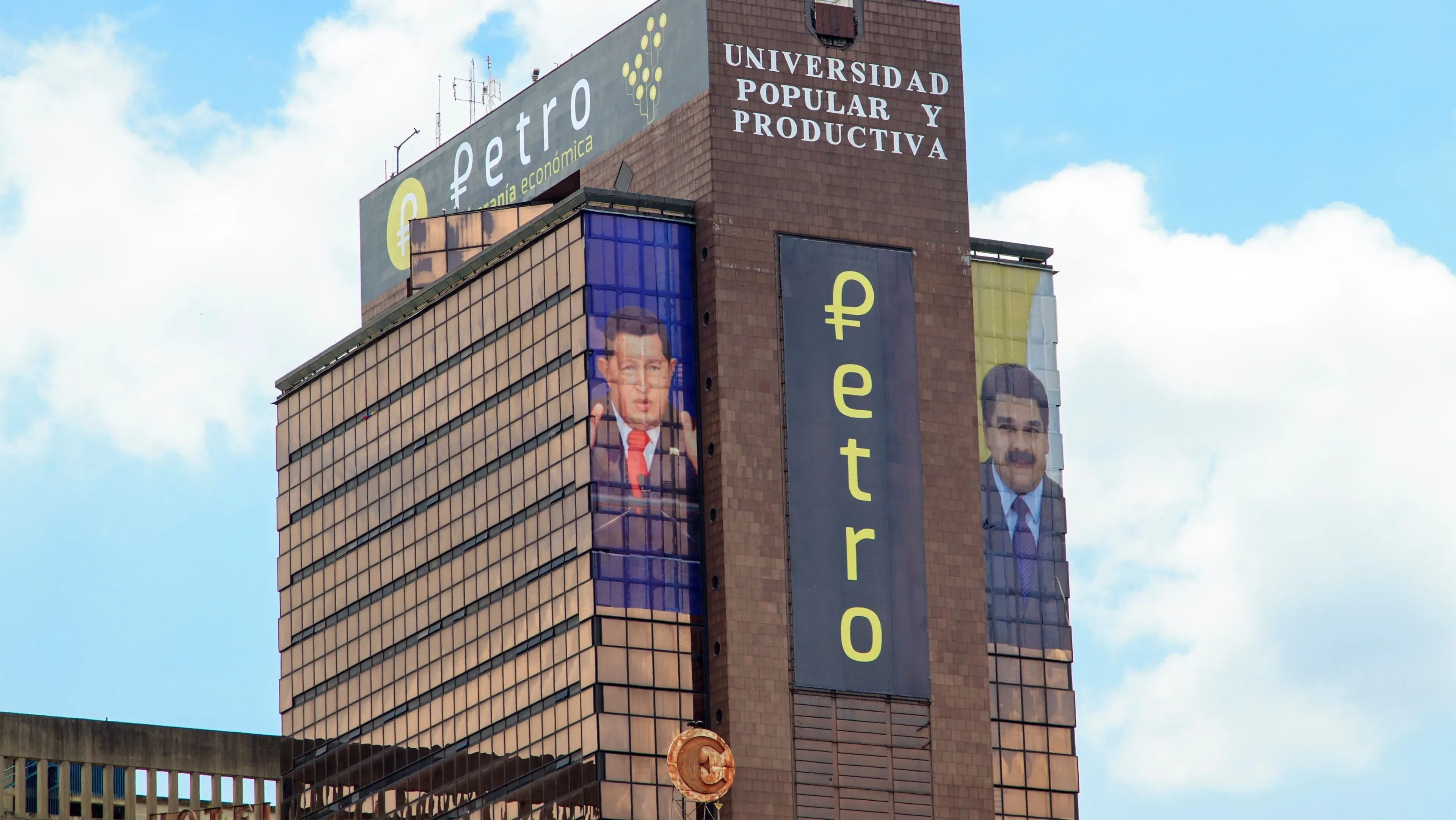
U.S. oil companies' access to Venezuela's vast reserves does not mean an immediate increase in global supply / Photo: testing / Shutterstock.com
The U.S. plans to use its share of Venezuelan oil to replenish the country’s depleted strategic reserves, President Donald Trump promised. This refers to the agreement announced on Friday, which will give the U.S. government control over 65 billion barrels of Venezuela’s proven reserves. “The replenishment process will begin very soon,” Trump promised.
According to Euronews, the U.S. government and an unnamed private operator have established a company that has been granted the rights to develop 17 undeveloped fields. Washington will gain access to 55% of the new entity’s production—through an equity stake and the right to purchase crude at cost, Bloomberg reports , citing an unnamed official. The purchased oil is planned to be used to replenish the strategic reserve and supply the U.S. armed forces, a Euronews source said.
Euronews notes that a significant portion of the deal’s terms has not been disclosed. It remains unclear what portion of that 55% represents the U.S. stake in the company and what portion represents the right to purchase oil at cost, who will pay for development, and how soon drilling will begin. It is also unknown how oil companies will react to the agreement: due to political uncertainty and damaged infrastructure, it may be difficult to attract major American companies.
Market participants warn that a significant increase in production in Venezuela will require investments in the billions and at least several years of development.
— Trump’s statement confuses the amount of oil sitting underground with the amount that can actually make it to the market, says Rory Johnston, founder of Commodity Context. “The figure of 65 billion barrels is a distraction and has almost nothing to do with actual deals,” he wrote on X, adding that most of the details on which the agreement’s impact depends remain unknown. Appearing on Canada’s CBC, Johnston explained that Venezuela’s massive reserves do not mean an immediate increase in global supply, and that a significant increase in production would require substantial investment and could take years, according to Business Insider.
— Tracy Schuchart, a senior economist at NinjaTrader, disputes the notion that these massive reserves will quickly translate into cheap gasoline. “To everyone who’s celebrating the deal with Venezuela and thinks that a flood of cheap oil is about to hit the market and gas prices will drop: It won’t,” she wrote on X. According to her assessment, production in the country has recently reached 1.2 million barrels, mainly thanks to the reactivation of previously drilled Chevron wells following the lifting of sanctions. “The light barrels are already back,” Schuchart noted. It will take “decades” to develop untapped fields, and it will take 5 to 15 years for volumes large enough to affect prices at U.S. gas stations to become available, she said.
— Amena Bakr, head of Middle East and OPEC+ research at Kpler, also points to the scale of investment required for Venezuelan production to increase significantly. “For Venezuela’s oil production to exceed 1.5 million barrels per day (currently around 1.2 million barrels), it will take years of consistent, large-scale investment in the construction of new infrastructure,” she wrote on X.
— Michael Alfaro, chief investment officer at the hedge fund Gallo Partners, called the agreement yet another attempt by Trump to lower prices. According to Alfaro, it is unclear who would agree to provide the necessary funding, as U.S. oil companies have been cautious about new investments in the region. “It’s also important to note that investments of this kind must endure several administrations,” Alfaro emphasized, as reported by the Financial Times.
— The agreement could increase, rather than reduce, uncertainty and risks for international investors, since it depends on the current Republican administration in the White House, according to Elias Ferrer, head of the consulting firm Orinoco Research. “If the Democrats win the midterm elections [for the U.S. Congress] in November, they will certainly begin to challenge these deals,” he says. According to Ferrer, Trump is already being accused of “replacing one dictator with another” and of favoring a Venezuelan oil executive with a controversial reputation, the FT reports. This refers to a potential partner for the Trump administration in this deal. According to Bloomberg, that partner is Alejandro Betancourt—the owner of Venezuela’s second-largest private oil company and a highly controversial figure due to his ties to the former regime.
The FT notes that U.S. oil giants ExxonMobil and ConocoPhillips, which lost billions of dollars in assets in Venezuela, have so far refrained from making new investments. Meanwhile, Chevron, Repsol, and Eni, which are already operating in the country, have signed agreements with the Venezuelan authorities this year. Chevron, the only U.S. oil company still producing in Venezuela, declined to comment to Euronews on the new agreement between Washington and Caracas. ExxonMobil also declined to comment.
This article was AI-translated and verified by a human editor