A Triumph for City Governments? How China’s Scaling Model Will Change the Global AI Market

In the field of AI, China is repeating a strategy it has already tested in the solar panel and electric vehicle markets: large-scale government subsidies are enabling a rapid increase in supply. Photo: Markus Winkler / Unsplash.com
When Beijing-based Zhipu released its new GLM 5.2 AI model in June, talk of a Chinese breakthrough in AI resurfaced in the market. The model is powerful and cheaper than its American counterparts. But its success stems not only from the talent of its developers but also from China’s policy, which it has already applied in the solar panel and electric vehicle industries. This strategy involves creating a glut of supply in the market through loss-leading production and state planning. Mikael Gorsky, an AI researcher at the Holon Institute of Technology and author of *The AI Pravda*, discusses how this strategy will affect the artificial intelligence sector on his Facebook page. Oninvest is publishing his opinion in full, with minor clarifications.
Super-Affordable Super-Achievements: How China Has Come to Dominate Markets
Have you read about China's AI triumph? They say they beat Sam Altman and his namesake uncle.
Not exactly. Let me explain what's going on and what the Communist Party's city committees have to do with it.
On June 13, 2026, the Beijing-based company Zhipu (known internationally as Z.ai) unveiled its new GLM 5.2 model. The model is excellent; it has already won a slew of benchmarks and impresses with its intelligence and affordable price (it’s about 2–3 times cheaper than Claude Opus, when accounting for the difference in their “talkativeness”).
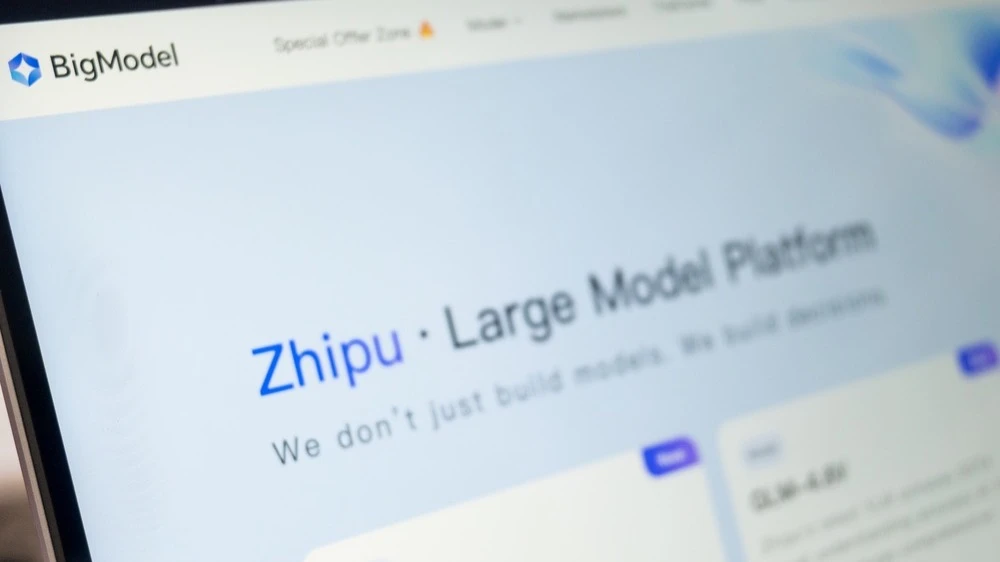
GLM 5.2 is released under an open-source license; anyone can download it (1.5 terabytes—that’s about as much as one and a half iPhones with the maximum built-in storage capacity) and run it on their own server (it requires eight Nvidia B200 GPUs, costs half a million dollars, and has a delivery wait time of a couple of years. An alternative to purchasing is renting, which costs $30,000–50,000 per month).
The power and accessibility of GLM 5.2 prompted commentators to recall the recent “DeepSeek moment,” when everyone was already convinced that the days of leading American labs were numbered, and the stock prices of nearly all American tech companies dropped by 10–30% over the course of a few days.
Let’s set aside other Chinese LLMs for a moment and focus instead on other highly accessible Chinese technological breakthroughs: solar panels and electric vehicles. After all, the Chinese AI industry is built on exactly the same principles, and Zhipu perfectly illustrates this fact.
About 25 years ago, the gradual advancement of Western technology transformed expensive and experimental solar panels—which had previously been used almost exclusively on spacecraft—into a cheap, mass-produced product. The research and development, of course, took place in Western laboratories (for example, at the University of New South Wales), but Western countries were only too happy to outsource the actual manufacturing—which is polluting and energy-intensive—to the Third World, a haven for environmental crimes with cheap and nearly endless coal-fired power.
Solar panels manufactured in China were purchased in huge quantities by Europe and the United States, and immediately a race began among the provincial and municipal committees of the Communist Party of China to ensure that such a wonderful, export-oriented production facility in their region or city. In the struggle for a place in the sun, hundreds upon hundreds of manufacturing companies could offer only one selling point—a lower price—thereby dooming themselves to participate in a “loss-making competition.”
Fortunately, the Chinese banking system is state-owned, and regional banks unquestioningly provided financing to the enterprises designated by the provincial or municipal party committees.
15–20 years ago, scientific discoveries—made, of course, in the West as well (one of the most significant centers being the University of Texas)—paved the way for the production of affordable and reliable batteries. Elon Musk, a genius and visionary, devised a clever business strategy to transform the electric car from a trendy toy for the ultra-wealthy into, first, a prestigious mode of transportation for the affluent, and then into an affordable vehicle for the middle class. This was aided by sensible government policies encouraging citizens to switch to cars that don’t pollute the air. Gradually, other American and European companies followed suit, and about five years ago, it became clear that a large new market for electric vehicles was taking shape.
Could the Communist Party of China ignore this new trend? Of course not. A competition broke out among provincial and municipal party committees to see who could produce the best electric vehicles. The story with solar panels is repeating itself exactly: funding from state-owned banks + massive government procurement = unprofitable but very cheap electric vehicles.
Creating an AI Abundance
It would be foolish to think that China’s AI industry is in any way different from the examples described above. We have the same Western technology, the same manufacturers that are knowingly operating at a loss, and the same inevitable dominance. While the triumph of Chinese LLMs among the “golden billion” is not guaranteed—just as the triumph of Chinese electric vehicles is not guaranteed—the other 7 billion people will undoubtedly use Chinese models—both cars and AI.
Let’s take a closer look at Zhipu. Its shares are even traded on the—so-called—“Western” Hong Kong Stock Exchange, but the vast majority of the shares in free float are controlled either by Chinese government agencies or by Chinese tech conglomerates: Alibaba, Tencent, Xiaomi, Meituan, and Ant Group. It’s surprising that all of Zhipu’s competitors are among its shareholders, but it’s not at all surprising that each of these companies has a Party committee.
The company’s main “product” is the GLM model family, released under an open license. However, the company also provides access to its model hosted on its servers. Revenue from these services constitutes part of Zhipu’s funding and comes from government organizations. The rest comes directly from state-owned banks and companies that manage state funds.
Now is the time to highlight the difference in the business models of, say, Anthropic and Zhipu.
Anthropic invests heavily in developing powerful LLMs (the Claude family) and then sells access to them on the open market.
Anthropic CEO Dario Amodei estimated the profit margin on this transaction to be over 50%; many in the market believe it is 75%. At the same time, Anthropic is currently spending far more than it earns—on technological research and the development of new models, on expanding its sales markets, and on academic, sociological, and economic research. Today, the company is not profitable, but its revenue is growing tenfold or more each year (by the end of 2025, this run rate reached $9 billion; by May of this year, it was $47 billion —Ed.), so investors—free agents in a free market—are highly interested in future purchases of the company’s shares at an extremely optimistic valuation.
Zhipu also invests heavily in developing new models, but then releases them under a free license. Its modest revenue ( just over 724.3 million yuan, or $101 million for 2025 — Ed.) consists of fees for access to the models (a small portion of users run them on the company’s servers) and consulting fees. However, this revenue clearly cannot cover the investments required to create new models. Moreover, both Zhipu’s clients and investors are controlled by party bureaucrats whose sole objective is to achieve the goals set by the Communist Party. A return on investment is not the bureaucrats’ goal; their goal is to dominate international markets.
It would be surprising if the party’s policy-making in China were limited to AI labs, auto plants, and solar panel manufacturers. Mega-projects to build new cities were carried out under the same paradigm—“the party said it had to be done, and XXX replied, ‘Yes.’” The goal was different, but the result was exactly the same—an abundance of supply was created.
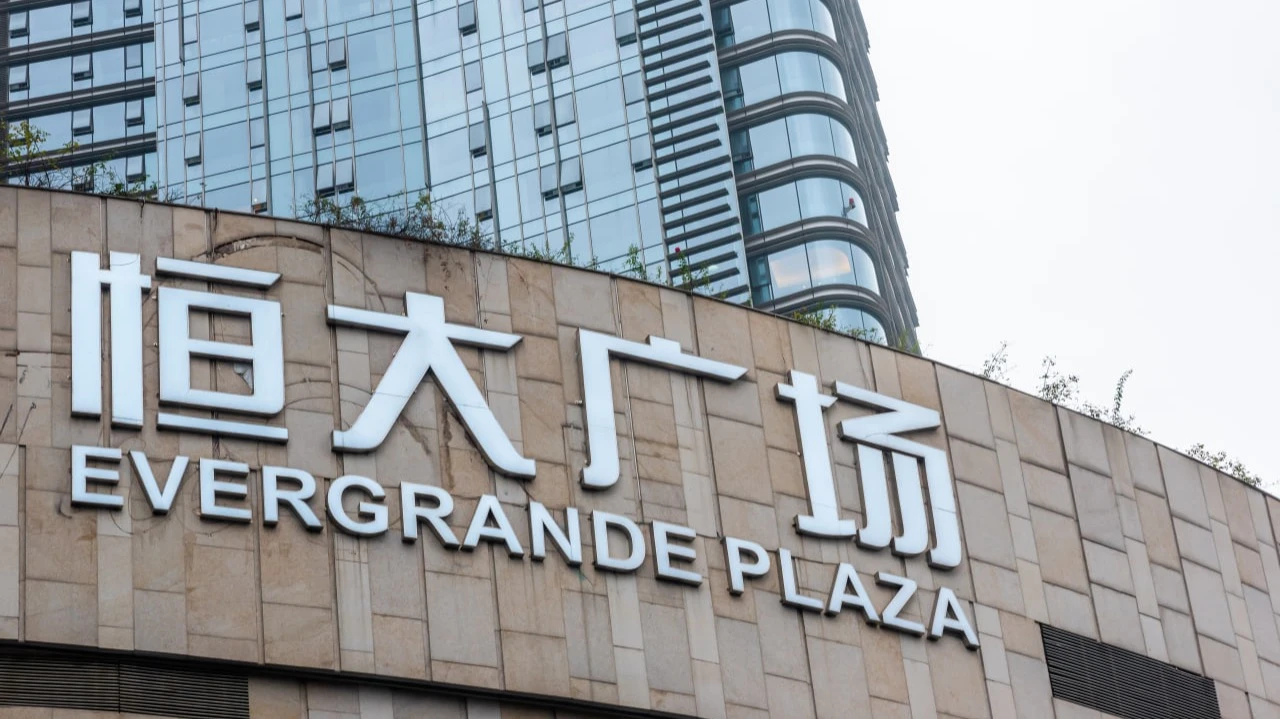
In the case of megacities, massive investments have led to the creation of eerie yet captivating videos about “ghost cities” and numerous scandals. In the case of solar panels, funding from the Chinese Communist Party has effectively put an end to industrial solar panel production in the West (an unqualified victory).
I don’t know what the proliferation of Chinese electric vehicles will lead to (that’s not my area of expertise), but I can speculate on where the development of Chinese open-source AI models is headed—toward a gradual reduction in the cost of lower-tier Western closed-source models.
The scale of generative AI adoption in the U.S. and European economies is estimated at hundreds of billions of dollars; the complexity and importance of such projects are growing and will continue to grow, just as companies’ efforts to optimize their AI spending will continue to increase. This is exactly where very low-cost models will come in handy.
As for China’s subsidized AI models, electric vehicles, and solar panels, there’s only one thing to hope for: that someday, those who will come to power in China will spend the budget on improving citizens’ lives, rather than on world domination. And once the money fountain runs dry—we’ll see who’s really worth their salt. Of course, that won’t happen tomorrow.
This article was AI-translated and verified by a human editor