SK Hynix's Record-Breaking IPO: What's Behind the Hype Surrounding Memory Chip Manufacturers

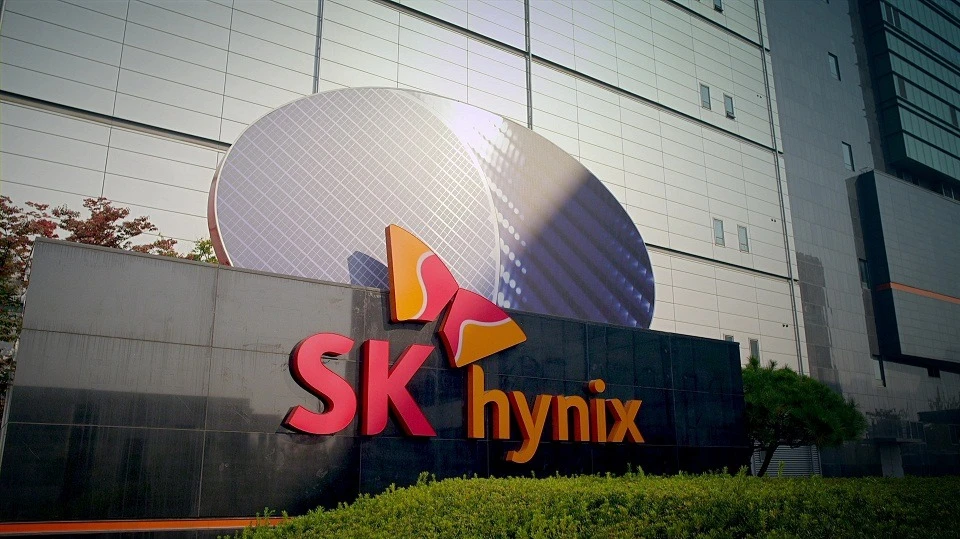
South Korea's SK Hynix held the largest IPO by a foreign company on the Nasdaq / Photo: skhynix.com
It is still too early to identify the winners and losers in the race for artificial intelligence. A much more effective strategy for investors may be to identify and invest in niche areas—companies that produce components that are in short supply but critical to the industry. BlackRock, among others, shares this view.
One such bottleneck suddenly turned out to be the production of memory chips, one of whose manufacturers—South Korea’s SK Hynix— held the largest IPO among foreign companies on the Nasdaq. The company raised $26.5 billion, and its valuation exceeded one trillion dollars. The order book was oversubscribed several times over, and the stock rose 13% on its first day of trading.
What’s behind all the hype surrounding a boring memory chip manufacturer? SK Hynix’s competitor answered that question back in late June. Micron surprised the market with its report, which showed that the artificial intelligence industry is entering a period of multi-year memory shortages.
How Memory Became AI's Biggest Bottleneck
What role do memory chips play in the AI industry? Memory is a component without which even the most powerful AI chips cannot operate at full speed. The fastest-growing segment right now is HBM chips, for which a shortage began to emerge after the launch of ChatGPT in late 2022. Every modern AI accelerator from Nvidia or AMD requires a large amount of this specific type of memory. SK Hynix explicitly states in its prospectus that HBM chips are at the epicenter of AI growth. Today, models can compute much faster than memory can deliver data—this is known as the “memory wall.” Imagine a person who can read at a rate of 100 pages per minute, but whose secretary brings him only one page per minute, limiting his productivity. HBM chips solve exactly this problem.
That is why the production volume of these chips determines how fast the entire industry can grow. This is one of the bottlenecks in the AI industry. Previously, AI performance was determined by computing power; today, it is determined by how quickly memory can deliver data to computational models—in other words, “feed” the AI with data. This is a fairly significant shift: the bottleneck has moved from computation to the speed of data transfer between memory and the computing chip. It is precisely this shift that underlies the investment story of SK Hynix, as well as that of two other HBM manufacturers—Micron and Samsung.
A market you shouldn't enter
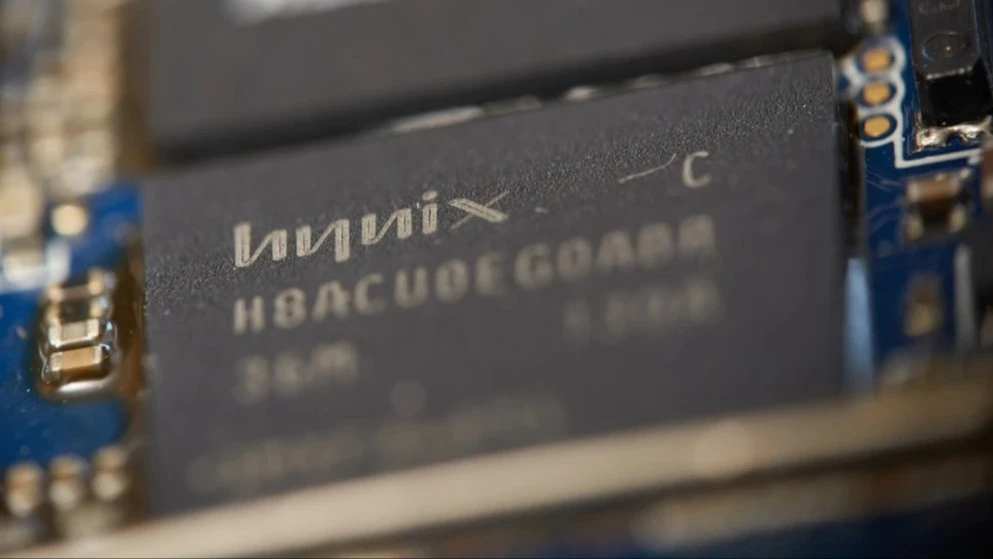
The global market for HBM memory chips is an oligopoly consisting of three companies: SK Hynix, Samsung, and Micron. South Korea’s SK Hynix holds the largest market share—56.4%—according to the company’s IPO prospectus. Specifically, SK Hynix supplies up to 80% of Nvidia’s memory chip needs. Its competitors’ market shares are smaller: Samsung holds 20.5%, and Micron holds 23.1%.
The oligopoly is firmly protected by high barriers to entry into this market. In particular, SK Hynix points out the technological complexity and high capital costs in its prospectus. “Memory production is one of the most capital-intensive sectors in global industry. Building and equipping a modern semiconductor plant is particularly expensive. Only a few large international companies with sufficient capital and the ability to generate an acceptable return on these investments are capable of sustaining such a high level of investment,” the company’s documents state.
Demand That Cannot Be Measured
Demand for memory chips, however, remains unknown at this time, as Micron noted when presenting its latest report. Management claims that demand so far exceeds supply that the company cannot even estimate it—it sells everything it produces. Market size is determined by supply—the number of memory chips that can physically be produced. At that time, the company also noted that it does not foresee a time when supply will catch up with demand. Clearly, the same applies to SK Hynix.
For investors, Micron’s management statement was one of the strongest signals in the memory sector in recent years. While memory manufacturers were previously considered a classic cyclical business, it now turns out that demand for AI memory is limited not by customers’ willingness to buy, but by the industry’s physical capacity to produce sufficient volumes.
On Friday, July 10, SK Hynix CEO Kwak No-jeong said in an interview with Bloomberg that the current memory shortage will persist until at least 2030. According to him, customers are signing long-term contracts because “they believe the shortage will continue for a very long time.” Micron has also mentioned customers signing long-term contracts and noted that the memory shortage will persist for years to come.

Where are the risks?
Overall, this suggests that, for the first time in many years, memory manufacturers have gained real pricing power, which will be reflected in their profits and, over time, in the cost of all electronics. Any company looking to build computing capacity will be forced to buy memory chips at rising prices, unless it is one of the hyperscalers capable of signing multi-year contracts in advance.
The main risk remains the cyclical nature of this market: memory production has traditionally followed cycles. When demand is high, company stock prices rise; when the market becomes saturated, they begin to fall. Yes, manufacturers today claim that they do not understand the extent of demand and cannot specify a timeframe for when the market will become saturated and the shortage will disappear. But that does not mean it will never happen.
In this regard, it’s also interesting to see what’s happening with memory chip buyers. Today, they’re entering into unusual contracts by placing so-called open orders, thereby signaling that they’re willing to buy any amount of memory at any price. But ultimately, everything will depend on whether hyperscalers can monetize their massive investments in artificial intelligence. Indeed, everything currently happening in the AI race boils down to this question.
This article was AI-translated and verified by a human editor