A Decade of Reversal: Where Will the Tenge's Appreciation End?

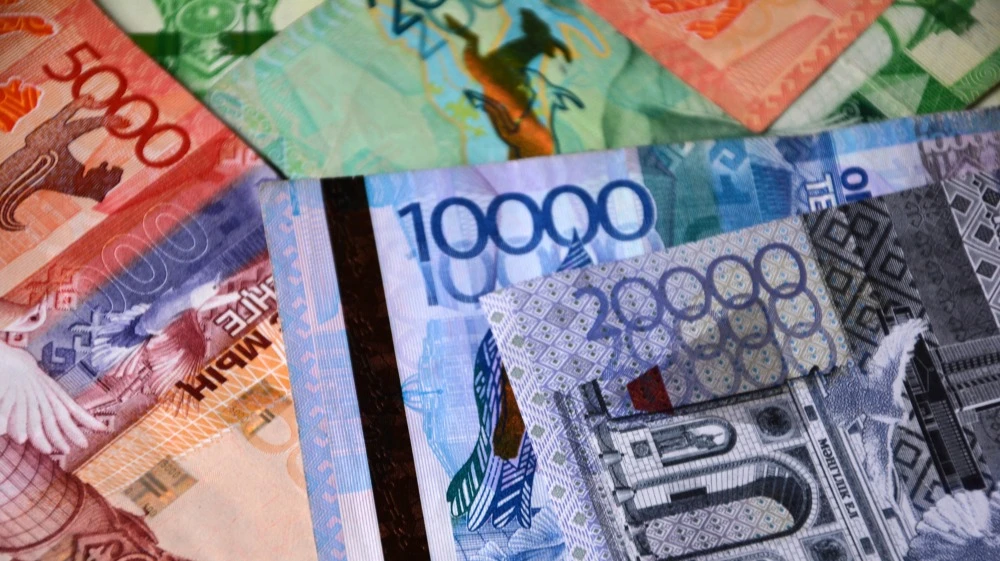
The strong tenge cycle is dragging on: a return to an exchange rate of 500 tenge would already be considered a victory for the dollar. Photo: Shutterstock.com
This year, the 10-year trend in the dollar-to-tenge exchange rate was broken to the downside. Since 2015, the dollar had been rising steadily—albeit with various interruptions—from 185 tenge to a peak of 550 tenge last year. The trend was clearly visible on the chart, as each new local low was higher than the previous one. But in 2026, the trend was broken, as we have now come very close to the 2024 low of 439 tenge. This has not happened since the introduction of the floating exchange rate in 2015.
Below 400?
There had previously been speculation that 465 tenge per dollar was a comfortable level for the National Bank to begin actively buying dollars, but that has not happened. There are now fairly well-founded opinions that the exchange rate could shift to 400 tenge per dollar or even lower.
Roughly half of the positive impact on the exchange rate is driven by rising oil prices: sales of dollars from the National Fund—which is replenished by oil revenues—accounted for 14% of total trading volume in 2025. In addition, there are the revenues of KazMunayGas and export customs duties on oil, which also flow into the foreign exchange market. Another significant factor is the recent frequent issuance of government bonds denominated in foreign currency, which, once placed, create demand for the tenge. In the last month alone, the Ministry of Finance of the Republic of Kazakhstan issued 6.6 billion yuan in Panda bonds, the Development Bank of Kazakhstan issued 3.7 billion yuan, “KazMunayGas” issued 3.5 billion yuan, and the Industrial Development Fund issued 1.5 billion yuan.
Oil prices are fueling expectations of rising budget revenues and further strengthening of the tenge. This creates an opportunity to lower interest rates with less risk of a reversal in the carry trade, while cheaper imports help reduce inflation. But this trend cannot last forever. Investments aimed at profiting from interest rate differentials are speculative and short-term in nature. Moreover, the lobby advocating for a weaker tenge is far from weak: it includes not only the state budget but also exporters, and the need to protect the competitiveness of Kazakhstani products abroad is a strong enough argument.
Even if oil prices remain high, sooner or later inflation will fall to target levels, the scope for further rate cuts will be exhausted, spreads between domestic and U.S. government securities will narrow—and the inflow of funds from non-residents will turn into an outflow. At the same time, the tenge’s inherent risks remain: quasi-budgetary spending is high, cheap imports are stifling domestic production, and oil exports are unstable. In other words, the stronger the tenge, the greater the potential harm it poses to the economy.
A painful pullback?
This raises a counterquestion: How painful could a return to, say, 550 tenge per dollar—which we saw at the end of last year—turn out to be?
This outcome has been predicted repeatedly, but the projected date for a turnaround keeps getting pushed further out, as market conditions remain attractive. The main factor is the high real interest rate. The National Bank is in no hurry to lower it; it is proceeding cautiously, and besides, it has specific goals to reduce inflation to single-digit levels. And the high interest rate is actually working right now: it is keeping inflation in check while keeping government bonds very attractive. More foreign currency is flowing into them, which is then converted into tenge. Essentially, all future scenarios on the market converge into a single one, in which there will be a further rate cut.
And the slower the National Bank lowers it, the better for investors. In this regard, only one question remains: how cautious the regulator will be during the rate-cutting cycle—this will determine how long investors will “stick with” government bonds. We are now more inclined to believe that the first half of 2027 will still be a strong period for the tenge amid high interest rates.
Given that the strong tenge cycle is dragging on, the potential for its decline is most likely diminishing. We no longer view 540–560 tenge as a target exchange rate for the next 12 months, since a 100-tenge appreciation in the short term would be too much of a shock for the National Bank to allow to happen. Therefore, given current conditions, a return to the 500 tenge level could already be considered a victory for the dollar.
The situation will be worse if several factors converge: for example, if oil prices fall below $70 at the same time that the inflow of foreign investment weakens. But even in that case, a drop to 540–560 tenge—that is, a 20–24% depreciation—seems like an extreme scenario, in which the government would clearly make every effort to stabilize the exchange rate.
This article was AI-translated and verified by a human editor