Between Andorra and Oman: Why S&P Raised the Ratings of Kazakhstan's Banks


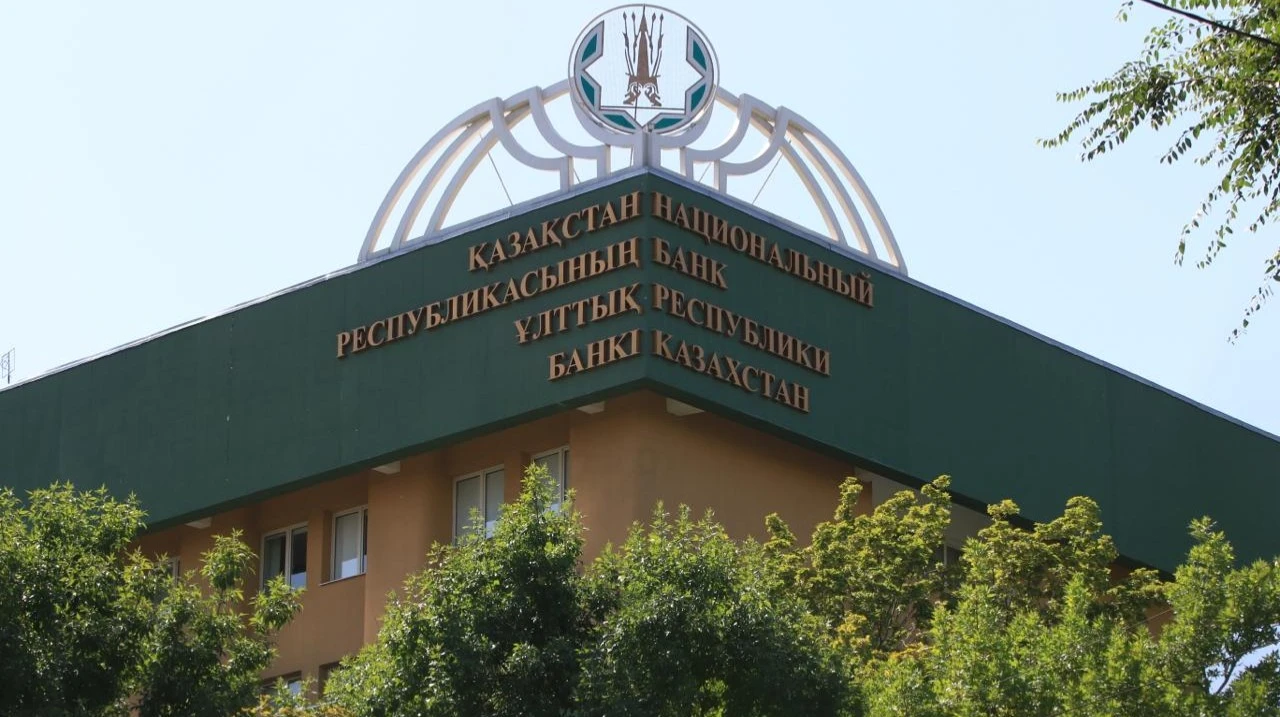
S&P notes that the regulator has stepped up oversight of Kazakh banks. Pavel Mikheyev / Shutterstock.com
S&P Global Ratings (S&P) lowered its sector risk assessment for Kazakhstan’s banking sector from “7” to “6.” The agency attributed this to strengthened supervision, regular reviews of the quality of banks’ assets, the implementation of SREP (a methodology for assessing bank stability, governance quality, and risks), as well as stricter capital and liquidity requirements and measures to limit retail lending risks. The economic risk rating remains at “7,” though the trend has shifted from stable to positive. The baseline rating used by the agency to assign ratings to Kazakh banks has remained at “bb.”
“Our upgrade of the sector risk rating from ‘7’ to ‘6’ reflects the number of initiatives undertaken by the Kazakhstani regulator to strengthen oversight of financial institutions in Kazakhstan in recent years… In our view, this will support Kazakhstan’s financial stability and, during periods of economic downturn, help reduce the number of bank failures and systemic asset quality issues,” S&P analysts note. The report also notes that the banking sector has been relatively resilient to macroeconomic challenges in recent years amid escalating geopolitical risks in the region.
S&P uses BICRA economic and sector risk assessments to determine the baseline rating level for financial institutions—the starting point for assigning a credit rating. The assessment is made on a scale from “1” (lowest risk) to “10” (highest risk). When assessing economic risk in the banking sector, the agency considers the structure of the country’s economy, its flexibility and resilience, and credit risks. When assessing sector-specific risk, it considers the effectiveness of banking supervision, the competitive environment, the structure of the sector, and the diversity and stability of banks’ funding sources.
In the assessment of sectoral risk, Kazakhstan was ranked at level “6,” placing it in the same group as Indonesia, Qatar, Andorra, Oman, and Morocco. Countries ranked at level “7” include, for example, Azerbaijan, Georgia, and Albania.
“In developed countries, the indicator is generally around 3 or 4,” says Kirill Lysenko, lead analyst for sovereign and regional ratings at Expert RA. “The downgrade of Kazakhstan’s sector risk from ‘7’ to ‘6’ is a significant acknowledgment of the improvement in the quality of banking supervision—the rating change was primarily driven by institutional factors. For creditors, the value of this change lies in greater confidence that banks’ problems will be identified in a timely manner and reflected in their financial statements.” He notes that a “6” rating still indicates the persistence of significant limitations; for example, regarding the institutional environment, S&P continues to highlight the risk of political influence on the regulator. “Accordingly, it is premature to speak of a transition to the low-risk category: improved oversight has reduced one of the sector’s vulnerabilities, but has not eliminated the others,” Lysenko notes.
S&P notes that after several years of decline, the share of non-performing bank loans may rise moderately from the current 6.6%, but will remain within the projected range of 6.5–7.5% of the loan portfolio.
Provisioning expenses over the next year and a half are projected to be 1.1–1.3%, compared with an average of approximately 2.3% in 2020–2025. According to the agency’s experts, banks’ profits remain sufficient to cover these risks: in the first half of 2026, the sector earned 1.2 trillion tenge ($2.6 billion), and the average return on equity in 2026–2027 is expected to be 20–25%. “This is driven by a slowdown in, but still steady, growth in lending, improved operational efficiency, and cyclically low credit losses. We believe that the Kazakh banking system’s sustained ability to generate profits can help absorb expected losses without putting significant pressure on its capital reserves,” S&P analysts write.
Lysenko believes that a reduction in market risk is an additional argument in favor of a lower risk premium when raising funds. “The decision could support demand for bank bonds and lenders’ willingness to provide funds for longer terms, while the impact on businesses and the public will be indirect: lending conditions may improve as bank funding becomes cheaper, but inflation, monetary policy, and the borrower’s own risk remain the key determinants of interest rates,” he continues.
Halyk Bank
Along with a reduction in the sector-wide risk level, S&P raised the ratings or outlooks for four major Kazakh banks at once.
S&P thus affirmed Halyk Bank’s credit ratings of “BBB-/A-3” and its national rating of kzAAA, and revised the outlook on the bank’s long-term global ratings to positive. "Halyk" remains the largest bank in Central Asia.
S&P expects the bank’s capital adequacy ratio (RAC), calculated using the agency’s methodology, to remain at 9–9.5%. A rating upgrade would require the RAC to rise above 10% and for asset quality to converge with that of comparable foreign banks. It was also noted that Halyk’s share of nonperforming loans (Stage 3) reached 8.6% by mid-2026—however, S&P expects this figure to decline following the reclassification of a portion of corporate loans and the write-off of retail debt.
S&P notes that in the first half of the year, the bank’s net income fell by 15.3% to 447.6 billion tenge ($985.2 million), however, assets grew by 5.4% to 222.04 trillion tenge ($48.5 billion), and the retail loan portfolio increased by 4.2% year-to-date to 4.8 trillion tenge ($10.6 billion)—though it showed virtually no growth in the first quarter.
In September 2025, Fitch affirmed Halyk’s rating at BBB- with a stable outlook, citing its dominant market position, high profitability, adequate capitalization, and liquidity.
Freedom Holding
The outlooks for Freedom Holding and its four key financial subsidiaries have also turned positive; their international ratings have been affirmed at B- for the holding company and BB- for the operating companies. At the same time, S&P upgraded the national ratings of Freedom Bank and Freedom Finance from kzA- to kzA.
S&P notes that the holding company's business continues to grow rapidly. In the first quarter of fiscal year 2027, Freedom Holding’s revenue rose 40% to $732.5 million, and its assets increased from $13.16 billion to $14.05 billion; interest income increased from $198.6 million to $295.1 million, and fee income rose from $107.6 million to $156.7 million. S&P believes that high and diversified earnings, combined with the raising of new equity capital, will enable the group to maintain strong capitalization.
CenterCredit Bank
CenterCredit Bank’s (BCK) long-term rating has been upgraded from BB to BB+, with the outlook remaining positive. S&P cites capitalization as the main independent factor behind the current upgrade of BCC’s rating: the bank’s Self-Assessed Credit Profile (SACP) has been raised from bb to bb+.
According to the agency’s estimates, the RAC is expected to rise from 9.2% in 2025 to 10.2–10.7% over the next one and a half to two years, driven by the bank’s own profits. In March, BZK’s shareholders decided not to pay dividends for 2025 and to retain 240.2 billion tenge ($528.7 million) in earnings. S&P also notes a slowdown in loan portfolio growth to an expected 15–18% in 2026, a 15% increase in net interest income in the first half of the year, and a relatively low share of non-performing assets—4.9% as of the end of March, with a forecast of 5.0–5.5% for the next two years.
BCK’s rating outlook has been improving for the second consecutive year. In August 2025, S&P changed the outlook on the BB rating from stable to positive and upgraded the bank’s national rating from kzA+ to kzAA-. Two weeks later, Moody’s upgraded BCC’s long-term deposit ratings from Ba1 to investment-grade Baa3, citing improvements in asset quality, profitability, and solvency, with a stable outlook.
Nurbank
For Nurbank, the outlook was changed from stable to positive with a B rating, and the national rating was upgraded from kzBB+ to kzBBB-. S&P expects Nurbank’s capital adequacy ratio to exceed 10% in 2026–2027, thanks to more moderate growth, reduced provisioning needs, and retained earnings. Nurbank’s Stage 3 loan ratio fell from 12.9% to 9.8% in the first half of 2026, and the agency expects the bank’s non-performing loan ratio to approach the market average by the end of 2027.
This article was AI-translated and verified by a human editor