The crisis involving investment funds in Turkey is not over yet. What should investors keep an eye on?
It is impossible to sell the assets of troubled funds quickly and without pain; international banking groups with operations in Turkey may feel the effects of the crisis

Turkish authorities have managed to contain the acute phase of the crisis involving investment funds, but the problem has not yet been resolved. Photo: Michael Jerrard / Unsplash
The first acute phase of the crisis involving investment funds in Turkey ended with the liquidation of 131 funds with assets totaling more than 890 billion lira. However, investors—including those in other countries—are yet to face its consequences. Zaman Rizvanioglu Gabibov, an investment analyst at ATLAS Capital, explains.
The fire was put out, but the problem remains unresolved
Turkish authorities have managed to contain the acute phase of the crisis, but have not eliminated all of its consequences. This is the most accurate way to describe the current stage of the situation involving investment funds in Turkey. The central bank promptly expanded liquidity provision; the regulator suspended transactions involving troubled funds, entrusted their liquidation to İşbank and Ziraat Bank, and adopted temporary measures to ease pressure on brokers. This helped slow the chain reaction of “falling asset values—new redemptions—forced sales,” but the market’s partial recovery does not yet mean that the problem has been fully resolved.
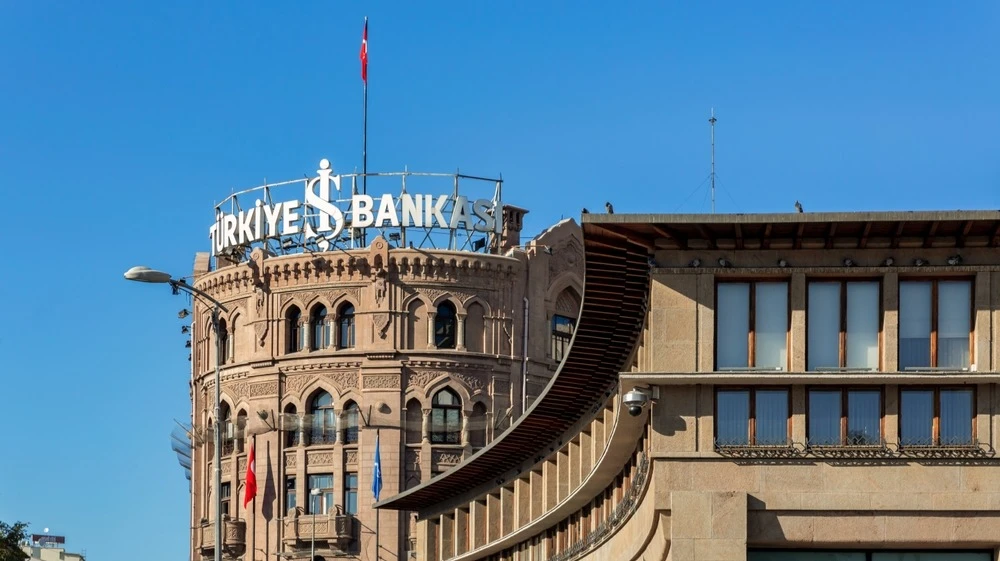
A total of 131 funds managed by seven asset management companies, with combined assets exceeding 890 billion liras (more than $18 billion), have been placed into liquidation. It is important to understand that liquidation does not mean investors will automatically lose their entire investment. The funds’ assets must be sold off gradually, and the proceeds distributed among unit holders in proportion to their shares.
The main uncertainty lies in the prices at which illiquid securities can be sold and the extent to which their actual value will differ from the funds' previously published net asset value (NAV).
It is telling that on September 20, the Turkish regulator—the Capital Markets Board— extended the maximum liquidation period from three to six months. On the one hand, this is a reasonable measure that helps prevent a rapid fire sale of assets at any price. On the other hand, the extension itself suggests that it is impossible to smoothly convert portfolios into cash in a short period of time. Therefore, the crisis is not yet over: the final extent of the losses will only become clear after the first payments to investors and the disclosure of the actual prices at which the assets were sold.
What should you keep an eye on?
Investors now need to keep an eye on several sets of indicators.
— First, regarding the payment schedule and the difference between the funds’ most recently published NAV and the amount actually returned to investors.
— Second, regarding outflows from funds not included in the liquidation: if the withdrawals spread to the healthy part of the market, a localized problem could turn into a broader crisis of confidence.
— Third, key factors include the lira’s performance, government bond yields, the cost of insuring Turkish debt, bank liquidity, and the market’s need for additional financing from the central bank.
— Special attention should be paid to stocks with a low free float that were held in the portfolios of several affiliated funds, as well as to potential losses incurred by brokers on margin positions and loans secured by such securities.
— Another key milestone is the November review of the MSCI indices.
Even before the crisis, international investors had expressed concern about the lack of transparency in ownership structures and possible coordinated trading in certain Turkish stocks. If, by the time of the November MSCI index review, the provider does not see sufficient progress in improving market transparency, it may begin consultations on how to proceed with the inclusion of Turkey and Turkish securities in its indices. This could result in changes to the weightings or composition of the indices, including the potential exclusion of certain securities. This could trigger selling by index funds and increase the cost of raising capital for Turkish companies.
Will the crisis in Turkey spread to other countries?
In the baseline scenario, the likelihood of a large-scale international contagion remains limited. The crisis is concentrated primarily in local funds, illiquid stocks, and transactions denominated in Turkish lira. As long as it does not escalate into a banking crisis or a sharp currency shock, the direct impact on other countries should be moderate.
The main external channel is not mutual debt, but rather a deterioration in global investors' risk appetite toward emerging markets.
Outside of Turkey, the direct impact will most likely be limited to the portfolios of international funds that invest in Turkish assets.
If the stress spreads beyond the investment fund sector and leads to a weakening of the lira, rising funding costs, or a deterioration in the quality of bank assets, increased volatility could affect the shares of foreign banking groups with significant operations in Turkey.
Specifically, these include Spain’s BBVA, which controls Garanti BBVA; the UAE’s Emirates NBD, which owns DenizBank; and Qatar’s QNB Group, which controls QNB Türkiye. However, the baseline scenario does not yet anticipate any significant impact on the banking systems or stock markets of Spain, the UAE, and Qatar as a whole.
Special attention may be directed toward markets with a high proportion of retail investors, a low free float, and opaque cross-shareholdings. In particular, MSCI is simultaneously examining transparency issues in Turkey and Indonesia, so the situation in Turkey could raise investors’ expectations regarding the quality of corporate governance in other emerging markets as well.
For Kazakhstan, the direct financial impact will most likely be minimal. An indirect impact is possible only through a general decline in risk appetite toward emerging markets, an outflow from regional funds, or a sharp deterioration in the Turkish banking system. So far, there are insufficient signs of this.
Thus, the acute phase was resolved fairly quickly, but a final assessment can only be made after payments begin, the actual value of the assets is verified, and MSCI makes its decision in November.
This article was AI-translated and verified by a human editor