"A Pullback Followed by Another Decline in December": Why an MRA Analyst Expects the S&P 500 to Fall 10%

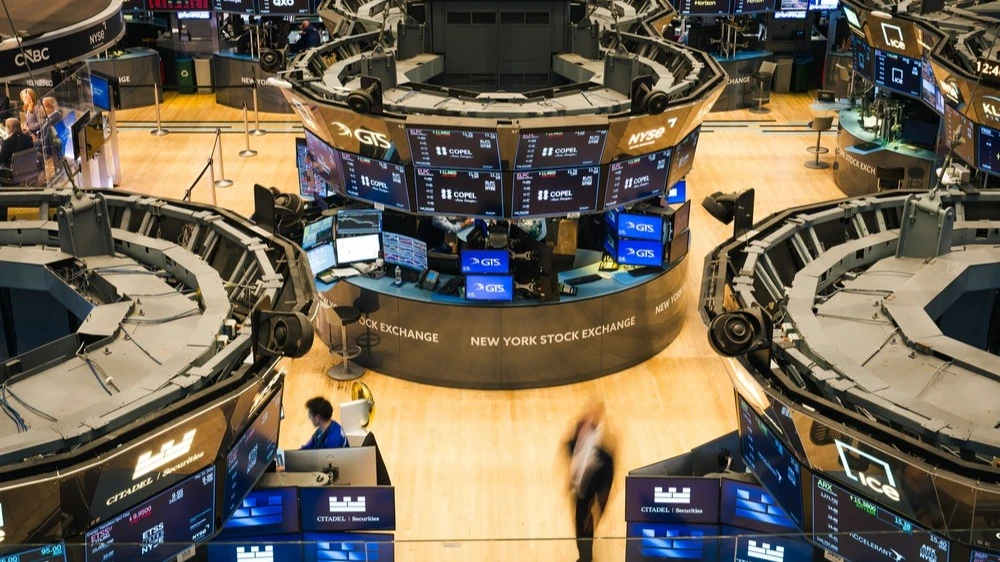
Analyst: The S&P 500 Could Drop 10% Due to the Fed's Rate Hike / Photo: Jonah Elkowitz / Shutterstock
A possible series of Fed rate hikes, which could begin as early as this week, could trigger a correction in the S&P 500 index, according to an analyst at Macro Risk Advisors (MRA), as reported by Bloomberg. The decline in corporate margins is weighing on earnings forecasts, and markets, in turn, are bracing for a period of monetary tightening, he added.
Details
Since the beginning of September, the S&P 500 has fallen by nearly 1%—historically, this month is considered its weakest, according to Bloomberg. The decline is driven by concerns over rising energy prices and recent inflation data, which have pushed the yield on 10-year U.S. Treasury bonds above 5% for the first time since 2023. Traders have already priced in a nearly 100% probability of a quarter-percentage-point rate hike by the Fed at its next meeting on Wednesday, September 16 (a week ago, the probability of a rate hike was estimated at about 60%).
A tightening of U.S. monetary policy will most likely lead to even greater problems for U.S. stocks, according to Dean Karnatt, CEO and founder of Macro Risk Advisors. “We expect the S&P to pull back 8–10%, with a potential second wave of declines in December,” he predicted regarding the market situation in the event of a rate hike. The Bloomberg article does not specify exactly which levels this decline is expected to reach. Since its peak in mid-August, the S&P 500 has already lost 2%.
According to the analyst, the Fed’s tightening of monetary policy will lead to “shrinking margins for companies that cannot pass on costs to consumers” and will also trigger a volatility shock in a market that is unprepared for it.
Carnatt noted that the current situation resembles that of 2018, when the S&P 500 index peaked in September and then plummeted by 10% in October and November. Recalling that there was “no Christmas rally” that year, he pointed out that the market took another downturn in December, ultimately losing nearly 20% from its high. Given this experience, “a defensive stance is the right approach,” he concluded.
What Other Analysts Are Saying
However, not everyone on Wall Street agrees with this view. For example, Ben Snyder, chief U.S. equity strategist at Goldman Sachs, is maintaining his year-end target for the S&P 500 at 8,000 points, which implies a 4.5% increase from the last close, according to Barron’s. “Stocks typically struggle when the Fed starts raising rates, but we expect the bull market to continue,” the analyst noted. On average, Snyder explained, the S&P 500 falls by about 2% in the three months following the Fed’s first rate hike but rises by more than 9% over the full year following it.
Savita Subramanian, head of U.S. equity strategy at Bank of America, in turn raised her forecast for the S&P 500 index on September 14 from 7,100 to 7,400 points, which, nevertheless, still implies a 3.3% decline from the latest closing level. “The fundamental environment is encouraging,” the analyst said, noting, however, that “deteriorating liquidity conditions, geopolitical tensions, persistent inflation, and unfavorable seasonal trends call for caution regarding stocks in the short term.”
Overall, in her view, about 27% of the profits expected from S&P 500 companies next year will come from just five firms—Nvidia, Alphabet, Micron, Microsoft, and Apple—all of which are connected in one way or another to the investment trend in artificial intelligence. Semiconductor manufacturers are expected to account for more than 60% of earnings growth in 2027.
Context
According to FedWatch data from CME, traders expect a rate hike at the next Fed meeting with a 92% probability. Moreover, following the release of the latest U.S. inflation data last week, some market participants began to suggest that the Fed may need not just one, but several consecutive rate hikes to bring inflation back to its 2% target.
“The discussion quickly shifted from the question of whether the Fed would raise rates to the more important one—how many hikes will ultimately be needed in this cycle,” CNBC quoted Sima Shah, chief global strategist at Principal Asset Management, as saying. “Three rate hikes is a good starting point,” noted Ed Al-Husseini, portfolio manager at Columbia Threadneedle Investments.
If the U.S. regulator decides to raise interest rates on September 16, it will be the first such move in the past three years.
On September 15, S&P 500 futures fell 0.2%, while Nasdaq 100 futures dropped 0.14%. Dow Jones futures lost 0.28%.
This article was AI-translated and verified by a human editor