Morning in New York: The Market Awaits the Fed's Decision

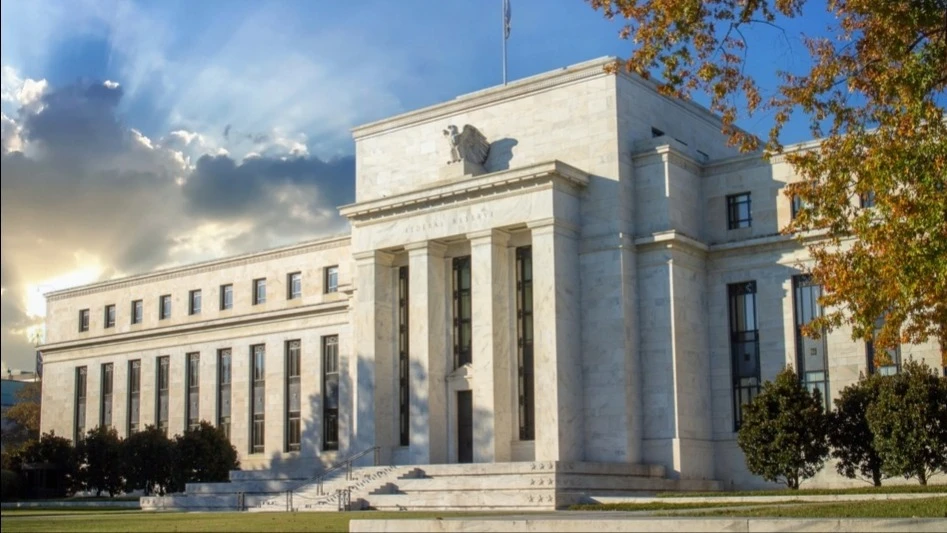
On September 15, the Fed will begin a two-day meeting to decide on the interest rate / Photo: Tanarch / Shutterstock.com
A daily review and forecast of events in the U.S. stock market by Mikhail Denislov, Deputy Director of Capital Markets Research at Freedom Broker.
We expect
The main factor driving the market remains the upcoming Fed decision, although the meeting itself begins today and the results will be announced on Wednesday. The probability of a 25-basis-point rate hike is estimated at approximately 90%, so this move is already largely priced in. For stocks, the question of the future trajectory of monetary policy is becoming more important: the oil shock and persistent inflationary pressures have heightened the risk that the September rate hike will not be a one-off adjustment, but rather the start of a longer period of tightening. In this regard, the bond market remains a key indicator: the yield on 10-year Treasuries has already exceeded 5% and reached its highest level since 2007, and any further rise in yields will be unfavorable for stocks.
In terms of macroeconomic data, the September Empire Manufacturing Index will be released today: the consensus forecast calls for the index to decline to 15 points from 20.6 previously. Barring any significant deviation from expectations, the release is likely to have a limited impact on the market ahead of the Fed meeting.
Oil remains the main source of additional inflationary risk. Following the attacks on Saudi energy infrastructure, the East–West pipeline remains out of service, shipping through the Strait of Hormuz remains restricted, Brent is trading around $107 per barrel, and WTI around $103. What matters most to the market is how long these disruptions will last: if high prices become entrenched in contracts with longer delivery dates, this will support inflation expectations and high Treasury yields.
A separate source of volatility will be the performance of semiconductor stocks and other securities related to AI infrastructure, following a sharp sell-off yesterday, when the SOX index lost nearly 6%. Concerns arose following calls from executives at Anthropic, OpenAI, and a number of other companies to slow the development of the most advanced AI models and strengthen independent assessments of their safety. So far, these statements do not suggest that infrastructure orders already placed will be canceled. For a sustained recovery in the sector, long-term yields will need to stabilize, and there will need to be further confirmation that investment in AI infrastructure is not slowing down.
Before the market opens, Forgent Power Solutions [AS1] (FPS) will report its earnings. After the market closes, Trip.com Group (TCOM) will release its quarterly results, with the performance of its international business serving as the key focus amid an expected slowdown in revenue growth.
S&P 500 and Nasdaq 100 futures are trading in the red. We assess the risk balance for the upcoming session as moderately negative, with elevated volatility. As a risk-management measure, we consider it prudent to reduce the equity allocation in portfolios ahead of the Fed’s decision on Wednesday, and other market participants are likely taking a similar stance. The yield on 10-year Treasuries will remain the key intraday indicator: a further rise toward nearly two-decade highs amid rising oil prices will increase risks for interest-rate-sensitive sectors. For the moderately negative risk balance to be revised, the S&P 500 will need to hold above 7,650 points.
What to Look for in the Pre-Market
— Enova International (ENVA) shares plummeted nearly 18% after the company withdrew its applications for regulatory approval of the acquisition of Grasshopper Bancorp. The deal, valued at approximately $369 million at the time of the announcement, was intended to transform Enova into a bank holding company and secure cheaper deposit funding; the company had expected adjusted EPS growth of more than 15% in the first full year following the closing. Enova has maintained its 2026 guidance and intends to accelerate its share buyback program. The sharp market reaction reflects a reassessment of the expected benefits of the banking model.
— Dave & Buster’s Entertainment (PLAY) is down about 12% following a weak quarterly report: revenue came in at $544.1 million versus an expected $556.8 million, and comparable sales fell 2.9%, and the adjusted loss reached $0.27 per share, compared with a consensus estimate of a profit of $0.19. Management also reported a decline in consumer spending and announced plans to scale back new store openings, anticipating a reduction in capital expenditures next year to $150 million or less. The results reinforce signs of pressure on U.S. consumers’ discretionary spending, despite some improvement in sales momentum this quarter.
— Ascendis Pharma (ASND) is in the spotlight following the announcement that Novo Nordisk has returned exclusive rights to TransCon-based products for the treatment of metabolic and cardiovascular diseases. These include TransCon Semaglutide, which is expected to be administered once a month for the treatment of obesity and type 2 diabetes; Ascendis plans to develop several programs in these areas. At the same time, the board of directors approved a share buyback of up to $400 million. The return of these rights expands the company’s capabilities in the field of obesity treatment, and Ascendis will once again be responsible for the further development of these programs.
— Sysco (SYY) is down about 1% following the announcement of a $1 billion stock offering. The company intends to grant the underwriters a 30-day option for an additional amount of up to $150 million and to use the proceeds to partially finance the acquisition of Jetro Restaurant Depot. At the time of the announcement, the deal was valued at approximately $29.1 billion; Jetro’s owners are set to receive $21.6 billion in cash and 91.5 million shares.
The Market on the Eve of...
The U.S. market closed lower on September 14: the S&P 500 fell 0.48%, the Nasdaq-100 fell 0.82%, the Dow Jones fell 0.29%, and the Russell 2000 fell 0.40%. Market breadth remained negative: the ratio of declining stocks to advancing stocks was 1.49:1 on the NYSE and 1.31:1 on the Nasdaq; however, the equally weighted RSP gained 0.07% while the SPY fell 0.45%. Among sector ETFs, communication services (XLC: +2.19%), healthcare (XLV: +1.45%), and consumer staples (XLP: +1.25%), while the sharpest declines were seen in IT (XLK: −1.81%), industrials (XLI: −1.42%), and utilities (XLU: −1.34%). Value stocks also appeared more resilient than growth stocks: among large-cap companies, the value factor fell by 0.15% compared with 0.71% for the growth factor, and a similar pattern was observed in the mid- and small-cap segments. Thus, the selling pressure was concentrated primarily in large-cap growth stocks, while the equally weighted S&P 500 held up noticeably better.
Companies related to AI infrastructure exerted the most pressure on the SPY. Amid a call by Anthropic CEO Dario Amodei to slow the development of the most advanced AI models due to security risks, selling pressure intensified in semiconductors, memory, and chip manufacturing equipment. Nvidia (NVDA) fell 3.4%, Broadcom (AVGO) 4.8%, Micron (MU) 5.3%, AMD 4.4%, and Lam Research (LRCX) 8.3%. The performance of these five stocks contributed a negative 61 basis points to the SPY, while the ETF itself fell by 45 basis points; therefore, much of the pressure was offset by gains in other major components. Within the technology sector, performance remained mixed: software developers fared noticeably better, particularly cybersecurity companies, where CrowdStrike (CRWD) gained 13.9%, Palo Alto Networks (PANW) rose 13.1%, and Fortinet (FTNT) gained 9.0%. This dispersion points to a pronounced rotation within the technology sector.
The yield on 10-year Treasuries reached 5% for the first time in about three years. The initial rise in WTI prices was driven by concerns over supply disruptions from the Middle East and the breakdown of negotiations between the Gulf states and Iran, while later the market reacted to Donald Trump’s statements regarding Iran’s willingness to pursue a diplomatic path. By the end of the session, WTI prices had risen 1.3%. The simultaneous pullback in oil prices and yields from their highs coincided with a recovery in U.S. stock indices, which closed significantly higher than their morning lows.
The main takeaway from the session was that the decline in market-cap-weighted indices was largely driven by weakness in the largest AI-related stocks, whereas the equally weighted S&P 500 and value stocks appeared more resilient. That said, negative market breadth prevents us from viewing the movement outside the largest companies as unequivocally strong.
This article was AI-translated and verified by a human editor