A Qatari tanker was attacked in the Strait of Hormuz. Brent crude prices rose by more than 1%.
The attack occurred amid the suspension of peace talks between the U.S. and Iran

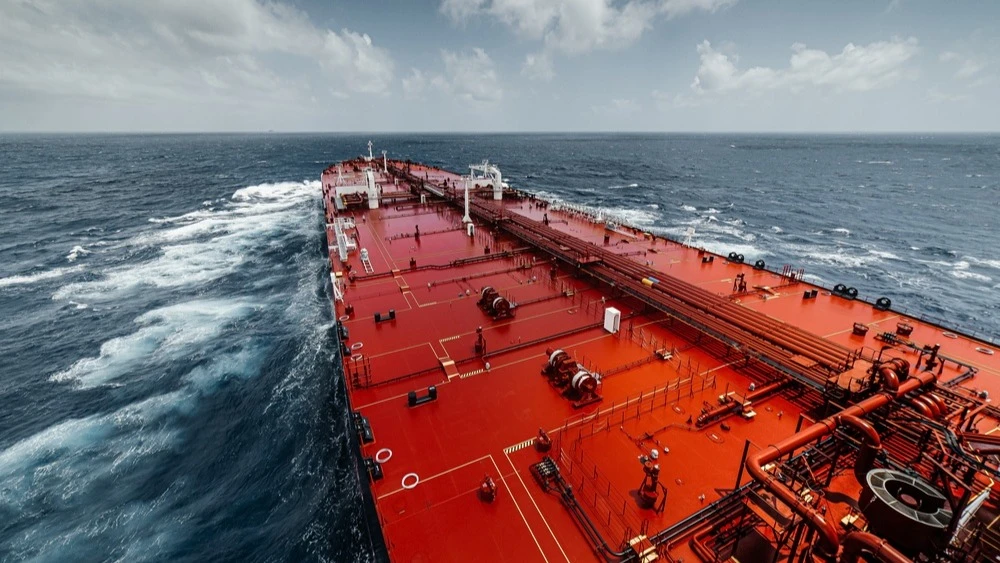
The Strait of Hormuz is open, but ships there are occasionally attacked / Photo: Maksims Osobenkov/Shutterstock
A fully loaded liquefied natural gas (LNG) tanker (LNG) Al Rekayyat, owned by the Qatari state-owned shipping company Nakilat, was struck off the coast of Oman while exiting the Strait of Hormuz, Bloomberg reports , citing sources. The incident was yet another test of the U.S.-Iran agreement, which was intended to suspend attacks while a comprehensive peace treaty was being negotiated, the agency notes.
Details
EOS Risk Group classified the incident as a missile or drone attack that occurred approximately 15 km east of the Omani city of Lima, according to Bloomberg. The attack caused a fire on the vessel, EOS Risk Group said. On June 6, the UK Maritime Trade Operations (UKMTO) issued a notice regarding the strike on the tanker, which caused a fire on board. No casualties were reported.
According to data from vessel-tracking systems, the tanker was sailing with its transponders—which transmit its location—turned off at the time of the attack, Bloomberg reports. QatarEnergy and Nakilat did not respond to Bloomberg’s request for comment.
On Monday night, Iran fired at least two missiles at commercial vessels in the Strait of Hormuz, Axios reported, citing two U.S. officials. The two ships sustained damage, but there were no casualties, the publication reported. It did not name the affected ships.
Amid reports of the attack, Brent crude oil futures rose by about 1.4% to $73 per barrel. U.S. WTI crude oil rose similarly, to $69.5 per barrel.
Why Is This Important?
The Strait of Hormuz is a vital maritime route through which, prior to the war between the U.S. and Iran, one-fifth of the world’s oil and gas supplies from the energy-rich Persian Gulf region passed. The strait has remained a zone of tension since late February: Iran closed it to shipping shortly after the conflict began and reopened it only after the parties signed a memorandum of understanding that paved the way for full-fledged peace talks.
The U.S. and Iran, however, have already exchanged blows twice following similar escalations triggered by the downing of an American helicopter and an Iranian attack on a commercial cargo ship.
Negotiations between the U.S. and Iran have been temporarily suspended due to the funeral of Iran’s Supreme Leader Ali Khamenei (the burial is scheduled for July 9), and plans are in place to resume them with Qatar acting as a mediator. The June agreement established a 60-day period for negotiations, but reaching a lasting peace is complicated by unresolved issues regarding the unfreezing of Iranian assets, transit fees through the Strait, and Tehran’s nuclear ambitions, Bloomberg notes.
The new attack has already forced other companies to urgently change their routes, Bloomberg adds. According to navigation data cited by the agency, the Qatari LNG tanker Al Areesh, which was headed for Pakistan, changed course as it exited the Persian Gulf. According to analysts at Kpler, traffic through the strait continues, but it is fragmented, as shipowners are choosing routes based on their own risk assessments.
This article was AI-translated and verified by a human editor