A Rival for Nvidia: AMD Will Release Its First Ready-to-Use AI Server, Which Microsoft Will Purchase
AMD accounts for only about 4.5% of the data center chip market, but Helios could change that

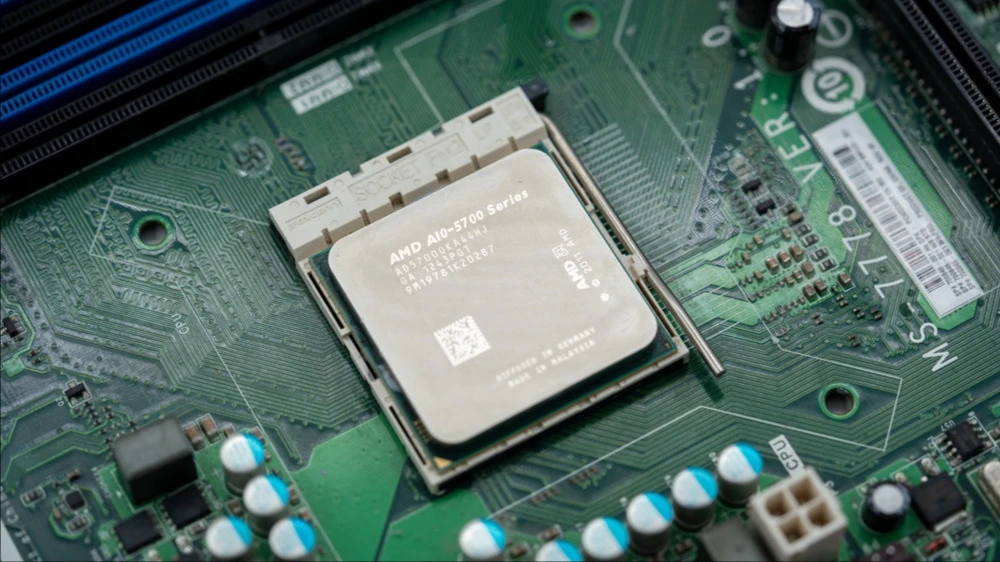
AMD's Helios system could hit the market at a price ranging from $5 million to $5.5 million per rack / Photo: Erman Gunes / Shutterstock.com
Chipmaker Advanced Micro Devices will begin shipping Helios, a ready-to-use rack-mounted AI system for data centers, this year. This is the first competitor to Nvidia’s extremely popular Grace Blackwell and Vera Rubin server systems, notes CNBC. Notably, Microsoft Azure is among the customers planning to purchase Helios.
At the start of trading on Monday, AMD shares jumped nearly 5%, before paring some of their gains. Since the beginning of the year, the company's stock price has risen 137%.
Details
The Helios system is built on the MI400 GPU and brings together four areas that AMD is developing internally: graphics-based AI accelerators, server management processors, networking technologies, and software. “We are very focused on delivering the best total cost of ownership and the lowest cost per token—taking all factors into account,” said Forrest Norrod, head of AMD’s data center division, in an interview with CNBC.
He did not disclose the cost of Helios. According to estimates by the analytics firm Futurum Group, the system will cost between $5 million and $5.5 million, while the price of the second-generation version of Nvidia’s similar product, Vera Rubin, could range from $3.5 million to $4 million.
According to Futurum Group, Nvidia controls more than 95% of the data center GPU market. AMD accounts for only about 4.5%, but Helios could change that, the TV channel claims. “I think there’s a realistic scenario in which AMD will achieve great success and be able to reach a 20–25% market share. And that, by the way, represents hundreds of billions of dollars in revenue,” Daniel Newman, an analyst and CEO of Futurum Group, told the TV channel.
In the first quarter of 2026, data centers accounted for the majority of AMD’s revenue, with sales in this segment growing by 57%. The company told CNBC that starting next year, it plans to generate tens of billions of dollars in revenue from its AI business for data centers, with Helios accounting for the majority of that revenue.
At the same time, Intel remains the clear leader in the data center CPU market, according to CNBC. However, AMD is strengthening its position here as well, which sets it apart from Nvidia, which released its first server processor only in 2021 and this year adjusted its strategy to place a greater focus on such chips.
Partnership with Microsoft
On Monday, July 20, Microsoft announced that it will use the Helios system in its data centers. The financial terms of the deal and the amount of computing capacity involved have not been disclosed. “‘We are expanding the Azure infrastructure portfolio with AMD Helios to give customers the performance, scale, and choice they need to build and run the next generation of AI applications,’ Microsoft CEO Satya Nadella is quoted as saying in an AMD press release.”
Microsoft is among a growing number of major companies turning to AMD for AI accelerators. According to AMD, eight of the top ten AI companies are running workloads on its Instinct GPUs, including OpenAI, Cohere, and SpaceX’s AI division. In February, Meta announced that it would eventually use up to 6 gigawatts of AMD GPUs. Oracle has also made major commitments to deploying Helios this year, as has India’s largest IT company, Tata Consultancy Services.
Is AMD catching up to Nvidia?
AMD’s chips for Helios are “on par” with Nvidia’s GPUs and CPUs, but “the secret ingredient lies in the software and optimization,” Neil Shah, an analyst at Counterpoint Research, explained to CNBC. “In my view, Nvidia has a larger ecosystem and is significantly ahead of AMD,” he said. However, the launch of the Helios integrated solution gives AMD an opportunity to make significant progress—depending on how successful the initial deployments turn out to be, the analyst noted.
“The question is this: Is AMD winning because it’s technologically superior to its competitors? Or is capacity so limited that if it can build it, someone will buy it?” Newman explained.
This article was AI-translated and verified by a human editor