The sell-off has spread to the Dow. Brent has approached its peak since the start of the war with Iran

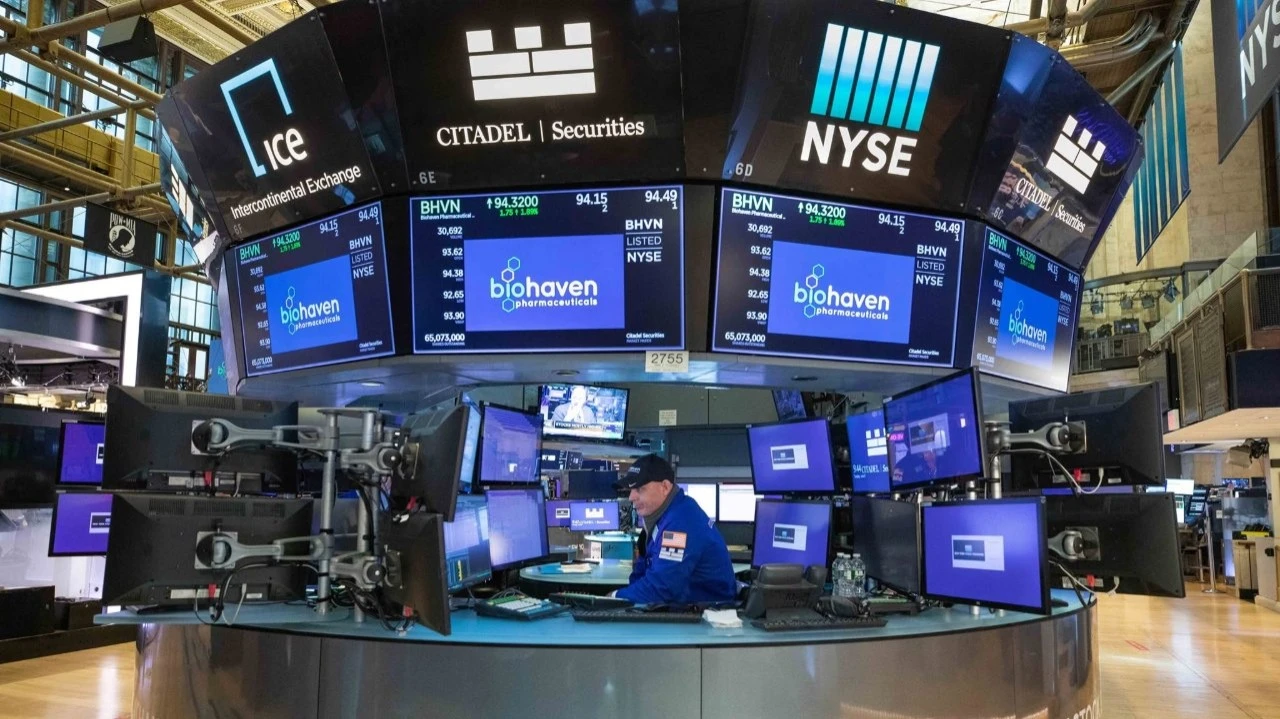
Photo: X / NYSE
The sell-off in the technology sector that began last week spread to blue-chip stocks: the Dow Jones Industrial Average (DJIA) fell 1.24% on November 23. Investors are reacting to another spike in oil prices and a renewed escalation of tensions between the U.S. and Iran.
The day before, The New York Times reported that the U.S. and Israel had drawn up plans for new strikes against Iran following the U.S. midterm elections. Against this backdrop, Brent crude futures rose 3.6% on Friday to $117.26 per barrel, the highest price since late April. The price of WTI rose 4.25% to $103.7 per barrel. Overall, Brent contracts closed the day up $3.55, or 3.1%, jumping to $116.72—just 1.4% below the highest closing price since the start of the war with Iran—$118.35 per barrel, recorded on March 31, according to MarketWatch. Overall, oil futures rose by $6.86, or 6.2%, over the past week. This marks the strongest gain since the week ending September 11.
The so-called “Wall Street Fear Index,” or the CBOE Volatility Index (VIX) , reached 20.02 points during Friday’s session; the last time it closed above this level—considered a psychologically significant threshold indicating high volatility—was on July 27. It closed Friday’s trading session at 19.75.
CNBC notes that on October 23, even the previously “defensive” market sectors came under pressure: shares of companies in the consumer, utilities, and healthcare sectors fell. The rotation into these “defensive” sectors had recently been supporting the Dow. For example, American Express lost more than 3% after announcing it would cut approximately 5% of its global workforce. The company explained the decision as a need to “prepare for AI.” Caterpillar fell by about 2%, and Goldman Sachs by about 1%. The tech sector’s main heavyweight—Nvidia, which is also part of the Dow—lost 0.6% of its market capitalization.
Meanwhile, the stocks that led the tech sector’s decline on Thursday rebounded slightly: Microsoft shares rose 0.7%, Micron Technology shares rose 2.5%, and Advanced Micro Devices shares rose 1.7%. The First Trust NASDAQ Cybersecurity ETF, which tracks cybersecurity service providers, gained more than 3% on Friday amid investor concerns over a PHP server-side code security issue identified this week by AI and affecting about 70% of all web hosting providers. Over the week, the fund’s share price rose 7.4%.
The S&P 500 broad-market index fell 0.52% on Friday, while the Nasdaq Composite—which had plummeted 2.6% the previous day—lost only 0.21% on November 23.
At the end of the week, the DJIA rose 0.45%, while the S&P 500 and Nasdaq fell 0.46% and 0.67%, respectively.
This article is being updated
This article was AI-translated and verified by a human editor