"A Shift That No One Can See": An AI Researcher Has Identified a Threat to the Markets
An interview with John Nosta, head of the NostaLab think tank and former member of the Google Health advisory board

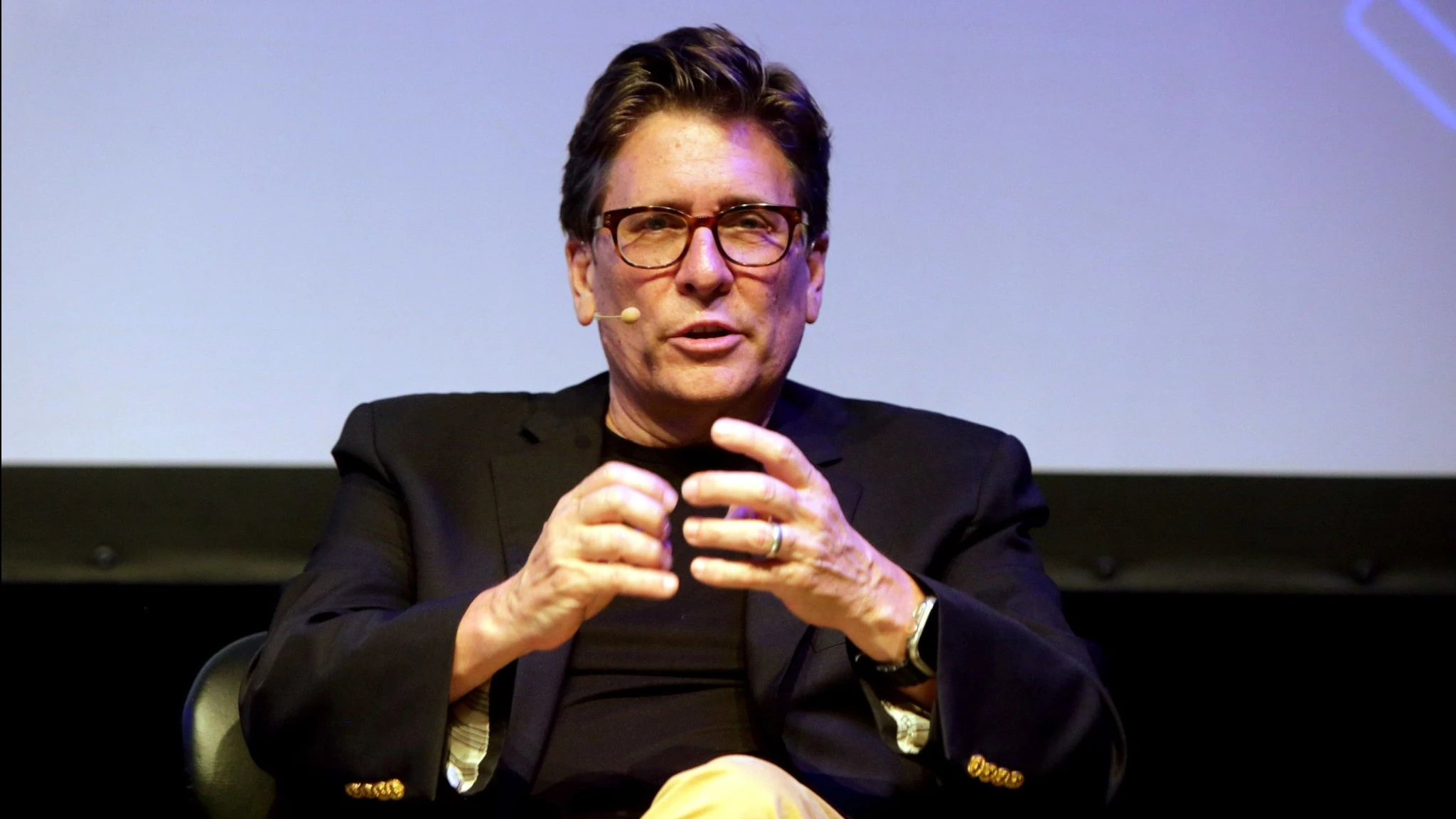
If investors systematically stop exercising their cognitive “muscles,” the market does not become more rational or efficient, according to digital health researcher John Nosta. Photo from personal archive
Artificial intelligence is entering a new era with the rapid development of AI agents, prompting investors to begin rethinking traditional business models—those that rely on human involvement.
Microsoft CEO Satya Nadella argues that the development of artificial intelligence is completely “upending conventional wisdom” about how processes work within companies: how will they continue to evolve, accumulate intellectual capital, and achieve success if AI models continuously “absorb” human and business expertise, turning it into a publicly available commodity? Meanwhile, one of the largest AI developers—Anthropic—has warned that in the future, models will be capable of improving without human involvement, and has called for slowing down the development of artificial intelligence to allow more time to address the consequences of this technological advancement.
What if people start relying more on AI and lose the ability to make decisions on their own? What if this affects investors? Then markets will become more fragile, argues John Nosta, who conducts research on AI and digital health. He is the founder and president of NostaLab think tank and former member of the Google Health advisory board. According to Nosta, the use of AI could pose fundamental threats to investors.
The highlights of the interview with him can be found in the Oninvest article.
As AI advances, the risk of “abandoning the thought process” is growing
Cognitive biases are errors that arise within the thought process. When an investor relies on a heuristic (a simplified decision-making strategy under conditions of uncertainty—ed.), they're still the author of the decision, even if the shortcut misfires. Behavioral biases are errors that occur within thinking. Cognitive surrender is something else entirely. It's a withdrawal from the process itself. A person’s agency has moved outside.
The capacity to reason under uncertainty, to tolerate not-knowing, to be wrong and recalibrate as these aren't just cognitive skills. They're closer to the core of what it means to be a person. When we systematically hand that off, we're not just making worse decisions. We're disavowing something fundamental to human dignity.

Cognitive surrender precedes learned helplessness. It's the voluntary chapter before the involuntary one. You hand over the thinking gradually, almost gladly, and only later discover that the capacity to think it through yourself has diminished or atrophied. The learned helplessness that follows isn't experienced as defeat—it's experienced as efficiency. That's what makes it so difficult to recognize and so easy to justify.
I'm not being hyperbolic when I say this edges toward a human rights question. The rights discourse has always been grounded in what makes humans distinctively human such as autonomy and even self-determination. AI systems that absorb those functions don't just change how we invest. They change what we are while we're doing it.
AI threatens the market's ability to self-correct
Financial markets were already a difficult environment for human cognition that are full of uncertain and emotion. AI didn't create the pressure. It arrived with an offer to relieve it. That's the trap.
The relief that comes from a decision being made by artificial intelligence is not insight. But it feels that way, especially when the model performs well and the feedback seems to validate its utility.
In financial markets the cognitive load is structural, not incidental. Uncertainty isn't a bug, it's the condition. So when something arrives that makes the discomfort abate, the temptation isn't weakness, it's almost rational. Which is precisely what makes it so worth watching.
At the individual level, cognitive surrender feels like a reasonable trade that offers you an emotional trade that is powerful—less burden, better performance, lower anxiety. But aggregate enough of those individual rationalities and something shifts at the system level that no single actor intended or can see.
When everyone delegates to similar models, consensus isn't reached through the friction of competing human judgments. It's manufactured upstream, in the technology and not in the humanity. The diversity that makes markets self-correcting and in this context, may be engineered out.
This, perhaps, is the fundamental and tragic Faustian bargain. Fragility doesn't announce itself in markets, it accumulates. And the very thing that made each individual decision feel more reliable is what made the collective more brittle. That's not a paradox to resolve. It's a warning that we need to heed.
AI vs. Investor Experience: The Threat of “Synchronized Blindness”
Every investor talks about how they’ve been burned in the market, and over time, that experience turns into intuition. The key point is that it can't be transferred to a model, because models don't carry the memory of what it cost to learn. And "cost" is an interesting term and perspective here.
If investors systematically stop training those cognitive muscles, the market doesn't just become more rational or more efficient. I contend that it becomes more brittle. Market fluctuations and anomalies—which an experienced trader might intuitively pick up on—become invisible.
When everyone's risk assessment builds on similar models processing similar signals, you don't achieve wisdom at scale. You get something that can be very dangerous — synchronized blindness.
This article was AI-translated and verified by a human editor