A tungsten project in Kazakhstan linked to Trump's sons has estimated its value at $2 billion


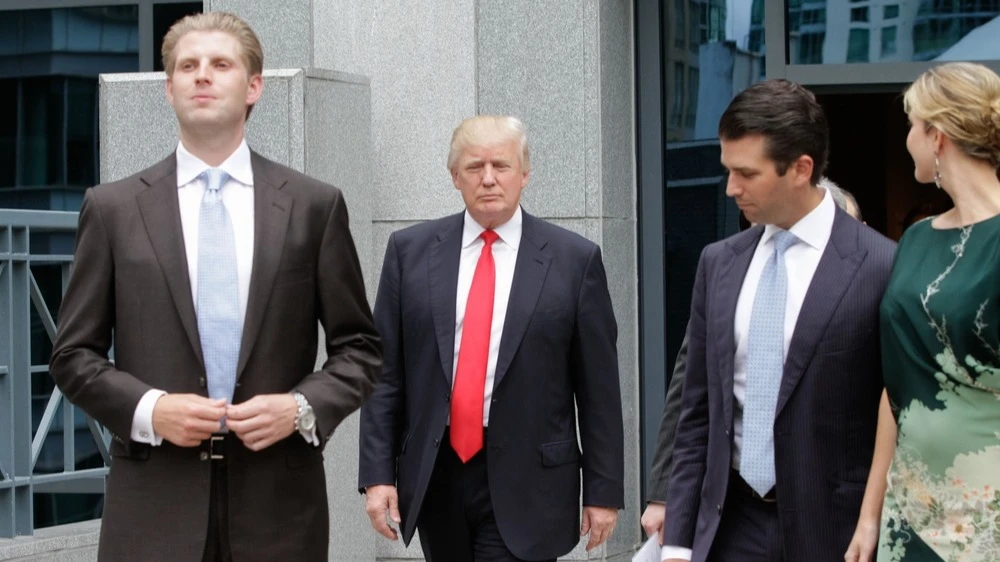
The Trump family's involvement in a tungsten project in Kazakhstan has raised questions about a conflict of interest among U.S. senators. Photo: Harrison Ha / Shutterstock.com
An American company, which holds a 70% stake in the project to develop Kazakhstan’s largest tungsten deposits, Severny Katpar and Verkhny Kayrakty, has announced that it intends to go public via a direct listing in the first half of 2027.
What happened?
Skyline Builders—a Hong Kong-based construction contractor that came under the control of U.S. investors in 2025 and shifted its focus to critical minerals—and the U.S.-based Cove Kaz announced that they were calling off the merger agreed upon in April.
Cove Kaz owns 70% of the project to develop the Severny Katpar and Verkhny Kayrakty tungsten deposits in Kazakhstan; the remaining 30% is held by the state-owned company “Tau-Ken Samruk.” The company now intends to go public on its own via a direct listing as early as the first half of 2027. Prior to that, it will be reorganized into a Delaware corporation (which is necessary to go public and trade common stock) and renamed Kaz Resources Inc. Meanwhile, Skyline will vacate the KAZR ticker symbol within 15 days, which Cove Kaz expects to acquire.
The relationship between the companies remains intact. In November 2025, Skyline acquired approximately 20% of the shares in Kaz Resources LLC—a company affiliated with Cove Kaz and owned by its founder, Pini Althaus, which holds a stake in Cove Kaz.
In addition, Skyline has extended a convertible loan of up to $45 million to Cove Kaz. Skyline will now exchange its stake in Kaz Resources and its loan claims for a 26% stake in Cove Kaz.
Why are they changing the structure of the deal?
The official version is that it’s faster. A direct listing is “a cleaner, quicker way for us to become a publicly traded company,” Althaus said in an interview with the WSJ. Skyline explains that this way, its shareholders will receive the value of their stake in Cove Kaz more quickly. Skyline plans to distribute this value to its shareholders and then seek new deals in the critical minerals sector.
But the initial merger also had political costs. According to the WSJ, it was partly orchestrated by partners of Trump’s sons, and the deal drew the attention of Senator Elizabeth Warren. In July, she sent letters to Commerce Secretary Howard Luthnik, Pentagon Chief Pete Hegset, and the heads of EXIM and DFC. Warren asked whether the White House was influencing decisions regarding federal support for the project, which is estimated at nearly $2 billion. The new structure removes Skyline from its role as a future public company. Althaus stated that he is prepared to testify before Congress if lawmakers invite him: “There’s no smoking gun here.”
What is the Trump family's current stake in the Kazakhstani project?
The sons of the U.S. president, Eric and Donald Trump Jr., are listed among Skyline’s investors. Dominari Holdings, which is partially owned by the Trumps, helped facilitate the investment in Skyline. Now, Dominari’s investment arm, American Ventures, has committed to investing $32 million in Cove Kaz in exchange for 4 million new shares at $8 each, representing approximately 1.6% of the company’s equity. According to the WSJ, strategic investors interested in tungsten supplies may join the funding round.
Skyline will hold another 26% or so, while the current shareholders of Cove Kaz and Kaz Resources will retain about 70%. The company has not disclosed the remaining ownership. The Trumps will not hold any direct shares. According to a WSJ source, their indirect stake will be less than 1%, meaning it is worth less than $20 million even at the new valuation. Althaus refers to them as passive investors.
Is the company really worth $2 billion?
This is a paper valuation. A price of $8 per share values Cove Kaz at $1.97 billion. According to Cove Kaz, this is 76% higher than the previous round. This explains the value of Skyline’s stake: once the round closes, it will be valued at more than $500 million. However, this valuation is based on a small round from an entity affiliated with Skyline’s controlling shareholders, and that round has not yet closed. Skyline itself values its stake in Cove Kaz at approximately $3.40 per share, taking full dilution into account. But the market disagrees: on November 2, the day of the announcement, KAZR shares fell 22% to $1.27—nearly 2.7 times lower than that valuation. That said, there are very few shares in free float, so the market price is a poor indicator.
What are the investment prospects for the project?
Until its IPO in 2027, the project is not directly accessible to investors, and the timeline for the distribution of Cove Kaz shares has not yet been determined. The project has a solid foundation, but it is still a long way from generating revenue. Reserves at the two deposits, as measured by JORC (the international standard for mineral resource and reserve classification), are estimated at 410,000 metric tons in WO3 equivalent (according to The Astana Times; WO3 stands for tungsten trioxide). Samruk-Kazyna calls them among the largest in the world. The company plans to produce about 12,000 metric tons per year, which it estimates accounts for about 15% of global production. Global production in 2025, according to USGS estimates, totaled about 85,000 metric tons, with China accounting for 79% of that total. However, the feasibility study is still underway, and the company hopes to begin production only in 2030. By mid-October, Chinese prices for APT and concentrate had fallen by approximately 67% from their March peak. At current Chinese prices, 12,000 metric tons of APT would generate approximately $0.8–0.9 billion in annual revenue (Oninvest estimate).
The construction project is estimated to cost approximately $1.1 billion. In November 2025, EXIM and DFC issued non-binding letters of interest to Cove Kaz regarding financing of up to $1.6 billion: up to $900 million and up to $700 million, respectively. In March 2026, the company requested an additional $400 million from the Pentagon (Office of Strategic Capital) to accelerate the mine’s development. Separately, Cove Kaz signed a letter of intent with the U.S. Department of Commerce to prioritize meeting the needs of the U.S. government and businesses. The company did not disclose any U.S. procurement commitments.
This article was AI-translated and verified by a human editor