The Battle for Tungsten: How Kazakhstan Found Itself at the Center of the Global Race for Critical Minerals

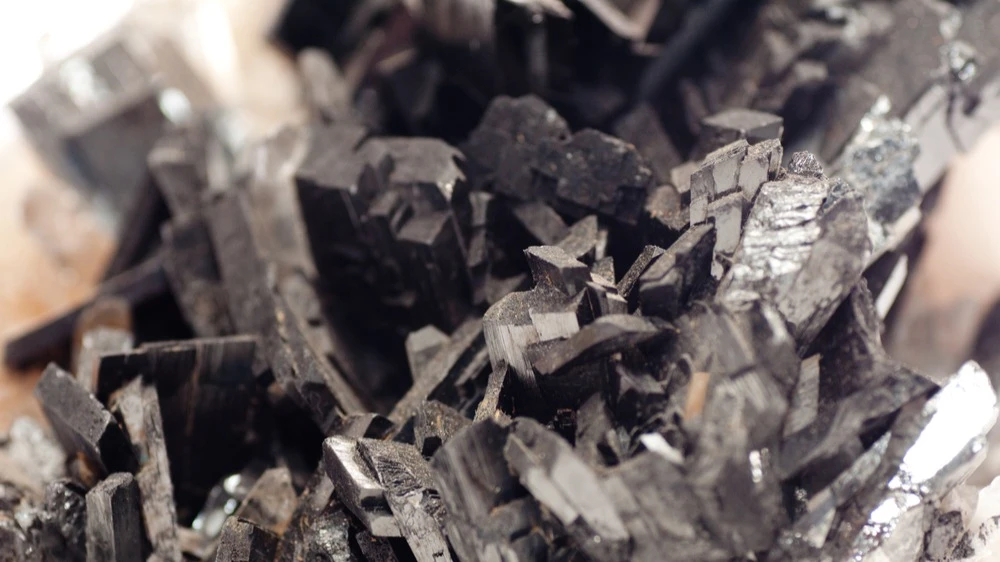
The U.S. is beginning to develop tungsten deposits in Kazakhstan to reduce its dependence on China / Photo: Shutterstock.com
Tungsten is one of the world’s most strategically important metals. Due to China’s export restrictions and a sharp rise in demand from the defense industry, a serious shortage has emerged in the market. If its reserves are confirmed and its projects reach full capacity, Kazakhstan could become one of the world’s largest tungsten producers and claim second place behind China.
Americans in Kazakhstan
Foreign investors’ interest in Kazakhstan’s market for rare and “critical” elements surged sharply last year. In total, since the beginning of 2025, reports of such investments amounting to approximately $2.4 billion have been identified, of which about $2 billion is expected to come from foreign investors.
The main deal in this area is an agreement between the U.S.-based Cove Kaz Capital (70%) and the state-owned Tau-Ken Samruk (30%) to develop the Severny Katpar and Verkhny Kairakty deposits, with total reserves of 410,000 tons of tungsten. The project gained particular notoriety when news broke of the planned merger between Cove Kaz Capital and Skyline Builders, whose investors reportedly include the sons of the U.S. president—Eric and Donald Trump Jr. Back in November 2025, Cove Kaz Capital received preliminary approval from the U.S. government for up to $1.6 billion in funding to develop the deposits, and in May requested an additional $400 million to accelerate the mine’s development. All production will be prioritized to meet the needs of the U.S. government and American businesses—though without any obligation on the part of the U.S. to purchase the entire volume.
The project will be managed by Australian Dominic Heaton, under whose leadership the Nui Fao plant in Vietnam—the largest tungsten producer outside of China—was built and brought up to full capacity.
This is not the only tungsten deposit development project in Kazakhstan that has attracted American interest. In February 2026, the U.S. Export-Import Bank (US EXIM) expressed interest in providing up to $240 million in financing for the Drozylovskoye deposit in the Kostanay region. This amount would cover a“significant portion” of the project’s capital costs. Tungsten trioxide resources at the Drozylovskoye deposit are estimated at 126,400 tons, which corresponds to 100,200 tons of pure metal.
Unlike Katpar, this field is being developed by a private Kazakhstani investor—QazMoly, a company that is part of the Altyn Group. It is owned by the Assaubayev family, who are related to the country’s former president, Nursultan Nazarbayev. QazMoly gained control of the field back in 2013, but plans to launch the project have not yet been realized.
Military targets
“In my 12 years working in the commodities markets, dealing with all sorts of strange and surprising metals, I’ve never seen a market as tight as the current one for tungsten,” said George Heppel, vice president of commodities research at BMO Capital Markets, in March. According to him, the war in Iran has served as a “harsh reminder” of the metal-intensive nature of modern warfare: “Hundreds and thousands of drones, as well as hundreds and thousands of missiles and drones designed to counter them. Tungsten plays a major role in this.”
The U.S. Department of Defense classifies tungsten as a strategically important material. It has the highest melting point of any metal (3,410 degrees), high hardness, and a density one and a half times that of lead. Tungsten itself is used in the manufacture of incandescent lamps, heating elements, and welding electrodes, as well as an additive in alloys. Extremely durable tungsten carbides are used in drilling tools and cutters, as well as in the warheads of armor-piercing shells and the striking elements of modern missiles and attack drones.
The majority of global tungsten production is used in civilian industries. The problem is that, despite relatively low consumption volumes for weapons production, tungsten is virtually irreplaceable due to its unique properties. And, according to estimates by the analytical firm Project Blue, demand from the defense industry—which currently accounts for approximately 12% of the tungsten market—is expected to grow to about 15% between 2027 and 2028.
In the fight against monopoly
In April 2026, the Critical Minerals Institute ranked tungsten among the top five strategic metals. “A mineral resource becomes critical when its production is concentrated in one or two countries—especially when those jurisdictions pose a risk to the stability of global supply,” the institute said in a statement.
The main issue facing the current tungsten market is extreme concentration: China accounts for up to 80% of global tungsten production. The major players in the domestic market are the state-owned Jiangxi Tungsten Holding Group, China Tungsten, and China Minmetals Hightech Materials.
In February 2025, the country tightened restrictions on tungsten exports, citing national security concerns, and continues to impose strict export controls on this metal. As a result, shipments of tungsten-containing components fell by nearly 70% in 2025 . From January 2025 to March 2026, global tungsten prices rose nearly eightfold—but by June they had fallen by half and then risen again by more than a quarter to $188.2 per kilogram (price in China excluding shipping, licensing, and other costs).
“There is no competition in this field; China has monopolized this sector, and we are decades behind them,” said Pini Althaus, managing partner and founder of Cove Capital, in 2024.
The U.S. produces less than 1,000 tons of tungsten annually, which is not enough to cover even 5% of its own needs. To address the shortage of “critical” minerals, the current U.S. administration has allocated a “staggering” $18.6 billion—though, as experts at BMO Capital Markets note, $15.9 billion of that currently exists only in the form of letters of intent from the Export-Import Bank.
“Since the tungsten market is small, a shortage could trigger further price increases before the situation stabilizes,” according to David Argyle, co-founder of Arlington Innovation Partners, an American company that specializes in developing supply chains for critical materials. He noted that the situation will remain “disappointing and frustrating” for another two years or so—until new mines come online in various countries.
Outside of China, the largest publicly traded tungsten producers are Masan High-Tech Materials (Vietnam, Nui Fao—reserves of approximately 110,000 tons), EQ Resources (Australia, Mount Carbone—about 75,000 tons), and Almonty Industries (Portugal and South Korea—a total of about 240,000 tons).
Deposits
The Severny Katpar and Verkhnie Kayrakty deposits were discovered by Soviet geologists in the mid-20th century. They are located close to one another and have a fairly well-developed infrastructure. In the 1980s, plans were made to build a large mining and processing plant at Verkhniy Kayraktinsky, but the project never reached the industrial stage. After the collapse of the Soviet Union, work at both deposits came to a halt.
These two deposits account for about 70% of Kazakhstan’s tungsten reserves—approximately 1.4 million tons (though some of these estimates date back to the Soviet era and have not been verified since then).
According to updated data in accordance with the JORC international standard, the reserves of these deposits are estimated to be more modest, at just 410,000 tons of tungsten—but that is still nearly four times more than at the largest mine outside of China, the Nui Fao deposit in Vietnam.
At various times, investors from China, Russia, and Europe have shown interest in Kazakhstan’s deposits, but all agreements stalled at the exploration stage. Until recently, global production generally met demand, so, given the high volatility of prices, investments in the industry were also associated with significant risk, according to the “Comprehensive Plan for the Development of Kazakhstan’s Rare and Rare-Earth Metals Industry for 2024–2028.” The plan alsonotesthe low level of geological exploration at deposits, the lack of open access to proven reserves, and the obsolescence of fixed assets.
According to management, Cove Capital’s primary goal at this time is to complete engineering studies, develop construction plans for the mine and processing plant, and begin work within the next eighteen months. According to estimates by the International Energy Agency (IEA), the average global construction time for mining facilities, excluding exploration and permitting procedures, is 4–5 years.
Kazakhstan is already home to one of the largest tungsten deposits—the Boguty deposit, which ranks fourth in the world in terms of reserves. It is being developed by the Chinese company Jiaxin International Resources (the project is valued at approximately $300 million). In 2024, a processing plant was launched with a design capacity of approximately 10,000 tons of tungsten concentrate per year.
Effects and Risks
If the Severny Katpar and Verkhnie Kairakty deposits are brought into production, the planned output will be approximately 12,000 tons per year. This is approximately 15% of the current global annual tungsten production, which is estimated at 85,000 tons per year. If current production levels in other countries remain unchanged, this could make Kazakhstan the world’s second-largest producer of tungsten after China, which produced 59,000 tons last year.
Once the projects reach full capacity, the value of annual production from North Katpar and Upper Kairakty could exceed $1.5 billion, even at domestic Chinese prices. Given current market volatility, European prices could be tens of percent higher—or even several times higher.
A May report by BMO Capital Markets states that Kazakhstan’s oil fields may eventually have enough capacity to meet all of the United States’ needs. “However, both are at a very early stage of development, and U.S. government funding for them has so far only been allocated but is not guaranteed to be disbursed,” the May report from BMO Capital Markets notes. Mikhail Korostikov, a visiting researcher at the Belgrade Center for Security Policy, also sees risks for the project: these are linked to a possible change in the U.S. administration following the next presidential election, in which case projects supported by the current U.S. president could be reconsidered.
This article was AI-translated and verified by a human editor