"Wall Street Punishes Hyperscalers." Why Bill Eckman's Fund Believes in the Returns from AI

Meta shares are held in Pershing Square's investment portfolio / Photo: ADRIAN3388 / Shutterstock
Bill Eckman's Pershing Square fund believes that Wall Street analysts are underestimating the growth potential of the major hyperscalers. Consensus forecasts take into account increased spending on AI infrastructure but do not fully reflect the potential returns on these investments.
Details
"Analysts are penalizing hyperscalers for their current infrastructure construction costs, while giving little weight to the significant future revenue and profit growth that these investments are likely to generate," —
says a letter to Pershing Square shareholders following the third-quarter results.
As an example, the fund cited Meta: the consensus forecast suggests that between 2026 and 2029, its capital expenditures will increase from 50% of revenue to 65%, while revenue growth is expected to slow from 27% to 15%. Wall Street forecasts similar trends for Microsoft and its cloud division, Amazon Web Services: capital intensity will remain high, while revenue growth will stabilize or slow, according to Seeking Alpha.
Pershing Square has calculated the potential return on investment in AI infrastructure. According to the fund’s estimates, building one gigawatt of data center capacity for the latest-generation chips costs approximately $40–50 billion. At the same time, each gigawatt can generate between $15 billion and $20 billion in annual revenue, half of which translates into operating profit, the letter states. This translates to $7.5 billion to $10 billion in additional revenue, the fund added. This implies a pre-tax return on investment of 15–25%, Pershing Square writes.
By applying these assumptions to the projected capital expenditures for business expansion, the fund identified significant potential for raising revenue forecasts for hyperscalers: their annual growth could turn out to be 5–10 percentage points higher than analysts’ expectations. And given the cumulative effect, future revenue could exceed current consensus forecasts by 15–35% or more.
Pershing Square notes that hyperscalers’ spending is “offensive rather than defensive” in nature. “Companies aren’t just defending their existing businesses: they’re investing to accelerate growth and pouring resources into technology capable of radically transforming the market and directly leveraging their competitive advantages,” according to Ekman’s fund.
The four largest tech giants—Microsoft, Meta, Amazon, and Google—are expected to spend a total of $740 billion on capital expenditures in 2026. Consensus forecasts indicate that spending will exceed $1 trillion in 2027, according to Seeking Alpha.
What kind of return does Pershing anticipate?
Pershing Square highlighted several examples of AI monetization that are already emerging among companies. Amazon’s investments in AI are helping to accelerate AWS’s growth: in the third quarter, cloud revenue grew by 39%. At Meta, artificial intelligence is improving ad targeting and content recommendations, and its AI assistant, Muse, surpassed 10 million downloads just a few weeks after its launch. This opens up additional opportunities for monetization through commerce and business services, according to the fund’s analysts. Microsoft is poised to benefit thanks to Azure, Microsoft 365 Copilot, and GitHub, they write.
What's in Ekman's briefcase?
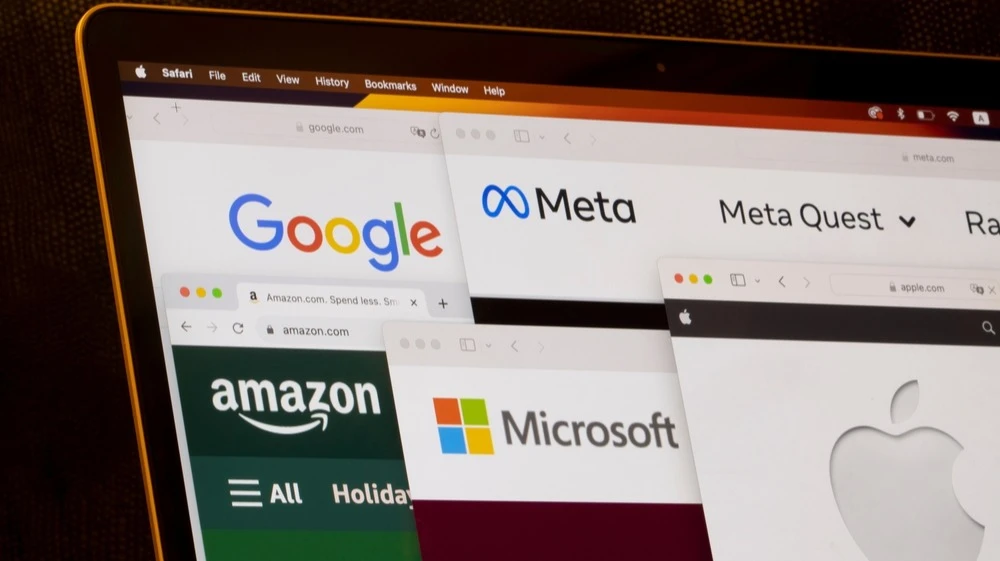
According to the letter, as of September 30, Pershing Square’s portfolio included securities from three hyperscalers. The fund’s largest position was Microsoft, accounting for 15% of the portfolio. Meta Platforms accounted for 11.2%, and Amazon for 11.2%. In the first quarter, the fund sold a portion of its Alphabet holdings specifically to free up cash to buy Microsoft, and in the second quarter, it completely closed out that position.
This article was AI-translated and verified by a human editor