Bubble or Supercycle: Major Investors and Bankers Disagree on the AI Boom


Investors and bankers are divided in their assessments of the AI market's prospects. Photo: Tada Images/Shutterstock
Fund managers and bankers who gathered on November 3 at the Global Financial Leaders Investment Summit in Hong Kong were divided in their assessments of the prospects for artificial intelligence, according to Bloomberg. Some participants warn of the risk of a bubble, while others see AI as the foundation of a new economic supercycle.
What Managers Fear
Emmanuel Roman, CEO of Pacific Investment Management (Pimco), is among a growing number of investment managers warning of the risks of a bubble in the AI sector, according to Bloomberg. “At some point, there will be a downturn, and then everything will start to collapse,” Roman said. According to him, anything could trigger the downturn: from rising interest rates in the U.S. or a war in the Middle East to a crisis in the eurozone.
“There are definitely bubbles that will burst,” says John Connerton, chairman of Bain Capital. “That’s why we view current stock valuations as very high, but the key question regarding AI is this: will you get a return commensurate with that valuation?”
Franklin Templeton CEO Jenny Johnson acknowledged that the investment cycle in the AI sector has stretched on for too long, citing a structural shift in the economies of the largest tech platforms as the main risk. “We’re at that stage in the cycle where the question arises: ‘Have we gone too far?’” Johnson noted. “I think part of the problem, especially with hyperscalers, is that these companies with large cash flows used to require low capital expenditures, but now they’ve suddenly become capital-intensive.”
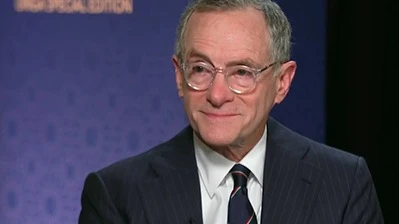
Howard Marks, co-chairman of Oaktree Capital Management, noted the emerging skepticism toward AI, calling investments in it an “overcrowded bet.”
That said, fund managers aren’t entirely pessimistic, according to Bloomberg. Even those who point out potential risks acknowledge the enormous opportunities associated with AI. “If you’re on the right side of the bet, this is the opportunity of a lifetime,” said Brookfield CEO Bruce Flatt.
Why Optimists Are Anticipating a Supercycle
Executives at leading Wall Street banks are much more optimistic, according to Bloomberg. Discussing the tech supercycle, Goldman Sachs CEO David Solomon said that “there will be bumps along the way,” and investors need to learn to deal with them. However, he added that capital markets remain active despite short-term volatility, and that investors “remain focused on the trajectory of demand for AI and computing power, while capital markets are open and ready for deals.”
Morgan Stanley CEO Ted Pick stated that capital expenditures on AI could range from $10 trillion to $15 trillion. This would cement the technology’s status as the most significant economic transformation since the dawn of the internet. He also warned that massive investments in AI could limit access to financing for successful companies in other industries.
“A certain amount of skepticism right now is probably helpful,” said Blackstone President John Gray. He noted that the global trend in AI points to growing investment and significantly higher demand for capital. “What’s happening has tremendous power, and I believe it would be a mistake to underestimate the coming growth in productivity and changes in consumer and business behavior,” he emphasized.
Standard Chartered CEO Bill Winters commented on the potential benefits of AI: “We are currently experiencing a period of massive investment—the largest we have ever seen. But I believe these massive investments will yield significant returns.”

This article was AI-translated and verified by a human editor