Iran has stepped up attacks on ships in the Strait of Hormuz amid rising oil shipments

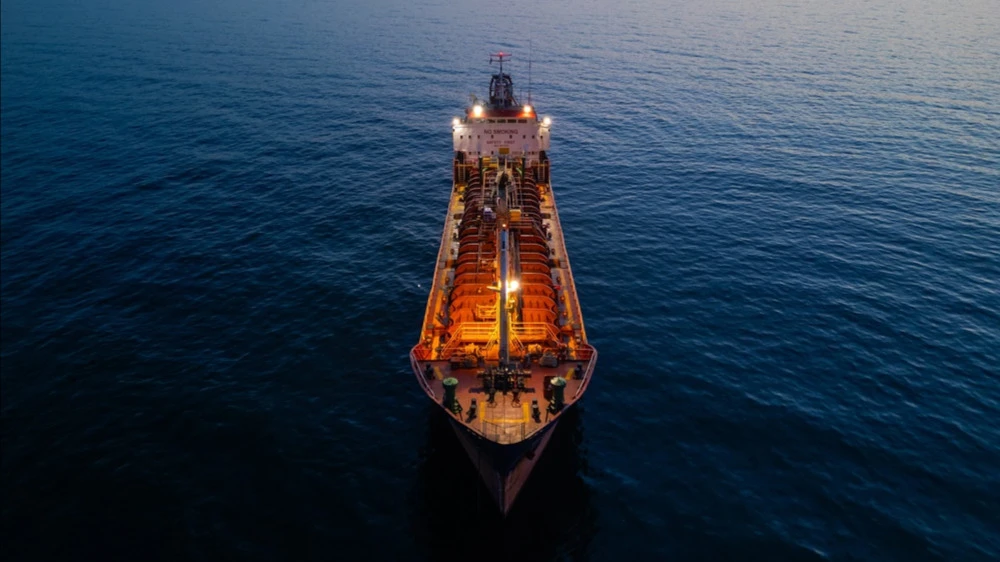
Since early October, Iran has attacked at least nine oil tankers in the Strait of Hormuz / Photo: sandsun / Shutterstock.com
In recent days, Iran has stepped up its attacks on tankers in the Strait of Hormuz amid reports that oil shipments have returned to pre-war levels through the world’s most critical energy transport route, Bloomberg reports. The UK Maritime Trade Operations (UKMTO) reported nine attacks in the strait since the beginning of this month. This accounts for half of the total number of attacks recorded by the agency throughout September in the Strait of Hormuz and the Persian Gulf combined, the agency notes. Furthermore, four of the September attacks occurred in the last two days of the month, which also points to a sharp increase in Iran’s military activity.
Representatives of maritime security agencies and shipping company executives say it is still unclear whether the current escalation will lead to a reduction in shipments through the Strait of Hormuz, according to Bloomberg. Its impact on maritime gas shipments—which have also risen slightly in recent weeks—remains uncertain, the agency notes.
The recent attacks have affected ocean freight rates. According to the London-based Baltic Exchange, on Monday the cost of shipping oil from the Persian Gulf to China reached a record $1.3 million per day. By comparison, last year this figure averaged about $60,000 per day, Bloomberg notes. Rates rose sharply as the number of shipowners willing to send their vessels through the Strait of Hormuz dwindled.
"It seems that Iran is trying to tighten its control over the Strait of Hormuz using one of its long-established tools of pressure—fear and uncertainty,” Bloomberg quotes Dimitris Maniatis, CEO of risk management firm Marisks, as saying. “Iran doesn’t need to stop every ship. It’s enough for it to convince the shipping industry that any ship could be next.”
Most tankers pass through the Strait of Hormuz via a corridor near the coast of Oman. As a rule, they cross the strait with their digital location-tracking systems turned off, according to Bloomberg. As a result, traders and analysts have to study satellite images and shipping data in an effort to determine the exact volume of shipments, the agency explains.
Oil flows through the strait have been steadily increasing since the beginning of summer, Bloomberg notes. Last week, several Wall Street banks stated that the volume of shipments is already approaching pre-war levels. Major commodity traders said this week at the Energy Intelligence Forum in London that shipments from the Middle East now account for about 80% of pre-conflict levels. And according to ship-tracking data cited by Reuters, oil exports from Middle Eastern countries in September exceeded the level recorded before the start of the war between the U.S. and Iran. This helped briefly push the price of Brent crude below $100 per barrel. However, in Tuesday’s trading, futures for this benchmark Mark rose again by 0.36%, to $100.9 per barrel.

This article was AI-translated and verified by a human editor