AI giants are pushing for data center savings. Who stands to lose?
Supernormal returns for data center equipment suppliers could soon end, Barclays says

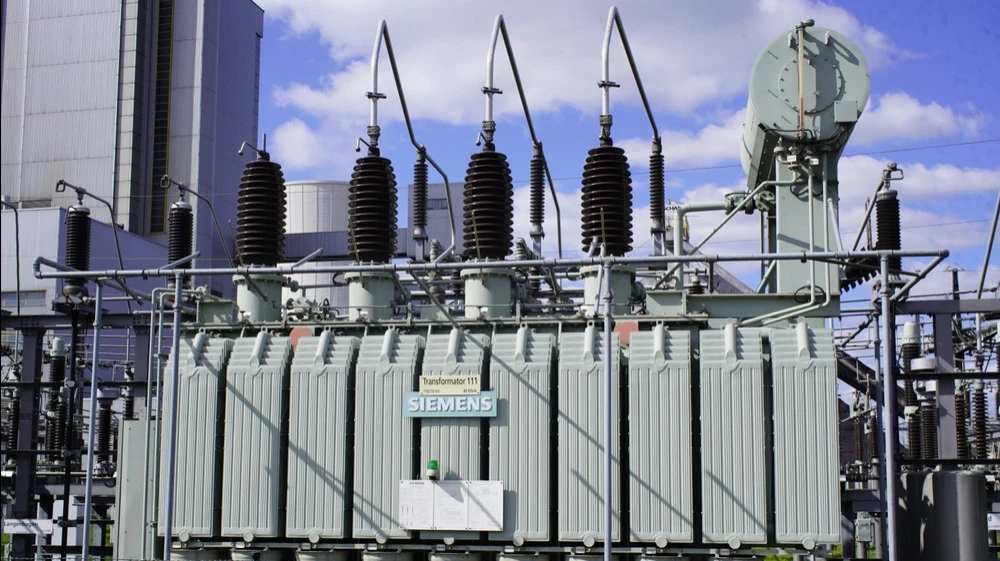
AI model developers and the largest cloud companies are driving harder bargains with equipment suppliers / Photo: guentermanausl / Shutterstock.com
The largest AI developers are starting to push for lower prices from suppliers of power and electrical equipment for data centers. That could squeeze profitability at companies such as Siemens Energy, Schneider Electric, and ABB, Barclays warns. The bank’s analysts called it “the worst of all scenarios.”
Details
Europe’s largest suppliers of power-grid equipment like Germany’s Siemens Energy, Switzerland’s ABB, and France’s Schneider Electric have significantly increased their profitability in recent years thanks to strong demand for power infrastructure for new data centers. However, “peak cycle economics could soon be normalized,” according to Barclays analysts led by George Featherstone, Bloomberg reports. As AI labs focus more on profitability and competition among suppliers intensifies, the sector could face simultaneous pressure on prices and sales volumes, the analysts argue.
Barclays already sees signs that developers of frontier AI models and the largest cloud companies are driving harder bargains with suppliers. The reasons are growing scrutiny of investment returns and rising financing costs. That is a bad sign for equipment makers that have enjoyed “supernormal returns” in recent years, the investment bank’s note states.
The analysts pointed to Nscale’s talks with Anthropic to sell computing power under a contract potentially worth around $45 billion as evidence of pressure on the supply chain. On a per-gigawatt, per-year basis, the price would be well below recent benchmarks, such as the short-term contracts CoreWeave announced in September, Bloomberg reports. Those deals were for three to six months at an annualized price of around $40 million per megawatt of capacity, equivalent to around $40 billion per gigawatt per year. Under Nscale’s six-year contract with Anthropic, the cost works out to around $16.3 billion per gigawatt per year.
Nscale’s contract and CoreWeave’s deals are not directly comparable. Still, they suggest that a “clearly over-earning supply chain is being asked to think again about its seemingly endless ability” to raise prices and expand margins, Featherstone emphasized in the note.
Competition is another source of pressure on profits. The industry’s very high returns are attracting more entrants, which should eventually weaken established suppliers’ pricing power. According to Barclays, significant production capacity expansions are under way in two areas: power equipment and medium-voltage electrical equipment. These are precisely the segments where delivery lead times have recently lengthened the most.
What is going on in the market?
Investors are increasingly questioning how much longer the AI infrastructure spending boom can last. Against that backdrop, Siemens Energy stock has fallen 31% from its April peak and is trading near its lowest levels since January. Schneider Electric has lost 22% from its August high, while ABB is down around the same amount since June.
Concerns about slowing growth at Anthropic and credit risks at neocloud operators such as CoreWeave have also weighed on investor sentiment in recent weeks.