AI Spending Threatens the Creditworthiness of Amazon, Meta, and Alphabet — Moody’s
The combined direct debt of the six hyperscalers has already reached approximately $460 billion

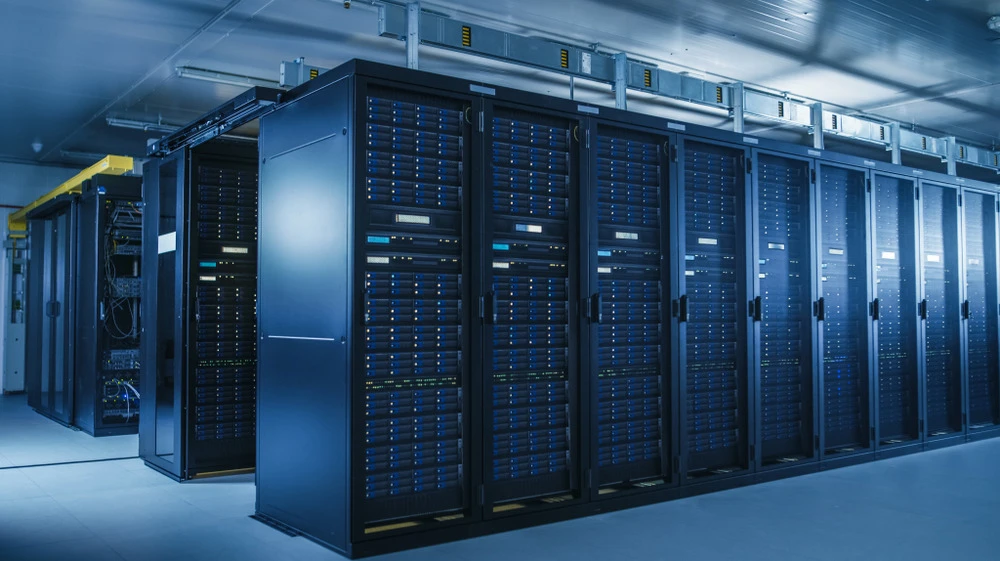
Moody’s forecasts that capital expenditures by major U.S. companies on AI data centers will reach $785 billion in 2026 and approach $1 trillion as early as next year / Photo: Gorodenkoff / Shutterstock.com
The race among the largest technology companies to build infrastructure for artificial intelligence is eroding their free cash flow and increasing risks to their balance sheets, Moody’s Ratings warned. According to the agency, this “threatens the credit quality” of the six companies Moody’s monitors: Microsoft, Amazon, Alphabet, Meta, Oracle, and CoreWeave.
Details
A Moody’s research note published this week states that the sharp rise in expenses is forcing even big tech companies like Alphabet and Microsoft to to increasingly turn to debt financing, issue shares, and use off-balance-sheet arrangements to support their AI ambitions.
Moody’s forecasts that capital expenditures (capex) by major U.S. technology companies—that is, investments in physical infrastructure, including data centers— — will reach $785 billion in 2026 and approach $1 trillion as early as next year. According to Moody’s, the aggregate direct debt of the six hyperscalers (Microsoft, Amazon, Alphabet, Meta, Oracle, and CoreWeave) has already reached approximately $460 billion. In addition, these companies are actively raising funds on the public market. As an example, the agency cites Alphabet, which last month announced an $85 billion stock offering.
“Previously, these companies relied on a capital-light business model based on software, intellectual property, and scalable cloud services that required relatively small investments, — according to a Moody’s report cited by CNBC. — The transition to a capital-intensive model with a high proportion of physical assets requires unprecedented levels of investment and capital raising.”
According to the agency’s assessment, this transformation “threatens the quality of the credit profile” of these companies. This shift is disrupting the model that for decades has enabled Silicon Valley to create the world’s most valuable companies, notes CNBC. Software replication costs virtually nothing, which allows companies to maintain high profitability and strong balance sheets, the network reports. Generative AI, on the other hand, requires massive physical infrastructure—data centers filled with expensive and energy-intensive servers and chips, CNBC emphasizes.
Free Cash Flow Under Pressure
Moody’s notes that AI equipment and infrastructure require massive upfront investments, while revenue materializes much later. As a result, the sector’s free cash flow is under pressure. For example, in its latest report, Alphabet reported negative free cash flow for the first time, showing investors that it is spending more on AI than it is earning.
To avoid increasing the amount of direct debt on their balance sheets, hyperscalers are increasingly turning to off-balance-sheet financing, primarily by entering into long-term data center lease agreements. According to Moody’s, total obligations under such agreements have risen to $1.2 trillion. More than $820 billion of this amount is attributable to facilities that have not yet been commissioned and are still under construction.
Although such obligations are not formally classified as debt, Moody’s treats them as the equivalent of debt obligations, since they will require significant lease payments in the future.
Whose credit ratings are at risk?
Moody’s notes that, despite the agency’s warning about risks, Microsoft, Alphabet, Amazon, and Meta still have some of the strongest corporate balance sheets in the world, so it is unlikely that their investment-grade credit ratings will face an immediate threat in the near future.
According to Moody’s, companies with lower ratings—Oracle and CoreWeave, a specialized cloud provider for AI—are under the most pressure. Oracle has a Baa2 credit rating with a negative outlook—just two notches above “junk” status.
CoreWeave, for its part, is already classified as a high-yield bond issuer due to its Ba3 credit rating and finances its AI server farms through complex private debt financing structures.
Circular Transactions
Moody’s also highlights the structural interdependence within the AI industry. According to the agency, part of the hyperscalers’ multibillion-dollar order portfolios is generated through strategic agreements with AI model developers that are not yet publicly traded, such as OpenAI and Anthropic.
Major technology companies have invested billions of dollars in these startups and then recoup a significant portion of those funds themselves, as AI developers spend that money on cloud computing services provided by those very same companies. Moody’s refers to this model as a “closed AI ecosystem.”
This interdependence increases risks, as the industry’s largest players are becoming increasingly reliant on the same customers and share the same expectations regarding future demand, CNBC explains.
At the same time, the agency notes that tech giants still have significant advantages that offset these risks. Demand for AI computing power remains high, cloud divisions continue to grow, and hyperscalers have already signed long-term customer contracts worth hundreds of billions of dollars, which will ensure predictable revenue. According to Moody’s, it is precisely these agreements that support the companies’ strong credit profiles, even amid unprecedented investment growth.
Nevertheless, investors should understand that, according to the agency’s assessment, the technology sector’s financial model is undergoing structural changes unlike anything seen before in the era of cloud technology. “Investors will increasingly focus on these companies’ ability to deliver a sufficient return on invested capital,” Moody’s emphasized.
This article was AI-translated and verified by a human editor