Why UBS is still the most bullish on apparel firm PVH, seeing almost 70% upside
After PVH's recent 2Q earnings, UBS cited its brand strength, strategy, and balance sheet as factors supporting long-term earnings growth

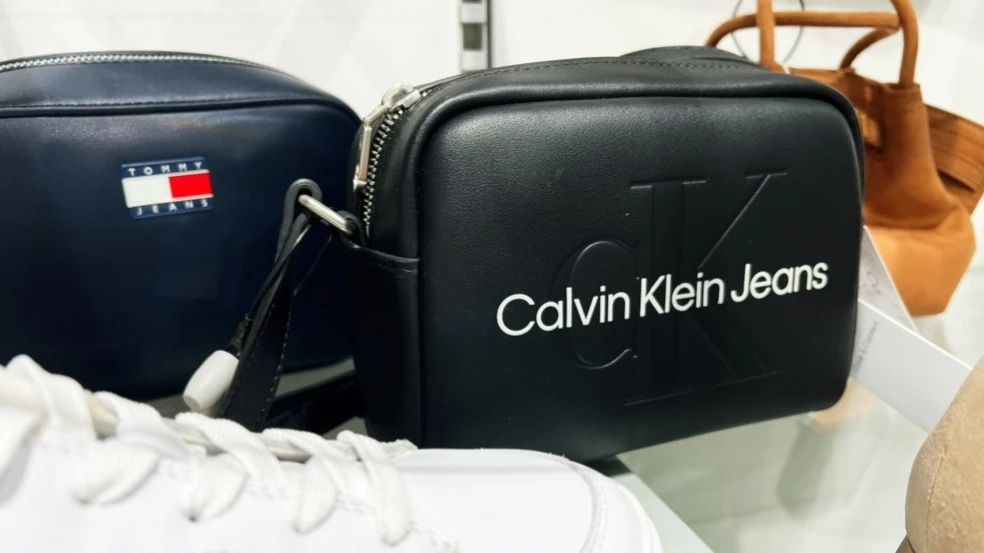
In 2025, Tommy Hilfiger and Calvin Klein accounted for approximately 95% of PVH's total revenue / Photo: AS project / Shutterstock.com
PVH Corp., the owner of the Calvin Klein and Tommy Hilfiger brands, is one of the oldest public companies, having gotten its start making men’s shirts for coal miners. More than a century and a string of acquisitions later, PVH has sold off its noncore assets and is focusing on two key brands. Is that bet paying off, and why do analysts like PVH as a stock? Oninvest takes a closer look.
Beginnings
The company’s founders, husband and wife Moses and Endel Phillips, were far removed from the world of fashion: in 1881, they began growing their business selling shirts they made for coal miners in Pennsylvania. Things went so well that several years later, the company moved to New York, where it merged with shirt and collar maker D. Jones & Son, operating as Phillips-Jones Corporation.
In 1919, after acquiring the patent for the Van Heusen soft-folding shirt collar, the company sparked a “revolution” in men’s comfort. The invention proved successful, and in 1920, the company listed on the New York Stock Exchange. In 1957, in honor of its best-selling shirt brand, Phillips-Jones changed its name to Phillips-Van Heusen.
Controversies
By the 1990s, the company was already a well-known maker of menswear. But the true breakthrough came in 2003, when PVH acquired Calvin Klein and affiliated companies.
PVH paid $401.6 million in cash and issued 2.54 million shares valued at $30 million. Calvin Klein also received a warrant to purchase PVH shares and the right to receive payments for 15 years equal to 1.15% of worldwide net sales of Calvin Klein products.
Calvin Klein rose to prominence as a fashion designer in the 1980s thanks to his jeans and underwear collections, as well as a controversial advertising campaign featuring 15-year-old actress Brooke Shields. In the 1990s, Kate Moss became the face of Calvin Klein: provocative campaigns for its underwear and Obsession fragrance bolstered the brand’s popularity, with Obsession becoming one of the world’s bestselling fragrances (according to Coty, which produced and sold Calvin Klein fragrances and cosmetics under license).
PVH noted that Calvin Klein had little or no presence in a number of product categories and saw expanding assortment as an opportunity to increase sales and profits. The deal began to pay off as early as year one: PVH reported that net sales rose $45.5 million year over year in 2003, mainly thanks to the Calvin Klein businesses.
After PVH acquired the Calvin Klein brand, some of its key businesses remained with licensees. Warnaco, in particular, made Calvin Klein jeans and underwear and operated the brand’s business in Asia and Latin America. In 2013, PVH acquired Warnaco for approximately $2.9 billion, gaining direct control of those businesses.
In 2025, Calvin Klein generated nearly $4 billion in revenue for PVH – almost 3% more than a year earlier and around 44% of the total PVH top line. The company now makes most of its money from sales of its own products: PVH’s total licensing revenue for 2025 was just $421 million.
'À la Ralph Lauren'
In 2010, the company made another major acquisition: Tommy Hilfiger, a brand founded by designer Tommy Hilfiger after an Indian entrepreneur offered to finance a menswear label in the mid-1980s that would be “à la Ralph Lauren,” but younger and less bound by tradition.
Tommy Hilfiger went public in 1992, but by the early 2000s had lost ground amid changes in its audience and image. In 2005, Apax Partners bought the company for $1.6 billion, turned the business around, and sold it to PVH four years later. The deal was valued at approximately EUR2.2 billion. Tommy Hilfiger remained the brand’s principal designer, a position he still holds today.
The acquisition gave PVH a large operating platform and distribution network in Europe. The Tommy Hilfiger acquisition transformed the scale of PVH’s business, turning the company from a predominantly U.S. apparel maker into a global player. In the year of the acquisition alone, Tommy Hilfiger International added around $1 billion to PVH’s net sales, while Tommy Hilfiger North America contributed $889.6 million. In 2025, the brand overtook Calvin Klein by revenue, generating $4.8 billion, up 4% from 2024.
Pandemic narrows focus
PVH had a major licensing business: the company had agreements with dozens of third-party brands, ranging from Michael Kors to the Donald J. Trump Signature Collection. The company signed its licensing agreement with Trump’s brand in 2004, for the sale of shirts, neckties, and sportswear. PVH ended the agreement in 2015 amid controversy over Trump’s comments about Mexican immigrants.
By 2020, PVH had built an extensive brand portfolio. In addition to Calvin Klein and Tommy Hilfiger, the company owned so-called Heritage Brands, including Van Heusen, IZOD, Arrow, Warner’s, Olga, and Geoffrey Beene. Together, Calvin Klein and Tommy Hilfiger, however, generated more than 85% of revenue, while over 60% of PVH’s sales came from markets outside of the U.S.
Amid the pandemic, the company’s revenue fell from $9.9 billion in 2019 to $7.1 billion in 2020. PVH decided to simplify its business structure and focus on its two key global brands. It first announced the closure of 162 Heritage Brands stores in North America and then began selling off the portfolio. In 2021, the company announced the $220 million sale of the Van Heusen, IZOD, Arrow, and Geoffrey Beene brands.
This was a difficult decision, as we recognize that our Heritage Brands business provided the resources that laid the foundation and gave us the opportunity to build PVH into one of the largest fashion companies in the world today. We have been proactively optimizing our Heritage Brands business over the past few years, while focusing on allocating resources to higher-return businesses to maximize shareholder value.
In late 2022, the company said it would gradually bring licensed Calvin Klein and Tommy Hilfiger product categories in-house and operate them directly to support its strategic growth. It decided to extend its licensing agreements with G-III Apparel Group before gradually winding them down between 2025 and 2027. The categories being brought back in-house represented a significant part of the business, accounting for around a third of PVH’s total global licensing revenue in 2021.
PVH retained some Heritage Brands in its portfolio. In 2025, the segment generated $215 million in revenue, less than half of the 2023 figure.
Latest financials
PVH’s revenue for the second quarter of 2026 fell 3% year over year to $2.1 billion. The company attributed the decline partly to weakness in its wholesale business, where sales fell 6%. The decline was particularly pronounced in the EMEA region (Europe, the Middle East, and Africa), where the company faced weak consumer demand due to tensions and conflict in the Middle East. Additional pressure came from a 13% decline in licensing revenue related to the transition of previously licensed categories to PVH’s direct management.
PVH’s direct-to-consumer sales, rather than sales through franchises and retail chains, were virtually unchanged. Online sales rose 4% to $194.1 million, but the increase was almost entirely offset by a 0.7% decline in revenue from company-operated stores to $862 million. Adjusted earnings per share rose to $3.70 from $2.52 a year earlier. The management left its full-year outlook unchatenged. PVH expects revenue to remain flat year over year and adjusted earnings per share to reach $11.80-12.10 versus $11.40 in 2025.
What analysts say
Following PVH’s second-quarter report, JPMorgan maintained its “underweight” rating and lowered its target price from $85 to $83 per share. The new target implies around 17.8% upside from Tuesday’s close. JPMorgan (whose note to clients was seen by Oninvest) believes the company will take longer to reach its long-term goal of a mid-teens operating margin due to the slow sales recovery, challenging global economic conditions, and heavy discounting by competitors.
Needham maintained its “buy” recommendation but lowered its target price from $102 to $95 per share. The house considers the second-quarter results mixed, saying the business is showing greater volatility than other global apparel brands. UBS also kept its “buy” rating, at a target price of $121 per share. This is the highest target on the stock and implies almost 70% upside from the last close. UBS expects long-term earnings growth to be supported by the strength of the Calvin Klein and Tommy Hilfiger brands, more targeted marketing, and PVH’s solid financial position. UBS also views the planned $300 million share buyback as an additional driver.
According to MarketWatch data, the company has eight “buy” calls from analysts, versus six “hold” ratings and two “sell” recommendations. The average target price is $87.45 per share, implying 22.7% upside.