An investigation into the Amazon plane crash has begun in the U.S. What will happen to the stock?
An airplane carrying Amazon packages veered off the runway at Miami Airport this Sunday and crashed into a van carrying seven people

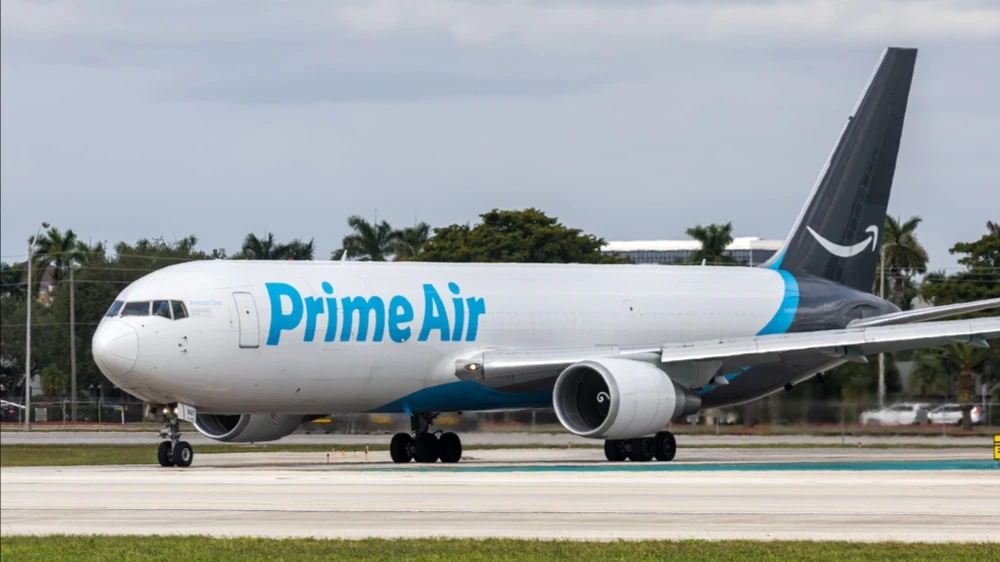
An Amazon cargo plane may have exceeded the speed limit during landing / Photo: Markus Mainka / Shutterstock.com
Investigators from the U.S. National Transportation Safety Board (NTSB) looking into the crash of an Amazon Air (Prime Air) cargo plane in Miami are considering a number of possible causes. These include high landing speed, weather conditions, and the lack of a dedicated safety system at the airport. The Amazon cargo plane, which was delivering packages for the e-commerce giant, veered off the runway during landing on Sunday and crashed into cars with people inside. Amazon’s stock fell 0.6% on Tuesday; Barron’s attributes this to the investigation into the accident.
Details
The Chair of the U.S. National Transportation Safety Board (NTSB) Jennifer Homendy stated at a briefing that the agency will investigate various possible causes of the plane crash, including the aircraft’s high speed during landing, weather conditions, and the functionality of the airport’s safety systems. The NTSB has dispatched a 32-person team to the scene. Investigators will also examine a number of other factors, including the operation of the aircraft’s mechanical systems, the crew’s experience and training, and the actions of air traffic controllers, according to The Wall Street Journal. Publicly available flight data will be cross-referenced with information obtained from the flight recorders. The team also includes a meteorologist who will examine weather conditions, including the impact of thunderstorms and wind in the area.
According to government officials and aviation industry representatives monitoring the investigation, the available information about the Amazon flight suggests that the plane may have been approaching Miami Airport at too high a speed, the WSJ reports. Since the plane ran out of runway after landing, investigators will likely look into why the two pilots did not perform the standard go-around maneuver to attempt another landing, these sources said. When asked about the go-around, Homendi replied, “We’ll have to interview the crew.”
Amazon said it is working closely with local authorities and officials and will cooperate with any investigation, according to the WSJ. The cargo airline 21 Air, whose pilots were operating the flight, said it was shocked by the incident and expressed its condolences to the families and loved ones of the victims.
According to Homendi, the flight recorders have already been found and are being sent to the NTSB headquarters in Washington for analysis.
Amazon shares fell 0.6% on Tuesday to $257 amid an intensified investigation into the crash of a Boeing 767 cargo plane at Miami Airport, according to Barron’s. On the same day, the S&P 500 index lost 0.58%, and the Nasdaq Composite fell 0.32%.
What Happened
On Sunday, an Amazon aircraft veered off the runway. As a result, five people were killed and five others were injured. The Boeing 767, operated by the cargo airline 21 Air, came to a stop approximately 400 meters beyond the paved portion of the runway, Homendi said. According to her, the plane crashed into a Ford Econoline van that was on the airport grounds. Seven cleaning service employees were in the van. The plane also collided with a Toyota SUV on a highway outside the airport.
What else are investigators looking into?
The airport’s runway was not equipped with a safety system designed to prevent incidents officially classified as aircraft running off the runway. This refers to the EMAS (Engineering Materials Arresting System)—a special section of crushable material at the end of the runway designed to stop aircraft if they overshoot, explains the WSJ.
Homendi stated that the absence of this system would also be the subject of an investigation.
The U.S. Federal Aviation Administration (FAA) and airport officials stated that the installation of EMAS was not considered necessary because there was already a designated safety zone around the runway.
It is still unclear whether such a system could have helped prevent the tragedy. According to the FAA, the crumple zone material in an EMAS system is capable of stopping an aircraft traveling at speeds of up to 80 miles per hour (129 km/h). According to publicly available flight data, the Amazon Air cargo plane was traveling at approximately 129 miles per hour (208 km/h) when it left the usable portion of the runway, according to Flightradar24 data.
This article was AI-translated and verified by a human editor