The AI bubble has burst in China. What triggered the crash?
Chinese retail investors’ favorite names have halved in value

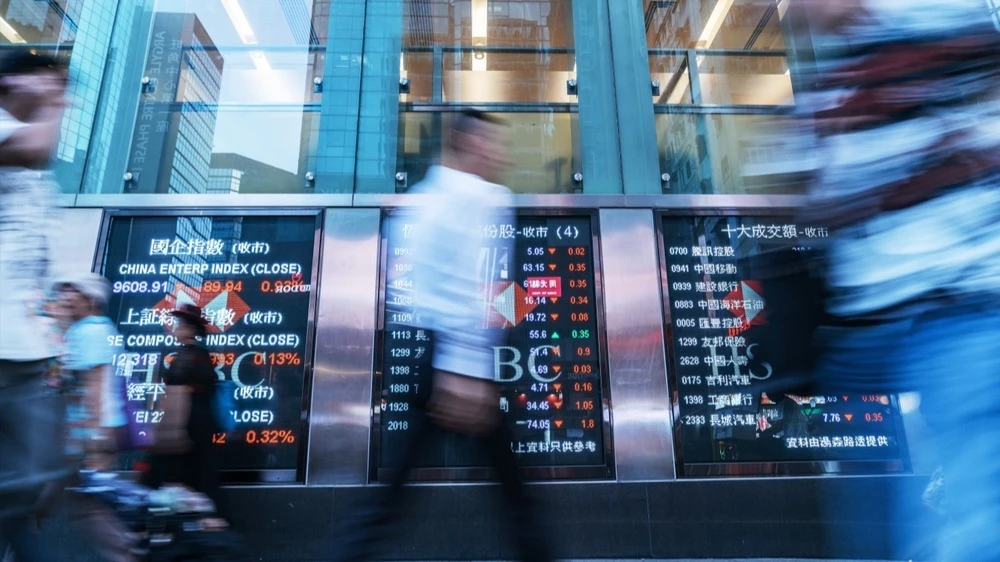
Chinese AI stocks have fallen 60% from their peak but still look far more expensive than their Nasdaq peers / Photo: katjen / Shutterstock.com
Chinese AI stocks have already crashed, Reuters reports. While the U.S. Nasdaq Composite has fallen just 5% from its October 6 record, the STAR50 index, which includes mainland China’s AI and semiconductor leaders, has slumped around 43% from its July peak. That has wiped roughly $480 billion off their combined market capitalization. The crash is a warning sign for investors worldwide, Reuters cautions.
Retail investors pay for the frenzy
There was almost nowhere to hide from the selloff in China’s stock market, which is dominated by retail investors. According to Goldman Sachs, AI companies account for 42% of the market’s capitalization and 57% of turnover in Chinese stocks listed in mainland China and Hong Kong. Blue chips have also been hit: the CSI 300 index has fallen about 20% from its June highs, including around 9% in the last month alone.
The decline has been so steep partly because Chinese stocks had previously climbed higher than those in the West and elsewhere in Asia, Reuters notes. “The stock market later evolved into a speculative crazy bull,” Beijing-based fund manager Dong Baozhen told Reuters. “And now we see the bubble bursting.”
IPOs illustrate the scale of the frenzy. When robot maker Unitree went public in August, retail orders exceeded the shares allocated to them by 8,000 times. Chipmakers MetaX Integrated Circuits and Moore Threads Technology surged 700% and 400%, respectively, on their trading debuts last year. Both stocks have halved in value since July, while another chipmaker, CXMT, has lost more than a quarter of its market value in the last month alone.
A perfect storm?
There was no obvious trigger for the selloff in China, according to Reuters. Several factors contributed, including concerns about AI demand and restrictions on Chinese exports. Traders interviewed by Reuters also pointed to high valuations and the threat that the U.S. and other countries could ban Chinese equipment from data centers. Washington is already moving toward barring optical-component makers Zhongji Innolight and Eoptolink Technology from supplying U.S. data centers, partly explaining why their stocks have plunged about 60% from their summer highs, Reuters notes.
Chinese companies’ access to advanced AI models is also at risk. U.S. developers, including Anthropic, have urged policymakers to restrict it, Bloomberg reported in September. They accused some Chinese rivals of distillation, the practice of using U.S. models without permission to train their own. China called the allegations baseless. U.S. security agencies accused companies including DeepSeek, Moonshot, MiniMax, and Z.AI of distillation, but the companies had not addressed the allegations at the time.
Valuations still too rich
Many investors in mainland China are looking at other sectors or waiting for AI stocks to get cheaper before buying, Reuters says. China’s stock market, the world’s second largest, has lost $3.5 trillion in value from its May peak, according to Bloomberg calculations. The STAR50’s price/last-12-month earnings ratio has fallen from a peak of almost 250 to around 100. But the Nasdaq 100 trades at just 30 times earnings, Reuters points out.
“Just like all other Chinese manufacturers, (chipmakers and AI suppliers) will eventually end up in a price war,” said fund manager Wang Zhuo, a partner at Shanghai Zhuozhu Investment Management. “There’s no exception,” he added. “All bubbles inevitably burst.”