Boeing shares plunge as 737 Max ramp-up delays overshadow top-line growth in 3Q

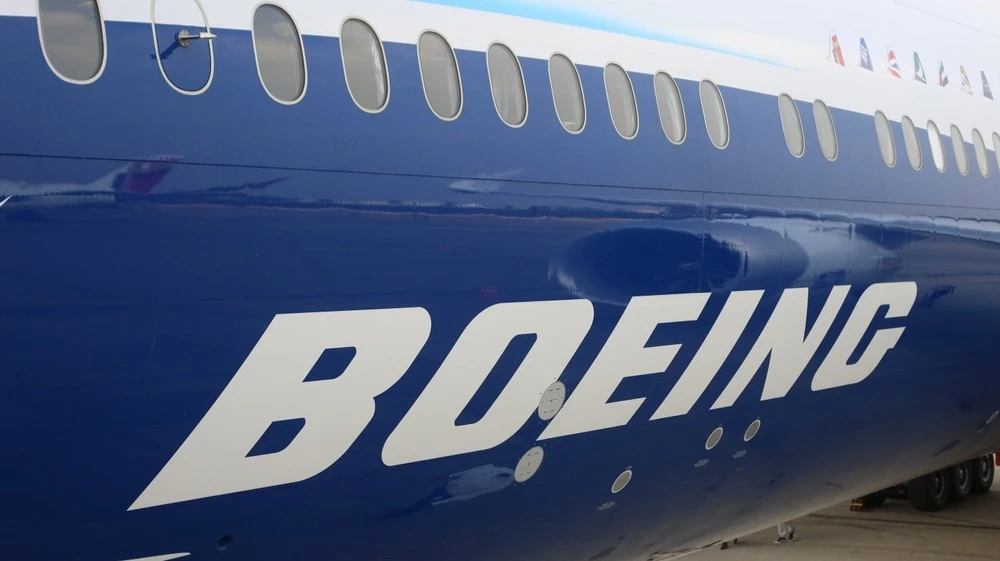
U.S. aircraft manufacturer reported a wider-than-expected third-quarter loss / Photo: Aerospace Trek/Shutterstock
Boeing shares plunged 10% on Tuesday. The aircraft manufacturer reported third-quarter revenue that topped analyst expectations, but CEO Kelly Ortberg struck a cautious tone on plans to ramp up 737 Max production, highlighting the tension between investors demanding better cash flow and the management still working to stabilize production lines before increasing output, Bloomberg reports. Boeing stock is off more than 20% year to date and is on track for its second-worst annual performance in five years.
Max production
Boeing is not set to significantly increase production of its best-selling 737 Max aircraft in the near term, Ortberg said on the earnings call. The management is targeting a production rate of 52 planes per month only in the second half of next year. Boeing currently produces about 47 737 Max jets per month, CNBC notes.
“I know everybody wants us to go faster but we’re going to do it right,” Ortberg told CNBC in an interview. He said that meant ensuring the production system was stable and delivering high-quality, safe aircraft, adding that he expected the stabilization period to last through the rest of this year and into early next year.
The news sent Boeing shares tumbling on Tuesday. Aircraft production and deliveries are crucial to the company’s recovery from years of crises because customers pay the bulk of an aircraft’s price on delivery, CNBC explains.
In September, Ortberg told investors that stabilizing 737 Max production was taking “a little bit longer” than expected because of the pace of wing production, CNBC writes.
Earnings
Boeing posted an adjusted third-quarter loss of $0.34 per share versus the $0.21 per share loss expected by analysts surveyed by LSEG, CNBC reports. Still, the net loss for the three months ended September 30 narrowed sharply to $116 million, or $0.26 per share. That was a substantial improvement versus the $5.34 billion loss a year earlier, when Boeing took around $5 billion in charges on its 777-9 aircraft program, Bloomberg and CNBC wrote.
Meanwhile, revenue rose 4% year over year to $24.19 billion versus analyst expectations of $23.84 billion. Free cash flow almost doubled to $464 million versus $238 million in the third quarter of last year.
A jump in defense sales helped the aircraft manufacturer narrow its loss and beat Wall Street’s top-line estimates. Revenue in the defense business surged 15% year over year to $7.94 billion. Growth in the segment was supported by rising global defense spending and the sale of a noncore asset, research center HRL Laboratories, in which Boeing had held a stake for more than 20 years.
Meanwhile, revenue at the company’s largest division, Commercial Airplanes, fell 3% year over year to $10.72 billion. The unit posted a negative operating margin of 6.5% and a $697 million loss, almost twice the $360.8 million loss expected by analysts surveyed by Bloomberg. Boeing attributed the performance to a less favorable delivery mix, higher projected costs associated with future production rate adjustments, and higher estimated supply chain costs.
Aircraft deliveries were almost unchanged: Boeing handed over 161 commercial jets in the third quarter, one more than a year earlier.
Outlook
The divergence between the divisions’ results underscores the challenges facing Ortberg, who took the helm in 2024, Bloomberg notes. Since then, Boeing has been working to repair its debt-laden balance sheet, restore regulators’ trust after a series of quality and safety crises, and ramp up production of its main aircraft models. In a message to employees, Ortberg acknowledged that Boeing had “more work to do.” “Expectations are rising, and they should,” he said. “We have a stronger foundation than a year ago,” he added, while stressing the work still needed to fulfill the order book, strengthen the corporate culture, and improve day-to-day operations.
Last week, the Federal Aviation Administration approved the 737 Max 10, the largest model in the family, thus completing certification of the lineup following approval of the 737 Max 7 in August. The U.S. Navy also selected Boeing to develop its next-generation fighter jet.
What analysts say
The increase in free cash flow to $464 million was the quarter’s main positive for Boeing, RBC Capital Markets analyst Ken Herbert wrote in a note to clients. He said it made the management’s full-year free cash flow guidance of $1-3 billion more achievable, although Boeing warned in September that weaker deliveries could leave it short of $2 billion, as Bloomberg notes. On Tuesday’s earnings call, the management said it expected free cash flow of about $2 billion this year and $3 billion in 2027.
Despite the selloff, Wall Street remains broadly upbeat on the stock. According to MarketWatch data, Boeing is a consensus “buy,” with 28 “buy” calls versus five “hold” ratings. There are no “sell” or “underweight” recommendations.