Anthropic has caught its leading Chinese competitors secretly using Claude
Deepseek and Moonshot, AI labs based in China, used thousands of fake accounts to “feed” their users’ real queries to Anthropic’s Claude model in order to leverage its capabilities to train their own neural networks

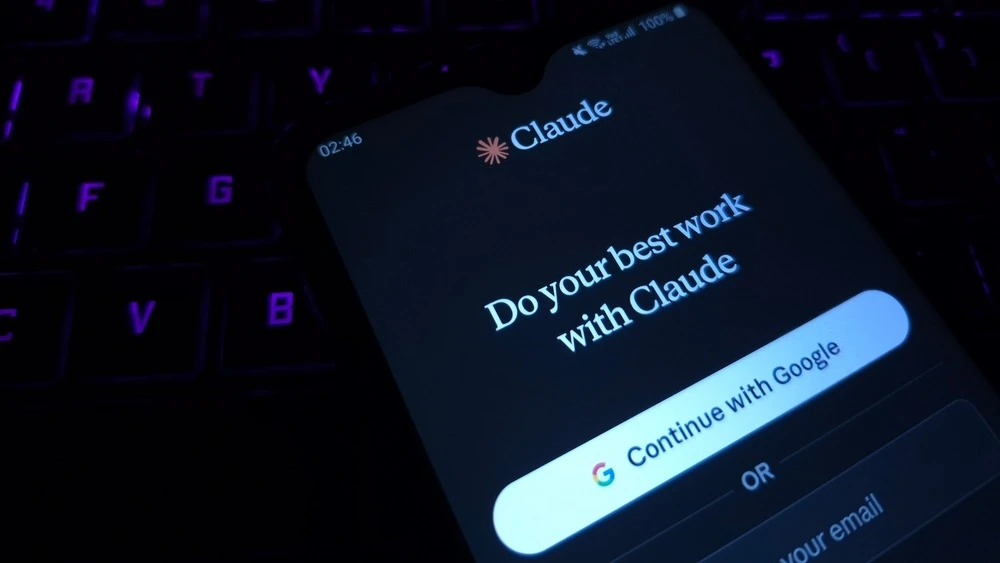
Photo: Nwz / Shutterstock
Moonshot and DeepSeek, two cutting-edge Chinese AI labs, in an effort to gain an edge in the race for AI leadership, secretly redirected thousands of user queries to Claude models developed by the American company Anthropic and passed off the responses as their own, Anthropic has discovered. Bloomberg and The Wall Street Journal (WSJ) are reporting on the American company’s report, in which it also described a number of other types of misuse of its AI platform—ranging from hackers to authoritarian regimes.
Details
“If someone like Anthropic, or one of our [other] colleagues, were doing what they [Chinese AI companies] are doing, it would be a huge scandal,” — noted Jacob Klein, head of threat analysis at Anthropic (as quoted by the WSJ).
As the American company discovered, AI labs in China, rather than processing user queries through their own AI models, were redirecting them to Anthropic’s chatbots without informing the users themselves. Specifically, in one instance, Anthropic discovered nearly 300,000 user queries that Moonshot had routed primarily to the American AI model Opus. And since Anthropic does not allow access to its technologies from China, Moonshot used 5,380 fake accounts for this purpose, most of which, apparently, were registered in Singapore and Japan, Bloomberg reports, citing the company’s report.
The WSJ reports that the requests Chinese AI labs secretly forwarded to Anthropic’s neural networks included, among other things, sensitive data such as location information and passwords. For example, in one instance, a user asked Moonshot’s Chinese neural network, Kimi AI, to analyze surveillance footage of a single person, which had been collected from hundreds of surveillance cameras in Chengdu, China (and Moonshot, using a network of intermediary platforms, passed this data on to Claude, according to Anthropic). In another instance, Kimi provided Claude with login credentials for several companies when an engineer was attempting to use the Chinese AI model to develop software for a Chinese company.
Overall, using a network of thousands of fake accounts, Moonshot exchanged more than 23 million user queries with Claude between May and July of this year, the U.S. company said. According to Anthropic, similar actions were also carried out over the past seven months by DeepSeek, Xiaomi, and other AI firms—a total of seven Chinese labs. Anthropic described these actions as part of a process known as distillation—when a developer uses data from a more powerful and larger AI model to improve its own less powerful system. U.S. labs generally prohibit third-party companies from applying distillation to their models, the WSJ explains, while noting, however, that according to U.S. officials, this technique nevertheless remains a widely used loophole that allows some participants in the AI race to catch up with more advanced players.
A Moonshot spokesperson declined to comment to the WSJ on Anthropic's statements. DeepSeek and Xiaomi did not promptly respond to Bloomberg's requests for comment.
This article is being updated
This article was AI-translated and verified by a human editor