Apollo is set to acquire EasyJet for $7.7 billion. What will happen to the pioneer of low-cost flights?

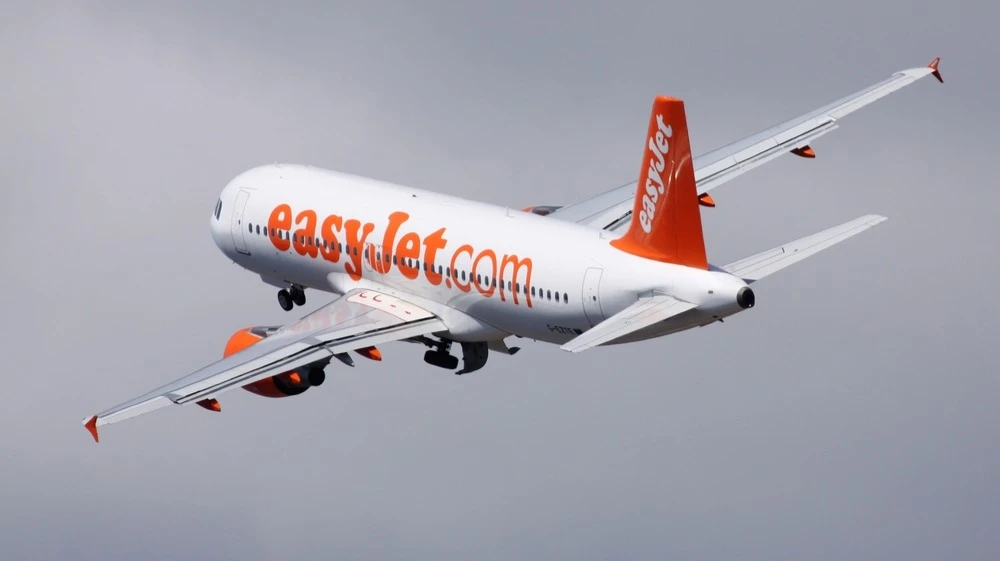
Apollo is buying low-cost carrier EasyJet for £5.7 billion / Photo: SON-Media / Shutterstock
The American investment firm Apollo Global Management has agreed to acquire the British low-cost carrier EasyJet for £5.7 billion, according to the company’s website. This is roughly equivalent to $7.7 billion. The deal concludes a months-long battle for the airline and could significantly shift the balance of power in the highly competitive European budget airline market, Bloomberg notes.
Details
EasyJet’s board of directors has approved the terms offered by Apollo, which valued the low-cost carrier at £7.15 per share, according to a statement from the parties. Shortly before that, another bidder for the airline—the U.S. private equity firm Castlelake—announced that it was withdrawing from the race and would not raise its latest offer, which stood at £5.5 billion.
Following Castlelake’s announcement, EasyJet shares fell 6% during trading in London, but then rebounded and closed 2.8% above Wednesday’s closing price on August 5. Year-to-date, they are up 31.8%: interest from private equity funds has supported the rise in share prices in recent months. Throughout the negotiation process, the shares traded below the proposed prices, indicating investors’ doubts that the deal would be able to overcome regulatory hurdles, Bloomberg explains.
Since Apollo is an American company, it cannot directly acquire full control of EasyJet: UK and EU laws require that the majority owners remain citizens of those countries, Bloomberg explains. Therefore, the acquisition will be structured through a special vehicle involving European shareholders and management.
The deal is expected to close by the end of the first quarter of next year, according to CNBC.
What's next?
Following the acquisition, the airline—which went public in November 2000 at 310 pence per share—will no longer be publicly traded, according to Bloomberg.
Apollo’s future plans regarding EasyJet have not yet been disclosed, but the investment firm has previously sought to dispel concerns that it would break up the airline. Such speculation arose because its individual business segments are valued higher than the company as a whole.
EasyJet, which was at the forefront of the development of ultra-low-cost air travel in Europe, has many attractive assets, including a fleet of modern Airbus SE A320-family aircraft, slots at busy airports in London, Milan, and Geneva, as well as a rapidly growing packaged tour business, the agency notes.
In a joint statement with Apollo, the airline stated that the investment fund is committed to honoring employee contracts, respecting the group’s future operations, and keeping the low-cost carrier’s headquarters in London.
Apollo is already actively investing in the aviation sector: the company operates an aircraft financing business and has previously invested in Sun Country Airlines, Aeromexico, and Atlas Air Worldwide, one of the world’s largest cargo airlines. Bloomberg notes that following Apollo’s investments, Sun Country and Aeromexico became profitable.
Context
The deal was the result of negotiations that had been ongoing since May, during which the bidders took turns raising their offers. The low-cost carrier’s management called Castlelake’s offer “extremely opportunistic” and claimed that it was trying to buy the company “on the cheap.” In response, Castlelake stated that “the board of directors was unwilling to engage in constructive dialogue,” according to Bloomberg. Following that, Apollo submitted its offer in July.
Recently, EasyJet has been under pressure due to a sharp rise in jet fuel prices amid the war in Iran. In July, the company announced that its profit for the previous quarter had fallen by 70% year-over-year.
This article was AI-translated and verified by a human editor