The price of Brent crude oil fell below $100 per barrel

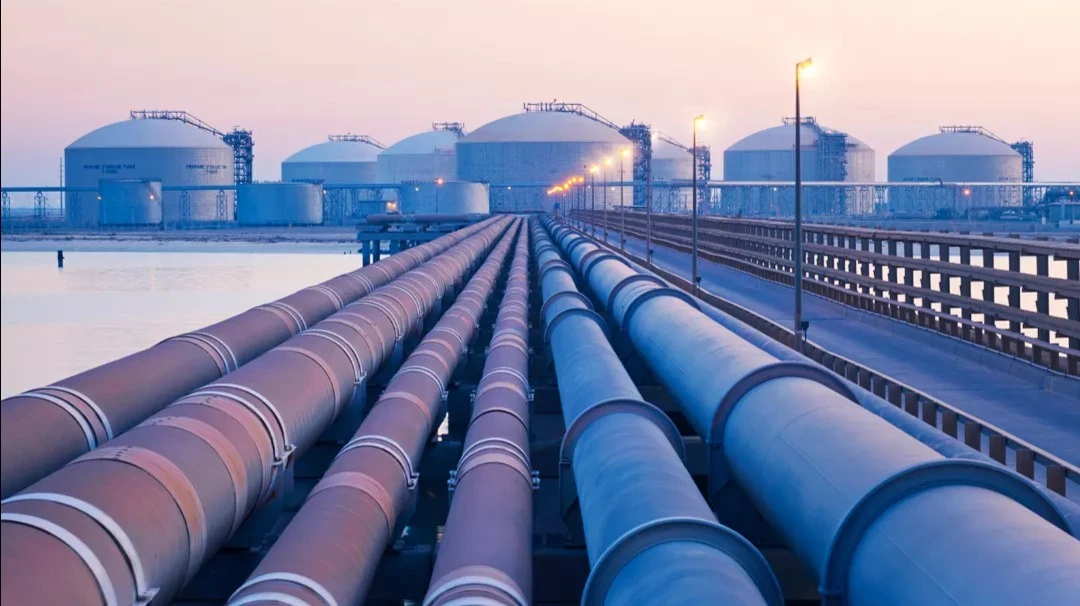
The price of Brent crude fell below the psychological threshold of $100 per barrel for the first time since September 9. At its intraday low, the price was down 4.7% at $98.98. The price of U.S. WTI crude oil fell 6%.
Prices fell due to a partial resumption of supplies from Saudi Arabia and investors' hopes for diplomatic progress in the U.S.-Iran conflict ahead of the UN General Assembly, which will take place this week in New York, Reuters reports.
Against the backdrop of falling oil prices, the U.S. stock market posted strong gains. The Nasdaq Composite Index, which tracks technology stocks, rose by more than 2.1%, while the broad-market S&P 500 Index gained 1.5% and the blue-chip rose 0.6%. The Nasdaq 100 index climbed 2.7%.
Details
Saudi oil company Saudi Aramco loaded about 14 million barrels of crude oil onto seven supertankers on Sunday, September 20, Reuters reported, citing data from TankerTrackers.com. This indicates that the kingdom has increased shipments in the Persian Gulf after attacks by Yemeni Houthis on its main pipeline disrupted supplies through the Red Sea, the agency notes. Expectations of large volumes pushed global oil prices lower, it said. A Saudi Aramco spokesperson declined to comment to Reuters. JPMorgan analysts wrote on September 18 that, according to satellite data, the volume of Saudi oil shipped through the Strait of Hormuz reached 2.9 million barrels per day over the past six days, Reuters added. By comparison, the average in August was only 700,000 barrels per day.
Diplomatic hopes are pinned on Iranian President Masoud Pezeshkian’s expected visit to New York to attend the UN General Assembly, Reuters noted. U.S. President Donald Trump has said he is open to meeting with Pezeshkian, although Washington and Tehran exchanged new threats over the weekend, the agency added.
On the other hand, diesel prices have risen to record highs in the U.S. and Europe. Diesel futures have more than doubled in price since the beginning of 2026, according to Reuters. Wars in the Middle East and Ukraine have sharply limited supplies from the largest producers—Russia, Saudi Arabia, and the UAE—by damaging their infrastructure, the agency explained. “The key problem is that many refineries around the world are already operating at full capacity. There are few options left to prevent further supply constraints and higher prices in the coming months,” the International Energy Agency warned on September 21.
In addition, U.S. strategic oil reserves have fallen to their lowest level since October 1982. They stood at 284.6 million barrels. The reserves are being reduced as part of the U.S. decision to release 172 million barrels from the reserves to combat the shortage of raw materials.
This article was AI-translated and verified by a human editor