Apple Shares Hit an All-Time High: Barron’s Compares the Company’s Strategy to Rockefeller’s Success
While competitors are spending hundreds of billions on AI infrastructure, the iPhone maker has adopted John D. Rockefeller’s strategy, according to Barron’s

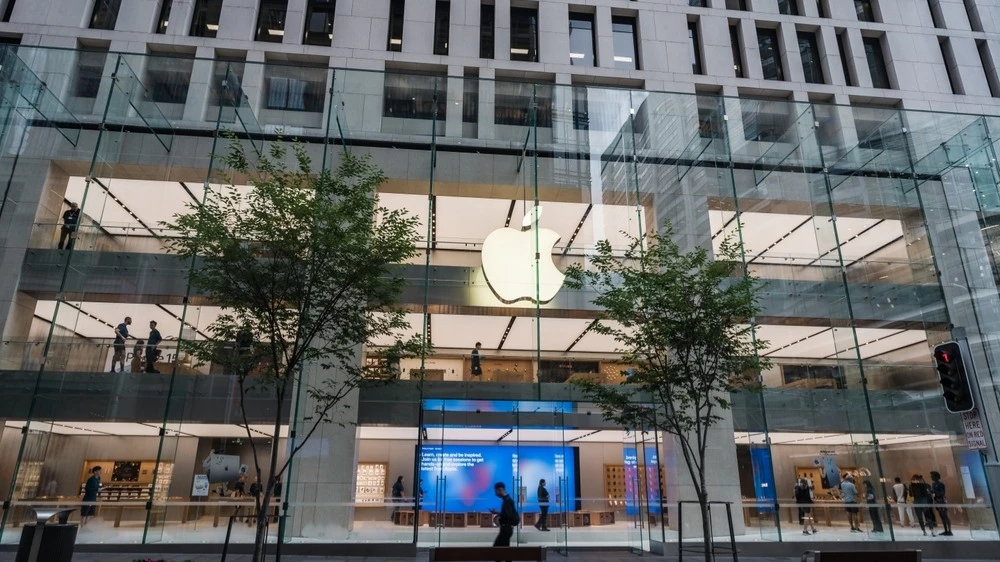
Apple Shares Hit Record Highs for the Second Day in a Row / Photo: Vivid Brands/Shutterstock
Apple shares hit a record high for the second day in a row, according to Dow Jones Market Data, as noted by Barron's. On Thursday, July 16, they rose nearly 2% to $333.26 per share, and the day before, they jumped 4%, leading gains in the Dow Jones index and pushing the company’s market capitalization to $4.8 trillion. Some investors view Apple as an “anti-AI” bet, the publication notes: while competitors are spending billions on AI infrastructure, the iPhone maker is refraining from such expenditures. Barron’s compares this approach to the strategy of 19th-century oil magnate John D. Rockefeller, who, during the oil rush, did not take risks by drilling wells but instead made his money through refining and distribution.
Details
Over the past three months, Apple’s market capitalization has increased by more than 23%. By comparison, most of the other members of the “Magnificent Seven”—a group that includes the iPhone maker—posted more modest results during the same period: Alphabet’s market capitalization rose by 3.74%, Nvidia’s increased by about 3%, Amazon’s fell by 0.27%, Meta and Tesla lost about 2% and 3%, respectively, and Microsoft’s fell by 5.13%.
Statistics show that investors support Apple’s strategy, under which, as Barron’s notes, the company is effectively shifting capital-intensive technological risks onto its competitors. While Alphabet, Microsoft, Amazon, and Meta are pouring hundreds of billions of dollars into AI infrastructure, Apple is in no hurry to make capital expenditures: it appears that the company plans to integrate solutions already validated by the market once the segment reaches technological maturity, Barron’s notes.
One of Apple’s key advantages is its control over distribution endpoints, the publication explains: Much like John D. Rockefeller, who dominated the oil industry by controlling refining and logistics, Apple maintains its leadership in the smartphone market and is also among the leading manufacturers of personal computers. As a result, the iPhone and Mac have become key channels for delivering AI services to end users.
At the same time, the company is focused on mergers and acquisitions (M&A) and is actively seeking startups to develop its own server-based AI chips optimized for Apple’s needs, according to The Information.
Apple declined to comment to Barron’s on its artificial intelligence strategy.
According to forecasts for fiscal year 2026, Apple’s planned capital expenditures will total only about $14 billion. By comparison, Amazon leads the pack, planning to allocate a record $200 billion to capital expenditures. Microsoft follows closely behind with a projected $190 billion in capital expenditures, while Alphabet has budgeted between $180 billion and $190 billion. Meta rounds out the list, planning to spend between $125 billion and $145 billion. In total, the four largest cloud giants intend to spend approximately $700 billion on AI infrastructure in 2026.
What are the risks?
Meanwhile, amid the AI boom, Apple announced in June that it was forced to raise prices on its devices (for now, the MacBook and iPad) due to rising costs of memory chips, which are also essential for expanding AI data centers. In an interview with The Wall Street Journal, Apple CEO Tim Cook called this crisis unprecedented and confirmed that price increases for the company’s products were inevitable. According to TechInsights estimates, to maintain its current profit margins, the company will have to raise the price of the next iPhone Pro by approximately $270.
Under these circumstances, Barron’s notes, the main test for Apple will be the fall launch of the iPhone 18 lineup—the market will have to see whether customers remain loyal.
Wall Street Consensus
In premarket trading on July 17, Apple shares are up another symbolic 0.1%. The overwhelming majority of analysts (32 out of 52) maintain a positive outlook on the company’s stock (Buy and Overweight recommendations). Sixteen are neutral (Hold rating), and four recommend reducing positions or selling the stock (Underweight and Sell ratings).
This article was AI-translated and verified by a human editor