Armani's will: the fashion designer allowed to sell his brand or go IPO
The fashion designer willed to sell the company's shares to buyers such as LVMH, L'Oréal and EssilorLuxottica, and if that didn't work out, to float them on the stock exchange
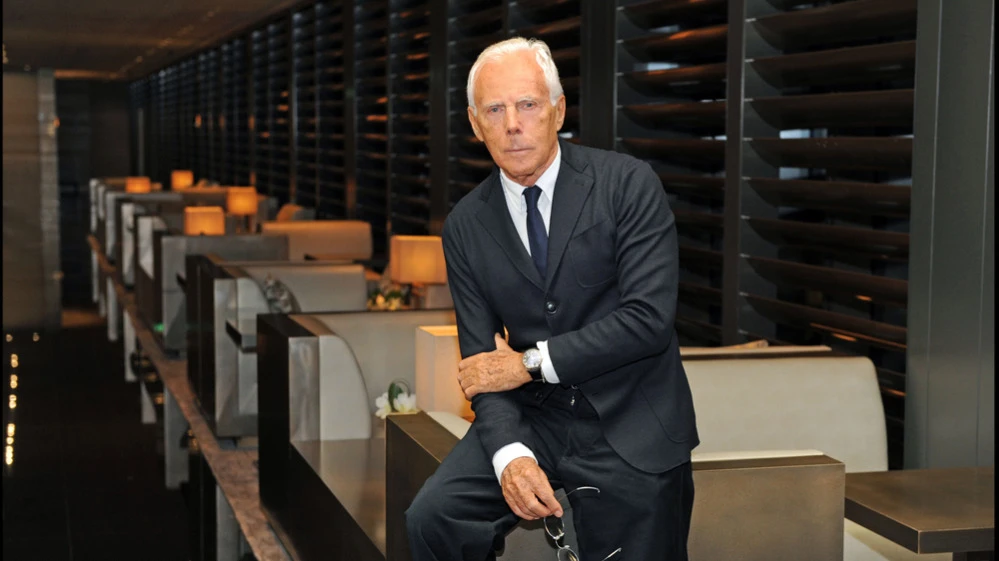
The will of the head of the fashion house Armani - Italian fashion designer George Armani, who died on September 4 - contains an order for a phased sale of the company he created or its public offering on the stock exchange, reports The Wall Street Journal. This could radically change the ownership structure of one of the last truly independent fashion houses, the publication notes.
Details
The will drawn up by Italian fashion designer and fashion designer George Armani in March was made public on September 12, The Wall Street Journal reports. The document orders that 15% of his company be sold within the next 18 months. Then - within three to five years - another 30% to 54.9% must be sold. If the second stage of the sale is not realized, the heirs are obliged to begin preparations for the initial public offering of Armani shares on the stock exchange.
In his will, Armani also prioritized potential buyers of stakes in Armani, including LVMH, L'Oréal and EssilorLuxottica. The fashion designer allowed the possibility of a deal with another fashion and luxury company of comparable scale or with existing brand partners. This shows his desire to see Armani as part of a global industry group, the WSJ emphasizes. The designer's death at the age of 91 has raised many questions about the future of his fashion empire, the publication notes.
Armani's executive committee noted that the will clearly reflects the designer's desire to ensure the stability and unity of the brand in the long term. Under its terms, the Giorgio Armani Foundation is to retain at least 30% of the company, which will ensure the continuity of the brand's core values.
The fund, founded in 2016 to protect Armani's identity, style and principles, will take full control of the company in the transition period. The company had revenue of about $2.7 billion in 2024, but operating profit fell by nearly a quarter amid a cooling luxury market.
How LVMH, L'Oréal and EssilorLuxottica reacted
Back in the late 1990s, LVMH, which owns the brands Dior and Fendi, was in talks with Armani to acquire 20% of the company, while the designer would retain creative control. However, the deal did not materialize. Since 1988, Armani has been working with L'Oréal under license to produce perfumes, including the popular Acqua di Giò fragrances. EssilorLuxottica is responsible for the production and distribution of Armani eyewear.
LVMH and L'Oréal declined to comment to WSJ on the fashion designer's will.
"We, together with the board, will carefully consider this scenario, which deserves the utmost attention given the strong ties that already exist between our groups," an EssilorLuxottica spokesperson told the WSJ.
Context
George Armani had no children and entrusted the management of the business to his closest relatives and key associates. Pantaleo Dell'Orco, his longtime deputy in charge of menswear, will get 40% of the voting rights in the Armani Group. His niece Silvana Armani and nephew Andrea Camerana, who work at the company, will each receive 15% of the voting rights.
In 2024, George Armani admitted that the fashion house Armani Group, after years of struggle to maintain its independence, may merge with a larger competitor or hold an IPO. The company's founder himself told Bloomberg in an interview at the time. Last spring, analysts suggested that the company's business could be valued at 8-10 billion euros.
What else did Armani bequeath
In a separate document drawn up in April, Armani ordered the division of his personal assets. Among the assets are houses in St. Moritz, New York, Paris, Xi, St. Tropez and Antigua. Also given instructions on the use of the yacht: individual heirs will be able to use it a certain number of weeks a year. The furnishings of the Milan residence are described in detail, from bookcases and tables to decorative objects, each bequeathed to a specific person.
Armani's death marks the end of an era when designers were in complete control of their brands, from creative concept to business strategy, says WSJ. They were not only the artists, but also the owners who set the course of the company and its global growth. Such a model has all but disappeared. Since its founding in 1975, Armani has resisted growing pressure from luxury conglomerates with the means to expand globally, leasing flagship locations and large-scale marketing campaigns, the publication says.
This article was AI-translated and verified by a human editor