Attractive Suitors and Packed Hotels: Five Questions About SK Hynix and Its Historic IPO
The company will list depositary receipts in the U.S. in addition to its shares in Seoul

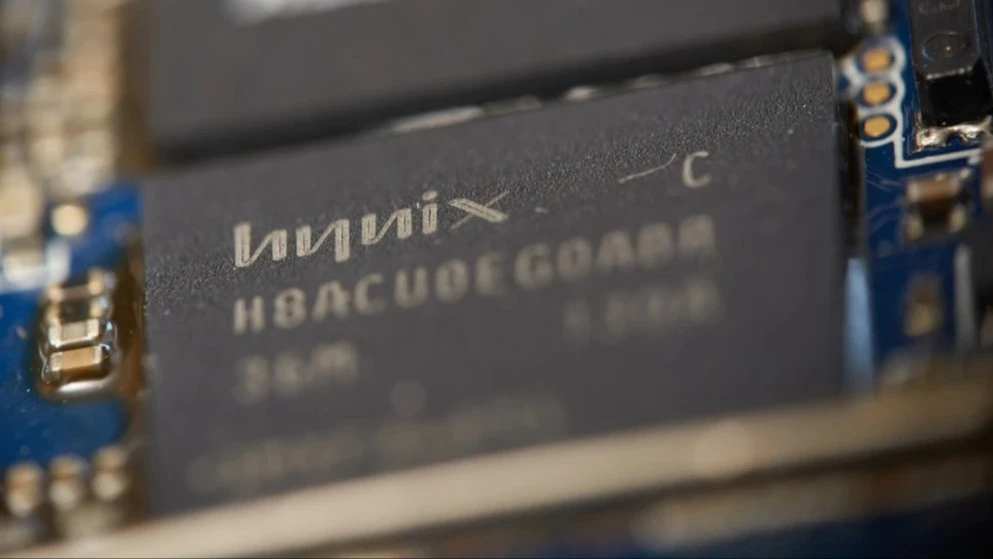
SK Hynix is the largest supplier of memory chips to Nvidia / Photo: g0d4ather/Shutterstock.com
Cloud companies and chipmakers are flocking to South Korea to secure memory chip contracts, keeping local hotels at full capacity, while SK Hynix employees—with bonuses totaling more than half a million dollars—have become the country’s most sought-after prospective spouses. On July 10, South Korea’s second-most-valuable company after Samsung will list on the Nasdaq under the ticker SKHY: Demand for its American Depositary Receipts (ADRs) is expected to be high, but investors are bracing for further price volatility in the already capricious memory chip market.
Why is this listing getting so much attention?
SK Hynix placed American Depositary Receipts (ADRs) at $149 each and raised approximately $26.5 billion—the largest ADR offering in history. According to a Reuters source, demand for the securities during the bookbuilding process exceeded the offered amount by more than seven times. The company is valued at more than $1 trillion, and from its first day of trading, it will join the ranks of top U.S. technology stocks, Barron’s notes.
CNBC notes that memory has long been a quiet and unremarkable segment of the semiconductor market. But over the past couple of years, demand for artificial intelligence has turned the industry upside down: a severe chip shortage has emerged, prices have hit all-time highs, and profits at Samsung and SK Hynix have soared. In 2027, tech giants will spend about $1.5 trillion on cloud and AI infrastructure, and, according to BofA analysts, 35–40% of that spending will go toward memory. Supply is failing to keep up with demand: no significant new production capacity will come online before mid-2027, according to Barron’s. Memory manufacturers themselves say the shortage will not be resolved until at least that time, adds CNBC.
Why SK Hynix Has Become the Top Bet in AI
The largest memory manufacturer is Samsung, not SK Hynix. But SK Hynix is the purest play in this market: it has higher sales than Micron and, unlike its Korean neighbor, does not have the added revenue from electronics and contract chip manufacturing. In HBM—a complex memory technology for AI servers, where multiple layers of conventional memory are stacked on top of each other—SK Hynix held a 58% market share as of the end of the first quarter, according to Counterpoint Research. Micron and Samsung each held 21%.
Nvidia buys memory from all three manufacturers, but its largest supplier is SK Hynix. It has built this position over the past 14 years through risky decisions that were met with skepticism and scorn—and has ultimately found itself at the center of the global AI boom, according to Reuters. “SK Hynix was Nvidia’s largest memory partner. SK Hynix will remain Nvidia’s largest memory partner,” Nvidia CEO Jensen Huang said in June, adding that the memory chip shortage will continue for several more years.
The company’s revenue nearly tripled from 2023 to 2025—to approximately $65 billion—and analysts surveyed by LSEG expect it to more than triple again in 2026, reaching $235 billion. Profits have skyrocketed to such an extent that each employee’s annual bonus will amount to about $574,500—which, according to Reuters, has made SK Hynix employees the most sought-after partners on the marriage market.
“SK Hynix has an advantage in terms of scale and production maturity. Demand far exceeds supply everywhere, so they have tremendous pricing power,” said Ken Mahoney, CEO of Mahoney Asset Management. “Overall, its first-mover advantage has been and remains its strength.”
What will the IPO mean for Micron and the others?
SK Hynix’s entry into the U.S. stock market should narrow its valuation gap with Micron. The U.S. company has a smaller share of key memory markets, but it has direct access to the world’s largest pool of investors. Micron is trading at a price-to-earnings (P/E) ratio of 6.66, compared to 5.5 for SK Hynix. “SK Hynix leads in market share and proximity to Nvidia, while Micron competes on the basis of energy efficiency, its U.S. presence, and momentum from its third-place position,” explains Daniel Newman, CEO of Futurum Group.
CNBC believes that the offering itself will be a test not only for SK Hynix but for the entire memory sector. “If the memory manufacturer’s record-breaking ADR offering goes well, it will show that investors have truly embraced the memory narrative within the broader AI story,” the network quotes Ben Reitzes of Melius Research as saying. The question is where the money will come from. Mizuho analyst Jordan Klein asks, “Will this boost demand for Micron, SanDisk, Lam Research, and even Seagate Technology and Western Digital—or will it drain money from these stocks?”
Experts surveyed by CNBC do not expect a blow to U.S. memory manufacturers, but they do anticipate a flow of money out of ETFs and mutual funds: investors now have a direct channel. “If you buy an ADR of such a company instead of a fund, some of the money could go that way,” said Mike Khau, chief strategist at OpenInterest.PRO. “This won’t suck the oxygen out of U.S. companies, but it could shift investment vehicles and make it easier for those who invest on their own.” Traders are more pessimistic: several trading platforms warned this week that the offering would trigger profit-taking. Morgan Stanley saw the ADR offering as “a case for further declines,” while UBS viewed it as “vulnerability of positions to further unwinding” ahead of the “key event” of SK Hynix’s listing.
Why Are These Stocks Still Considered Cheap After a 646% Rise?
Over the past 12 months, the stock has risen 646% in Korea. Barron’s highlights SK Hynix’s advantages over Micron: it’s larger, cheaper, and closer to its most important customer in the world, Nvidia. Goldman Sachs analyst Ji-woon Lee believes the company deserves a P/E ratio of nine times annual earnings instead of the current 5.5, and maintains a target price of 3.5 million won ($2,314) for shares traded in South Korea—69% above current levels. “For those who believe in the AI play, the case is simple. SK Hynix is trading at an unwarranted discount that could narrow once a U.S. listing gives the company access to a broader investor base,” according to Barron’s.
What Could Go Wrong
Memory is a historically cyclical segment of the semiconductor industry: shortages are always followed by overproduction. Major technological shifts—dot-coms, smartphones, the transition from boxed software to the cloud—have each time driven up demand, only to result in oversupply and a price collapse, as CNBC notes. “SK Hynix is a more direct bet on AI, and that works both ways. Its revenue is more heavily concentrated in HBM and specifically in Nvidia. During a downturn, that concentration of customers becomes a vulnerability,” warned Newman of Futurum Group. He added, “That’s how memory behaves in any megacycle or supercycle. The problem is that it always crashes hard.”
There’s also a currency nuance: the receipts are denominated in dollars but tied to shares on the volatile Korean market—ten ADRs correspond to one common share. So, if an investor believes in the sustainability of the AI boom, this security is a good fit, according to Barron’s. The industry itself is preparing for potential turbulence, notes CNBC: SK Hynix, Micron, and Samsung are switching to long-term contracts, locking in prices and orders for years to come—previously, memory contracts were signed on a quarterly or annual basis.
This article was AI-translated and verified by a human editor