A company from Kazakhstan has been hit with U.S. sanctions related to the Iranian aviation industry
In total, there are 36 firms on the updated U.S. “blacklist.” Among them are companies from the UAE, Turkey, and Malaysia.

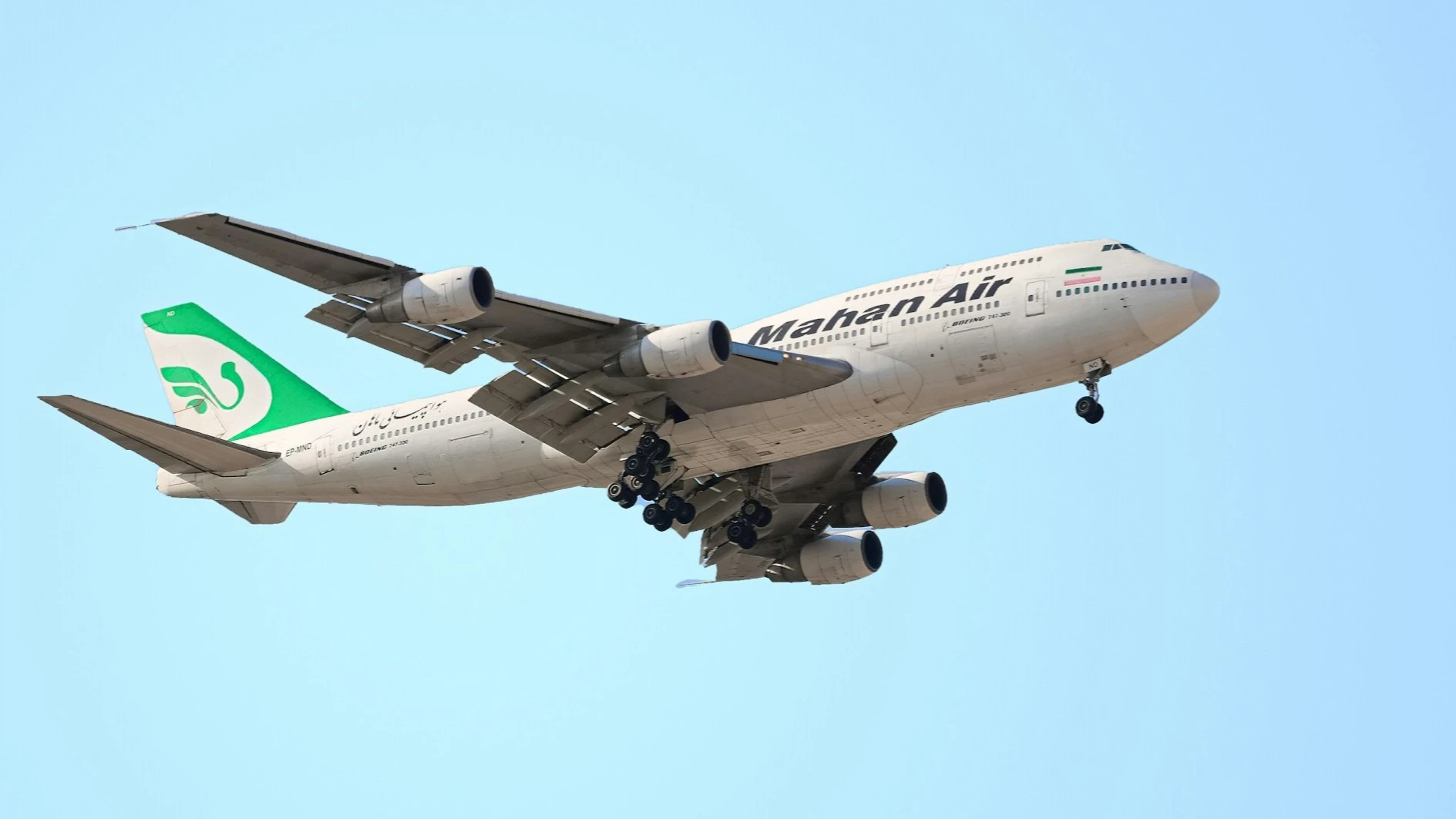
The U.S. Treasury Department has designated Kazakhstan-based Tour Invest as the “general sales agent” for the Iranian airline Mahan Air / Photo: Sajad Darvishi / unsplash
Tour Invest LLC (Tour Invest), a company based in Kazakhstan, has been added to the U.S. sanctions list related to the Iranian aviation sector. The U.S. Treasury Department updated the list on September 8—after U.S. President Donald Trump threatened in late August to launch against Iran “the most devastating economic operation ever carried out against any country.”
However, as Bloomberg notes, Washington's sanctions policy has not yet had a significant impact on Tehran's main trading partners.
Details
The U.S.—after the U.S. Treasury Department threatened Iran with an “economic D-Day” (a military term denoting the start of a major operation)—took action against companies supporting Iran’s aviation sector. The Treasury Department’s “blacklist” includes 36 firms that, according to U.S. authorities, Tehran “uses to transfer weapons, personnel, and illicit cargo.” These include “secret front companies, foreign intermediaries, and deceptive cargo transshipment routes that Iran relies on to obtain U.S.-origin aircraft and sensitive technologies,” according to the U.S. Treasury Department’s website.
Among these firms, the U.S. agency listed, among others, “Kazakhstan-based Tour Invest LLC.” Along with the Malaysian company Icargo, Tour Invest, according to the U.S. Treasury Department, acted as the “general sales agent” for the Iranian airline Mahan Air. This carrier, already subject to U.S. and European Union sanctions, continued to operate flights in the Middle East and carried out flights to China, according to Reuters and Bloomberg.
According to the information portal uchet.kz, Tour Invest is a “joint venture with foreign participation.” The company’s executives have not been disclosed. Judging by the address—which is also listed on the U.S. Department of the Treasury’s website—the sanctioned Kazakhstani company is registered in Almaty at a residential building (128 Makataev Street).
Which other companies ended up on the “blacklist”?
In addition to Tour Invest and the Malaysian company Icargo, the United Arab Emirates-based (UAE) ECT Aviation Support LLC (ECT Aviation Support UAE) and the Turkey-registered Sky Phoenix Hava Yollari Tasimaciligi Ticaret Limited Sirketi (Sky Phoenix) have also been subject to U.S. sanctions for “supporting the Iranian aviation sector.” According to a statement from the U.S. Department of the Treasury, both “acted as intermediaries in a scheme to transfer U.S.-origin aircraft to [the Iranian carrier] Mahan Air.” The operation took place in the summer of 2026: during that period, “Mahan Air received at least three B-777 aircraft, which were rerouted [to it] through the UAE and Oman,” officials in Washington revealed. The aircraft in question had previously been decommissioned in the U.S., but then “passed through ECT Aviation Support UAE, after which they received temporary registration,” the Treasury Department’s statement said.
For the most part, the updated sanctions list consists of Iranian airlines (27 in total). Among them are Iran Aseman Airlines, Iran Air Tour, Kish Airlines, and Qeshm Air. They were added to the U.S. “blacklist” “for conducting activities in the aviation sector of the Iranian economy.”
What Else You Need to Know About the New U.S. Sanctions
In addition, the Financial Crimes Enforcement Network (FinCEN) of the U.S. Department of the Treasury has issued a warning to financial institutions about the risks associated with doing business with Iran’s aviation sector—which, according to FinCEN, helps Tehran procure components for ballistic missiles and drones.
What People Are Saying in the Market
The U.S. administration’s efforts to put pressure on the Iranian authorities have not yet impressed sanctions experts, according to Bloomberg. Many of Iran’s key remaining trading partners—from countries in the Middle East to China — appear to have so far easily coped with Washington’s new sanctions policy, which U.S. Treasury Secretary Scott Bessent called “Economic D-Day” against Tehran.
Additional sanctions against relatively small entities or individuals—as well as companies that are already on “blacklists”—may have only a limited effect, the agency notes, emphasizing that the U.S. has not yet decided to take action against China—which purchases more than 90% of Iranian oil—or against Chinese banks. Earlier, the Chinese Foreign Ministry warned that it would take retaliatory measures if Chinese companies were targeted by Trump’s new sanctions due to their ties to Iran.
Instead, the U.S. has focused on relatively small entities that are unlikely to have any significant impact on Iran’s armed forces, the Islamic Revolutionary Guard Corps, or war-related decision-making, Bloomberg notes.
This article was AI-translated and verified by a human editor