The National Bank of Kazakhstan Cut Its Base Rate: What This Means for the Tenge and Inflation

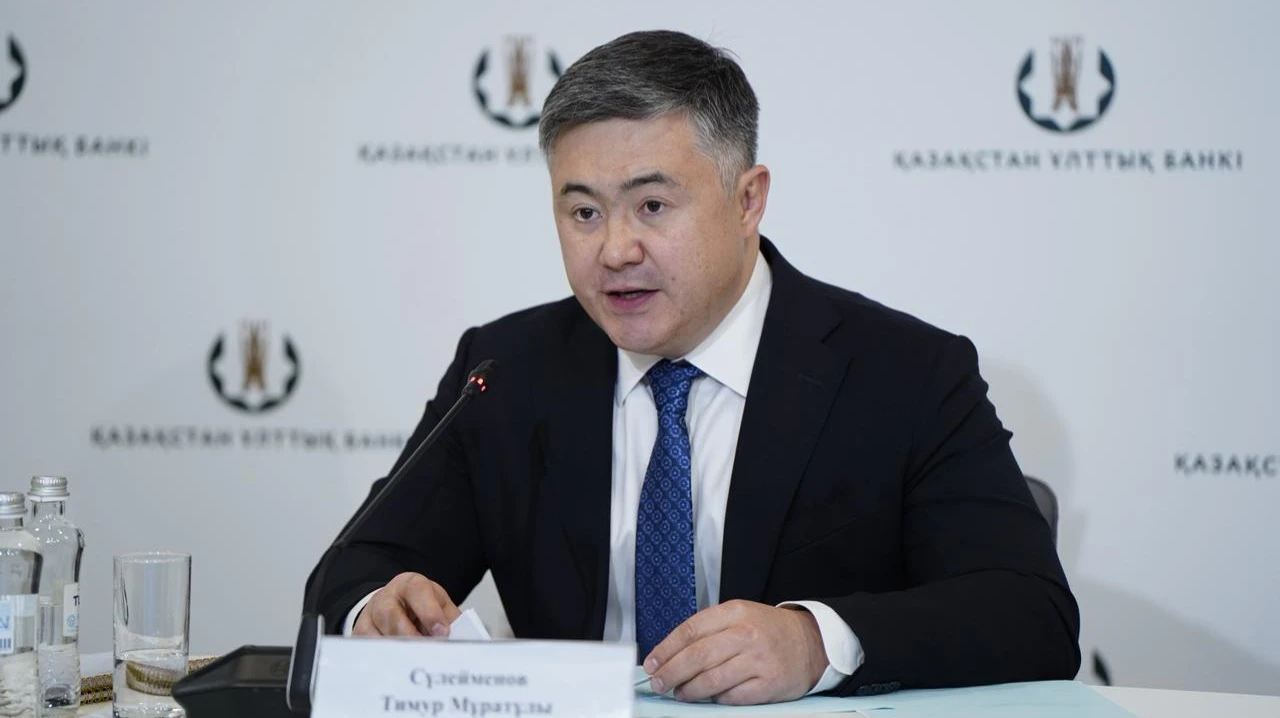
Timur Suleimenov, Chairman of the National Bank of Kazakhstan, is optimistic but cautious. Photo: NBK
On September 4, the National Bank of Kazakhstan lowered its base rate from 16.75% to 16.25%. In explaining this decision, National Bank Chairman Timur Suleimenov cited, first and foremost, inflation, which fell in August to a “single-digit” level—from 10.2% to 9.8% (on an annualized basis). He also noted a decline in the public’s inflation expectations for the coming year, from 13.4% to 12.1%.
Suleimenov also pointed to external factors: for example, in the U.S., inflation slowed to 3.4% in July (it had been 3.5% the previous month and had reached 4.2% in May). And in Russia, despite the fact that inflation remained at 6% in July, the key rate was cut by 0.25 percentage points to 14%.
At the same time, Timur Suleimenov noted that seasonally adjusted inflation in Kazakhstan rose to 0.9% in August, up from 0.7% in July, and external inflationary pressures persist in both the food and energy sectors. Meanwhile, the situation in the oil market remains uncertain, and there are no plans to change the baseline scenario at this time: the average price is expected to be $89 per barrel in 2026, and $75 and $65 in 2027 and 2028, respectively.
As a result, despite generally positive indicators, the National Bank’s inflation forecast for 2026 remains unchanged at 9–11%, while the forecast for 2027 has been raised from 5.5–7.5% to 6.5–8.5%.
A wider stride
The National Bank is cutting the rate for the third time since the start of the summer, when it stood at 18%. An ING Bank report published today ahead of the meeting was titled: “CIS-4: Currencies Continue to Find Support; Selective Rate Cuts Cannot Be Ruled Out.” However, a cut of 0.5 percentage points all at once was less expected: Three days ago, 89% of experts surveyed by the “Association of Financiers of Kazakhstan” (AFK) considered a cut to only 16.5% likely, while the rest said maintaining the current level would be optimal.
Almas Myrzali, Chief Investment Officer at ATLAS Capital, agrees that the decline turned out to be more pronounced than might have been expected based on the regulator’s previous cautious rhetoric. At the same time, he notes that the National Bank’s position appears consistent: the regulator continues to highlight factors that could sustain inflationary pressure, which is also reflected in its forecasts. “The trajectory of further rate cuts at upcoming meetings does not yet appear predetermined,” he says. “Inflation expectations among the public have improved, but the upward revision of the inflation forecast for 2027 shows that the National Bank maintains a fairly cautious view on future price dynamics.”
Freedom Broker analyst Daniyar Orazbaev says the 0.5 percentage point rate cut was expected given the slowdown in inflation. He also notes that the situation globally and in Kazakhstan differs significantly due to local factors, and that in the past, when interest rates were falling worldwide, the country’s rate, on the contrary, rose in response to local challenges.
Everything has been taken into account
At a press conference, the head of the National Bank was asked how he assessed the risk that a cut in the base rate could trigger an outflow of foreign capital and put pressure on the tenge. According to the Agency for Financial Markets, non-resident investments in Kazakh government bonds reached 2.6 trillion tenge ($5.7 billion) as of the end of August.
Suleimenov noted that the share of non-residents in the national debt stands at 7.2%, which is low compared to other countries, “where it reaches 15% or even 20%.” According to Suleimenov, the inflow of these funds has helped reduce the cost of servicing the national debt by 2–3 percentage points, and the National Bank is interested in seeing this share grow. At the same time, the regulator does not intend to allow this figure to exceed 10 percent: “It’s not that we’re going to restrict or push them out, but if it grows significantly, we’ll try to regulate this issue,” Timur Suleimenov explained.
Almas Myrzali believes that the current structure of the financial market suggests a certain degree of resilience, and he does not see any risk of all non-residents exiting the market at once. “Furthermore, a gradual easing of monetary policy does not yet signify a shift toward an accommodative policy. The National Bank itself notes that the scope for further rate cuts is currently limited.”
"From the perspective of the exchange rate and carry trades, this decision does not pose significant risks. The dollar has strengthened significantly in recent months, and the National Bank’s purchases of foreign currency to replenish the Unified Pension Fund in August and earlier in April and May indicate that the National Bank considers the rate of 460 tenge per dollar to be very attractive for buying foreign currency. Therefore, an increase in the exchange rate to 480–490 will not be a major problem for the National Bank,” believes Daniyar Orazbayev.
This article was AI-translated and verified by a human editor