Boeing's stock has fallen 23% since the start of the year. Is it worth buying on the dip?
During trading on October 28, Boeing shares fell to $165, their lowest price since April 2025

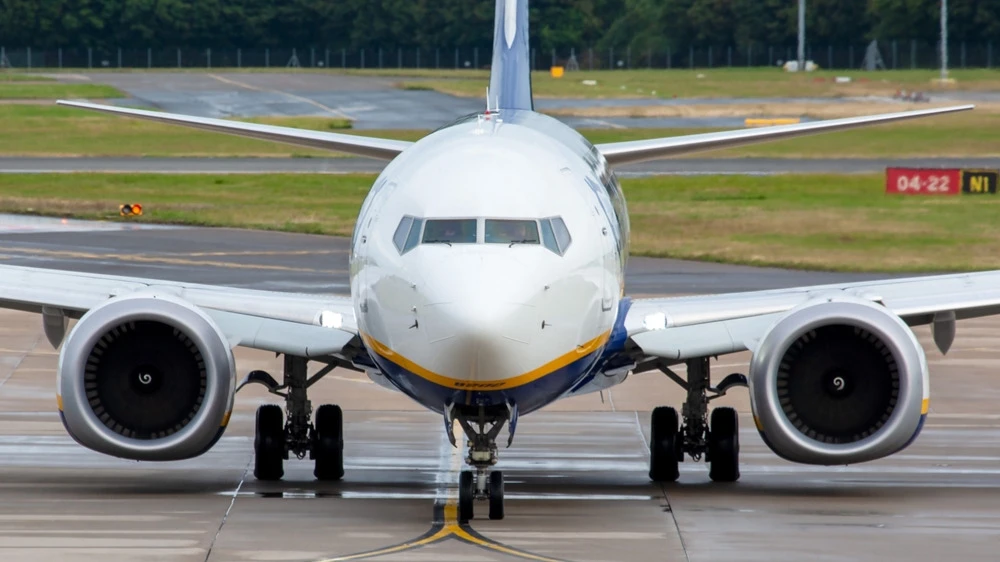
Since their peak on January 23, Boeing shares have fallen 33% / Photo: Airlinephoto / Shutterstock.com
Boeing shares fell to their lowest level since April 2025. Since the start of the year, they have lost 23% of their value, and 33% from their peak on January 23. The plunge has exposed the gap between Boeing’s stock price and analysts’ growing optimism: at the start of the month, the proportion of “buy” recommendations for the company’s stock was at a five-year high, while there were no “sell” recommendations at all, Bloomberg notes. And even after the weak earnings report, Wall Street continues to view the aerospace company with optimism—due to its growing order backlog.
Details
During trading on October 28, Boeing shares fell to $165, their lowest price since April 2025. By the end of the trading session, the stock had recovered some of its losses, closing the day down 0.7%. The day before, the stock plummeted 11% after the company lowered its annual delivery forecast and reported weaker-than-expected results from its commercial aircraft division. This marked Boeing’s sharpest one-day stock decline since June 2020, according to Bloomberg.
At current levels, the stock is trading at approximately 62 times its projected earnings for the next 12 months (P/E ratio). This is the highest ratio among companies in the Dow Jones Blue Chip Index and the ninth highest among constituents of the broad-market S&P 500 Index, according to Bloomberg data.
What Analysts Are Saying
According to MarketWatch, analysts' average price target for Boeing shares is $237.3. That is 40% higher than the closing price on October 28.
“Investors aren’t so much disputing the positive scenario as they are refusing to pay for it in advance, and the latest data confirms that they were right to adopt a wait-and-see approach,” — says Dave Mazza, CEO of Roundhill Investments, whose comments are cited by Bloomberg.
"Wall Street may have been too hasty in its expectations regarding how quickly Boeing would be able to ramp up production, restore profitability, and generate significant free cash flow," said Ivan Fainset, chief investment officer at Tigress Financial Partners, in an interview with Bloomberg.
Although the company had hoped to lower expectations ahead of 2027, “the bar appears to have been set very low,” noted Scott Mikus, an analyst at Melius Research, in a note to clients, according to Bloomberg.
Some analysts believe that Boeing’s revision of its delivery forecast could serve as a “catalyst,” Bloomberg notes. “The market likes stocks that can consistently raise their forecasts over time, and it seems Boeing has finally found itself in that position. It’s clear that analysts had overestimated Boeing, and the company simply needed to adjust our expectations,” said BNP Paribas analyst Matthew Aker.
Following the release of its earnings report, the research firm Langenberg upgraded its recommendation on Boeing shares from “neutral” to “buy” and set a price target of $250, according to Investing.com. This is 32% higher than Wednesday’s closing price. Analyst Brian K. Langenberg highlighted Boeing’s total order backlog of $745 billion, which showed double-digit year-over-year growth across all of the company’s business segments. Langenberg wrote that, despite delays in increasing aircraft production, Boeing’s outlook remains favorable.
Context
Boeing announced that it will not meet its annual delivery target of 500 737 Max aircraft and will deliver 787 Dreamliners closer to the lower end of its forecast. The commercial aircraft division, the company’s largest in terms of revenue, posted an operating loss of $697 million—nearly double what analysts had expected. The free cash flow forecast for 2027, at $3 billion, also fell short of analysts’ median forecast of $5.3 billion.
“As I’ve said many times before, it’s more important for us to ramp up production at the right pace than to meet a specific deadline, and we’ll remain disciplined in this regard,” said Boeing CEO Kelly Ortberg during a conference call with analysts.
Weak performance in terms of shipments and cash flow overshadowed the generally positive developments of the quarter: Boeing received regulatory approval for the 737 Max 7 and 10 models and won a contract to manufacture a next-generation fighter jet for the U.S. Navy.
Boeing has faced a series of problems in recent months: a slowdown in production due to supply constraints, a software glitch on the 737 Max, and the risk of a strike. Also in March, the company pushed back the timeline for its commercial aircraft division to return to profitability from 2026 to 2027 due to costs associated with the integration of supplier Spirit AeroSystems.
This article was AI-translated and verified by a human editor