Brent price drop reversed to a surge after new US strikes on Iran
The market has started to factor in the risk of a breakdown in the Strait of Hormuz deal again

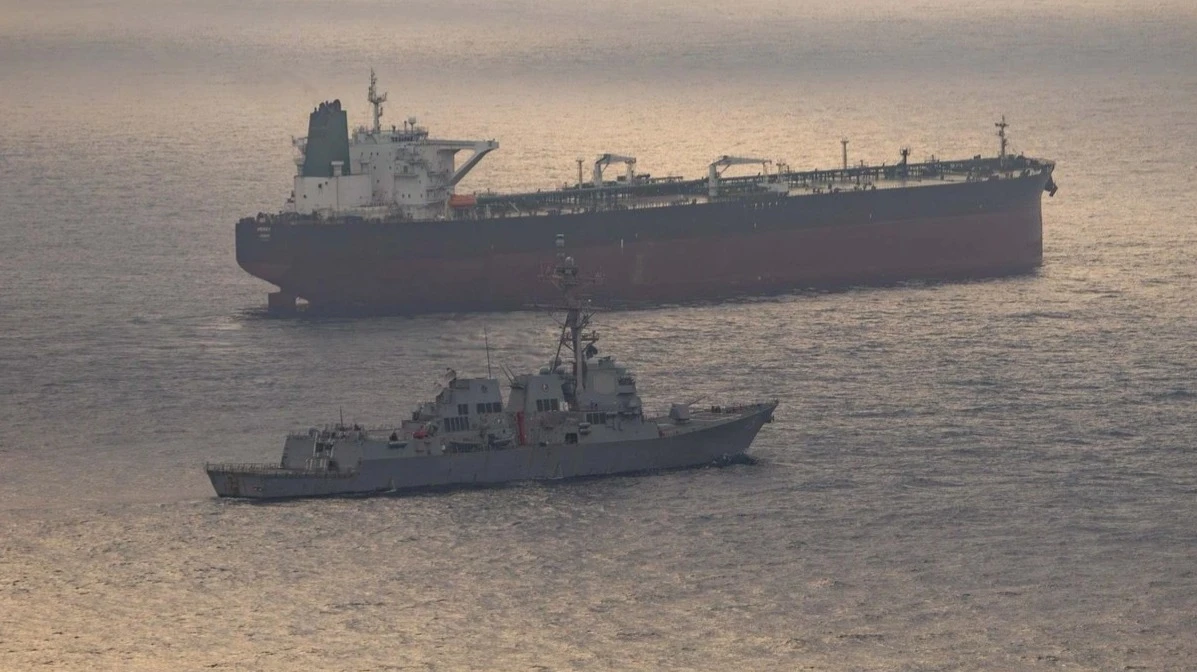
U.S. Central Command explained the new strikes on Iran by the need to "protect troops from threats from Iranian forces" / Photo: X/U.S. Central Command
Brent crude oil prices reversed on the morning of Ma 26 after falling more than 7% a day earlier, with futures rising 2% to above $98 a barrel. The international benchmark rose in price due to US strikes on facilities in southern Iran. U.S. WTI is trading around $92 a barrel - slightly above Monday's last trade, but 5% below Friday's closing level as the official closing price of WTI was not calculated due to the Memorial Day holiday on Ma. 25 in the U.S., Reuters points out.
Details
The United States on Tuesday night struck targets in southern Iran, including gunboats that U.S. commanders believe were attempting to lay mines and missile launcher positions. U.S. Central Command said the strikes were needed "to protect our troops from threats from Iranian Xi."
The Wall Street Journal, citing two U.S. officials, writes that Washington continues to observe the truce and considers strikes on missile sites and mine launchers as defensive actions. At the same time, the U.S. military continues to block Iranian ports and is ready to resume bombing if President Donald Trump decides to go on the offensive, WSJ reports.
Explosions were heard in Bandar Abbas (a city on the shore of the Strait of Hormuz) and neighboring coastal areas, Reuters reported, citing Iranian media.
Why the market believed in decoupling
On Ma. 25, oil prices collapsed because traders believed the U.S. and Iran were converging on a deal that could open the Strait of Hormuz, through which about a fifth of all offshore oil shipments passed in peacetime.
Washington and Tehran said progress was being made on a memorandum that would extend the truce for 60 days and give negotiators time to discuss a final agreement. Japan's Nikkei, citing a Middle East diplomatic source, reported that under the terms of the agreement, Iran would clear the Strait of Hormuz of mines within a month, after which ships of all countries would be able to safely pass through it and Tehran would stop charging transit fees.
In recent days, three LNG ships for Pakistan, China and India, as well as a supertanker carrying Iraqi oil for China that had been idle for almost three months, Reuters wrote.
What could derail the deal
The weekend began with statements by US President Donald Trump and White House officials about the proximity of a peace deal, but ended with the US leader saying that he would not rush to conclude the agreement on unsuitable terms. The stumbling block was Iran's nuclear program, WSJ writes.
On May 25, Trump again demanded that Tehran hand over enriched uranium to the United States for destruction. "It's a stiff reminder [to the market] that the deal can still fall apart at the last minute - as it did with the five previous attempts," IG analyst Tony Sycamore stated.
This article was AI-translated and verified by a human editor