Chipmakers Are on the Brink of a "Bear" Market. Is the Rally Over?

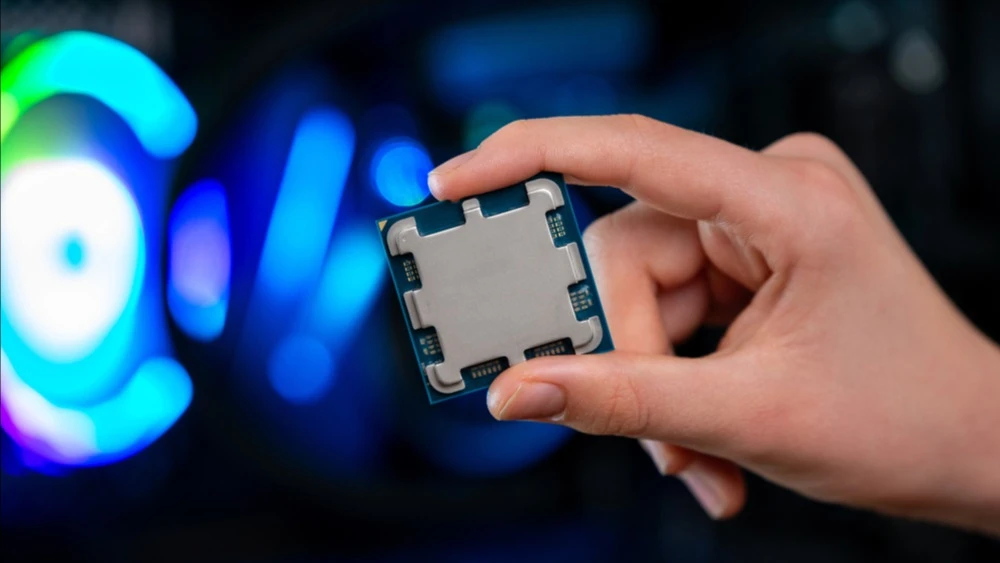
The Philadelphia Semiconductor Index, which tracks 30 semiconductor companies, has fallen more than 20% from its recent high / Photo: RSplaneta / Shutterstock.com
The Philadelphia Semiconductor Index, which tracks semiconductor manufacturers and is closely watched by investors, briefly entered a “bear market” during trading on July 17. At one point, it was down 5.7%, bringing its decline from the record high reached in late June to more than 20%. The index has lost a significant portion of the rapid gains driven by the rally in memory chip stocks, Bloomberg notes.
Details
The Philadelphia Semiconductor Index, which includes the stocks of 30 chipmakers, rose 105% from its March low to last month’s peak. Since then, the shares of Marvell Technology, Arm Holdings, and Intel—all of which are included in the index—have fallen by more than 30%, and the index itself is teetering on the brink of a roughly 20% drop from its high. Shares of memory manufacturers, which were among this year’s top performers, have also seen declines. Micron Technology shares have fallen 33% from their peak, while Western Digital and SanDisk shares have lost more than 40%.
In early July, Samsung Electronics’ stock plummeted after the South Korean company reported a 19-fold increase in quarterly profits. This proved insufficient to satisfy investors following a 150% rise in the stock’s price since the start of the year, Bloomberg notes. Taiwan Semiconductor Manufacturing, the main manufacturer of memory for Nvidia’s AI chips, suffered a similar fate this week. The company raised its full-year forecasts for both capital expenditures and revenue, yet its stock fell by more than 7%. As a result, the decline from its record high approached 9%.
What Triggered the Sell-Off
Friday’s sell-off followed an unexpected breakthrough by the Chinese AI startup Moonshot, Bloomberg explains. The company stated that its new Kimi K3 model is capable of competing with the most powerful models developed by OpenAI and Anthropic. The Bloomberg index tracking Asian semiconductor stocks fell by more than 6%. Investors compared this reaction to the shock that the release of DeepSeek caused in the market last year. At the time, the company claimed it had been able to train its AI model without using powerful Nvidia processors, as they were not being shipped to China due to sanctions. This raised concerns among investors that hyperscalers’ spending on top-of-the-line servers was excessive. However, the AI boom has not slowed down: it quickly became clear that high computing power is needed not only for training language models but also for generating responses for end users.
Now, however, the sell-off has been triggered by new concerns about the sustainability of the artificial intelligence investment boom and the ability of hyperscalers to continue pouring trillions of dollars into infrastructure-related capital expenditures, according to Bloomberg. Investors are also trying to determine whether stock valuations have become excessively high, the agency notes.
What Analysts Are Saying
“It’s clear that price movements have outpaced improvements in fundamentals, although the fundamentals themselves remain strong and continue to improve,” James Abate, managing director and head of fundamental strategies at Horizon Investments, told Bloomberg. According to him, before the reversal, the chipmakers’ index “was essentially on a parabolic trajectory.” He also noted that even though the semiconductor index had fallen by 20%, it had “merely returned to May levels.” “So there’s no need to overreact,” Abate added.
“Despite strong fundamentals, expectations have become too detached from reality,” Munib Muzaffar, senior portfolio manager at Bold Wealth Partners, told Bloomberg. “The multiples reflected a particularly optimistic scenario, which raised the question: Hasn’t the best part of this story already been priced in? How much are investors willing to pay for chipmakers’ profits, and could these expectations be revised downward?” The analyst also noted that the market now needs to be convinced that the hyperscalers’ investments will pay off. If these expenses are justified, companies will continue to invest, and chipmakers will continue to profit, Muzaffar believes. “But right now, the picture is mixed, as strong fundamentals are compounded by high valuations, investor sentiment, and capital flows.”
On Friday, UBS forecast a 92% increase in earnings for companies in the Philadelphia Semiconductor Index this year and a further 40% increase in 2027. “Demand for computing power continues to outstrip available supply, and production capacity constraints in the supply chain are unlikely to disappear anytime soon,” Ulrike Hoffmann-Burkhardi, global head of equities at UBS, wrote in a note cited by CNBC.
Barclays also sees “no signs of panic” in the semiconductor sector. “We’re starting to receive significantly more inquiries from investors about when to expect a rebound in the semiconductor market,” Barclays traders wrote in a note cited by CNBC. “The selling is more passive than aggressive. It appears that investors are merely reducing their positions rather than trying to exit the sector entirely.”
On Friday, Deutsche Bank strategist Maximilian Uleer expressed concern about the sector’s outlook. “The uncertainty surrounding the outlook, combined with the sector’s significant contribution to the recent stock market rally, raises questions about how to handle semiconductor stocks within an investment portfolio,” CNBC quoted him as saying.
Wells Fargo strategist Oh Seon-kwon noted on Thursday that “sentiment toward the semiconductor sector has deteriorated over the past four weeks at one of the sharpest rates in history.”
According to the June forecast by the industry association World Semiconductor Trade Statistics, the global semiconductor market is expected to grow by 90% in 2026 and by another 27% in 2027, CNBC reports. More recent statistics indicate that this trend is continuing. After industry sales grew 106% year-over-year in April, the pace accelerated to 119% in May, JPMorgan noted on Friday, citing WSTS data, the network reports.
The Philadelphia Semiconductor Index is still up 65% year-to-date and is significantly outpacing the S&P 500’s gains. The vast majority of analysts remain bullish on the sector, according to Bloomberg: an aggregate estimate based on analysts’ price targets for the 30 stocks in the index suggests it will rise by about 34% over the next 12 months.
This article was AI-translated and verified by a human editor